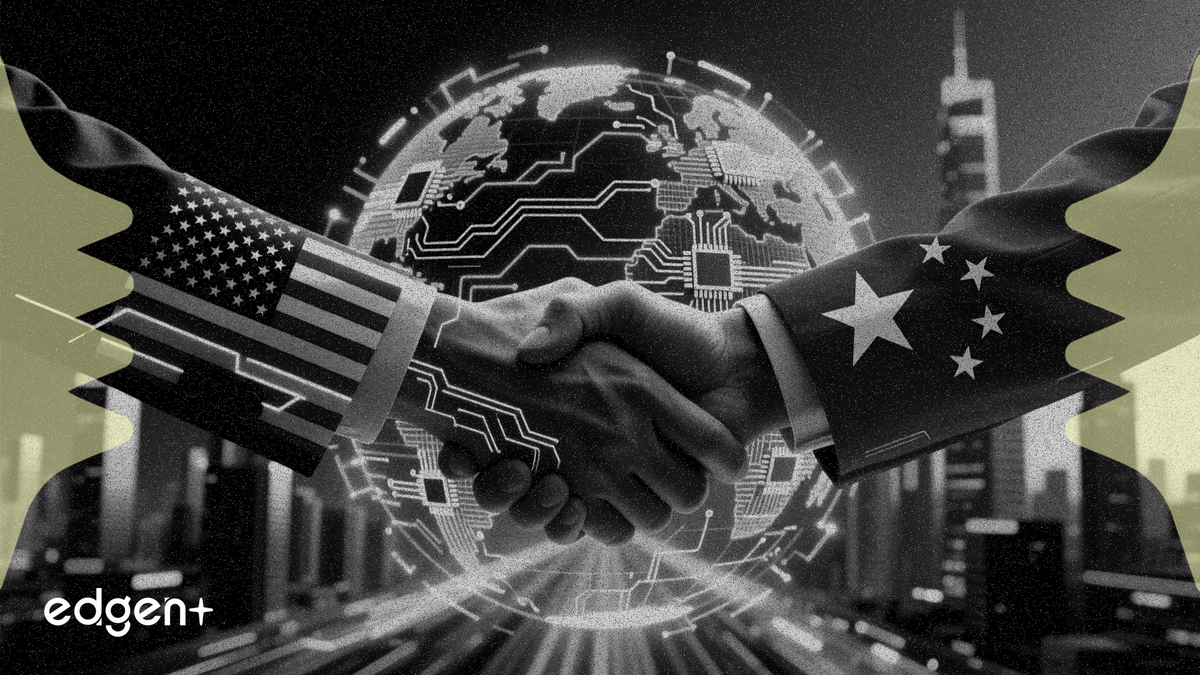
Top executives from Apple, Nvidia, and Tesla signaled productive discussions in Beijing, offering a moment of corporate optimism as the US and China negotiate trade, technology, and security.

Top executives from Apple, Nvidia, and Tesla signaled productive discussions in Beijing, offering a moment of corporate optimism as the US and China negotiate trade, technology, and security.
The leaders of America’s most valuable technology companies, including Apple’s Tim Cook and Nvidia’s Jensen Huang, offered upbeat assessments of their meetings in Beijing on Thursday, providing a starkly positive contrast to the high-stakes trade and security negotiations between US President Donald Trump and China’s Xi Jinping. The CEO delegation, numbering more than a dozen, is seeking to preserve access to China's vast market as a trade-war truce nears its November expiration.
“Meetings went well,” Jensen Huang, chief executive of chipmaker Nvidia, told reporters outside the Great Hall of the People. When asked for his assessment, Tesla CEO Elon Musk simply said, “Wonderful.” Apple’s Tim Cook, who is set to step down later this year, gave a peace sign and a thumbs up.
The CEOs are part of an official US delegation that also includes executives from Boeing, Blackrock, and Goldman Sachs. Their visit comes as the US continues to restrict China’s access to advanced semiconductors, such as Nvidia’s high-end AI chips, citing national security concerns. The US administration has allowed the sale of some less advanced Nvidia AI chips to China, but with a 25% fee. In return, China has leveraged its dominance over the supply of rare earths, critical minerals necessary for everything from iPhones to F-35 fighter jets.
The positive gestures from the CEOs highlight the delicate balance they must strike between Washington’s security agenda and their reliance on China for both manufacturing and revenue. For Apple, the greater China region represents a significant portion of its sales, while Nvidia is navigating US export controls that aim to slow Beijing's AI development. A positive outcome from the summit could boost tech stocks, while a breakdown in talks threatens to disrupt supply chains and escalate the ongoing tech rivalry.
The presence of the high-profile executive team, which Trump said he personally invited, shows the critical importance of the Chinese market. In his opening remarks, Trump told Xi the CEOs were in Beijing to "pay respects" and that business would be "totally reciprocal." This corporate diplomacy is running parallel to tense governmental talks covering a potential peace deal in Iran, US arms sales to Taiwan, and the future of tariffs that have whipsawed global markets.
For the tech industry, the core conflict revolves around semiconductors. Washington's export controls are designed to prevent China from using top-tier American technology, particularly Nvidia's GPUs, for military and advanced AI applications. Beijing has decried the measures and initiated its own probes into US trade barriers, while also using its control over rare earth mineral processing as a powerful negotiating tool. A licensing system imposed by China has already slowed the export of these critical elements, impacting global supply chains.
The upbeat comments from Musk, Cook, and Huang suggest that, at least at the corporate level, lines of communication remain open. Their companies are deeply embedded in China. Tesla's Shanghai Gigafactory is a crucial production hub, Apple depends on Chinese manufacturing and a massive consumer market, and Nvidia, despite the restrictions, still seeks to sell its less-advanced chips to Chinese tech firms. The success of these individual corporate missions may ultimately depend on the broader agreement, or lack thereof, reached by Trump and Xi.
This article is for informational purposes only and does not constitute investment advice.