
A deep-rooted skepticism of taxation has shaped US fiscal policy from the 18th century to today's tax-cut pledges.
A deep-rooted skepticism of taxation has shaped US fiscal policy from the 18th century to today's tax-cut pledges.
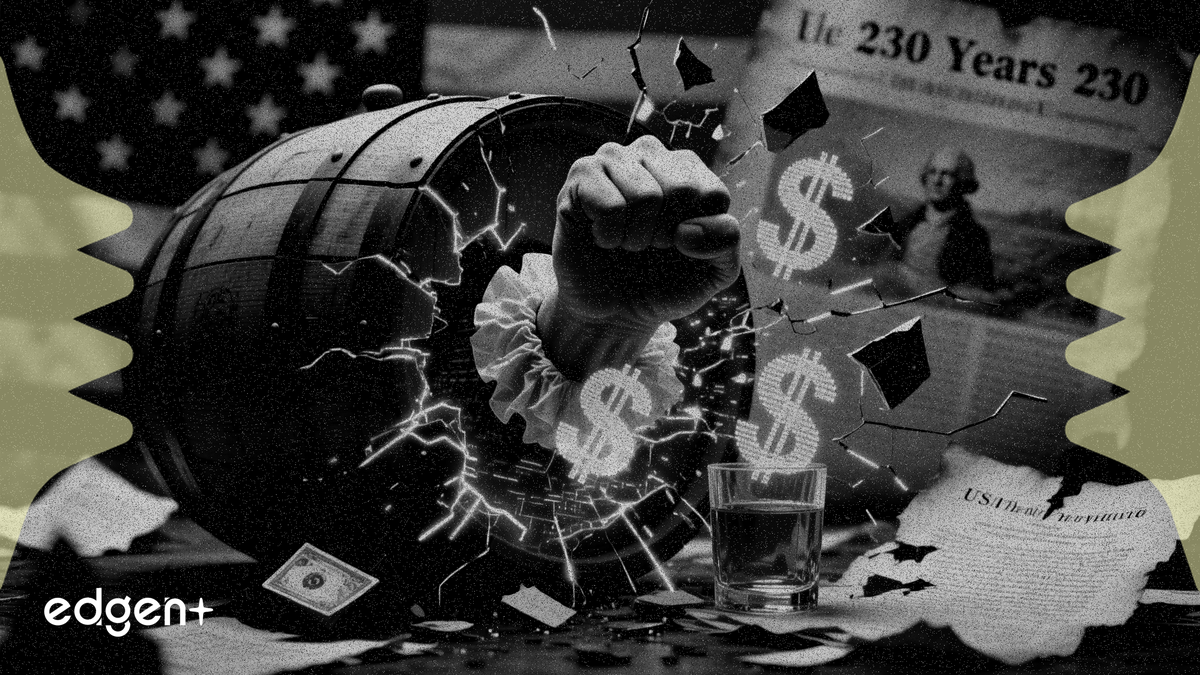
American resistance to taxation, a core tenet of the nation's identity since the Revolutionary War, continues to shape political discourse, linking the 1794 Whiskey Rebellion to modern anti-tax pledges signed by nearly 1,400 elected officials.
While Supreme Court Justice Oliver Wendell Holmes Jr. famously said “taxes are what we pay for civilized society,” suggesting a transactional relationship for public benefit, many Americans have historically viewed taxation with deep suspicion.
The nation’s first major tax uprising over an excise tax on distilled spirits in 1794 saw President Washington lead a 13,000-man army to quell the rebellion. This was followed by Henry David Thoreau's 1846 protest against a poll tax, and the formal establishment of the income tax in 1913, which fueled the modern conservative movement culminating in Grover Norquist’s 1986 Taxpayer Protection Pledge.
This long-standing tension between financing a government and individual financial sovereignty remains the central battle for the American wallet, framing current debates that pit proposals for new wealth taxes against promises of further tax reductions.
The cry of “no taxation without representation” that sparked the Revolutionary War did not fade with the nation's founding. The first major test came in 1794, when violent protests erupted across the western frontier over an excise tax on distilled spirits, a measure intended to pay off Revolutionary War debt. Farmers, who often ran stills, refused to pay and attacked federal officials, leading President George Washington to personally lead a militia of 13,000 to suppress the uprising. The show of force worked, and the tax stood.
Nearly a century later, the protest became more philosophical, but no less profound. In 1846, writer Henry David Thoreau was jailed for refusing to pay a poll tax that supported a government that permitted slavery. His essay, "Civil Disobedience," argued that individuals have a moral obligation to resist unjust laws, a principle that has influenced movements on both the left and right for generations.
The 20th century saw the formalization of a broad-based income tax in 1913, which expanded to fund a growing government. This became a primary target for conservative and libertarian movements. The Libertarian Party's 1972 platform called for the eventual repeal of all taxation. This sentiment was crystallized into a powerful political tool in 1986 with Grover Norquist's Taxpayer Protection Pledge, which commits signatories to oppose any net tax increase. According to Americans for Tax Reform, nearly 1,400 elected officials have signed it, including 44 current senators and 192 U.S. representatives.
Today, the debate continues along familiar lines. Some, like New York City Mayor Zohran Mamdani and Senator Elizabeth Warren, advocate for higher taxes on the wealthy to fund social programs and a direct tax on large fortunes. Conversely, the conservative platform continues to prioritize tax and regulation cuts as a central pillar of economic policy. The historical animosity toward taxes ensures this fundamental conflict over the government's role and reach will persist.
This article is for informational purposes only and does not constitute investment advice.