
The Federal Reserve’s preferred inflation gauge accelerated on a monthly basis in February, painting a picture of persistent price pressures even before the Iran war began roiling commodity markets.
The Federal Reserve’s preferred inflation gauge accelerated on a monthly basis in February, painting a picture of persistent price pressures even before the Iran war began roiling commodity markets.
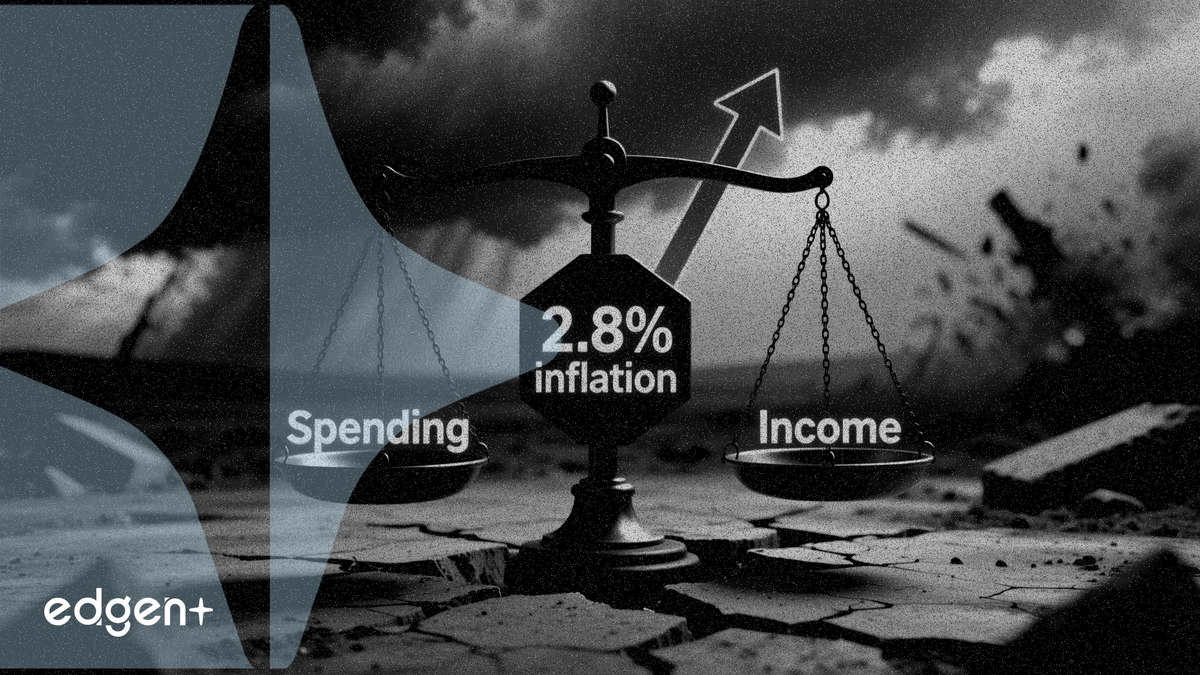
The personal consumption expenditures price index rose 0.4% in February, quickening from January's 0.3% pace, the Commerce Department said Thursday. The data, which predates the conflict in Iran, shows core inflation running at 3.0% annually, a full percentage point above the Federal Reserve's target and a challenge to the market's rate-cut expectations.
"The starting point for this inflation shock was already elevated, and this report confirms that progress had stalled before the war," said Ann Saphir, a Reuters journalist specializing in the Fed. "The question now is how much of the energy price spike passes through to core services."
The annual headline PCE rate held at 2.8%, while the core measure, which strips out volatile food and energy, ticked down to 3.0% from 3.1% in the prior month. The monthly core reading also came in at a brisk 0.4%. The report also showed a divergence in household finances, with personal spending growing a solid 0.5% even as personal incomes fell by 0.1%.
With inflation already proving sticky, the war in Iran introduces a significant new risk that could keep prices higher for longer and complicate the Fed's policy path. Dallas Fed research indicates a prolonged conflict could push headline inflation above 4% by year-end, a scenario that would likely shelve any discussion of interest rate cuts and potentially bring hikes back into consideration. The first look at post-war inflation comes with Friday's March CPI report.
The conflict has already sent a wave of anxiety through the economy. The New York Federal Reserve's March Survey of Consumer Expectations, the first to capture sentiment since the war began, showed one-year inflation expectations jumping 0.4 percentage point to 3.4%. The increase was driven by a surge in gasoline price expectations to their highest since March 2022.
Research from the Dallas Fed sketches out a more alarming scenario if the conflict escalates. A paper published Tuesday found that a nine-month closure of the Strait of Hormuz, a chokepoint for 20% of the world's oil, would drive the price of oil from $115 to $167 a barrel. Such a disruption would push up fourth-quarter inflation by as much as 1.8 percentage points. However, the researchers noted there is "little evidence of higher gasoline prices being passed through to core inflation or long-run inflation expectations becoming unanchored," with five- to 10-year expectations seen rising a modest 0.09 percentage points at most.
The combination of sticky pre-war inflation and a new geopolitical shock puts the Federal Reserve in a difficult position. The central bank is reluctant to add more pressure to a weakening labor market, where consumers' expectations for unemployment are at their highest since April 2025, according to the New York Fed survey.
The war's inflationary effects are already being felt across the economy, from rising jet-fuel prices causing airlines to cancel flights to higher fertilizer costs that are expected to increase food prices. The consensus estimate for the March consumer-price index, due Friday, is for a 3.4% year-over-year increase, which would be the largest jump in two years.
This economic reality is fueling worries of a prolonged period of elevated prices. JPMorgan CEO Jamie Dimon recently called inflation the "skunk at the party" that could spoil stock returns in 2026. Harvard professor Ken Rogoff has pointed to the overlooked impact of increased military spending on an already-strained U.S. budget deficit, a situation he says risks a bond-yield spike.
This article is for informational purposes only and does not constitute investment advice.