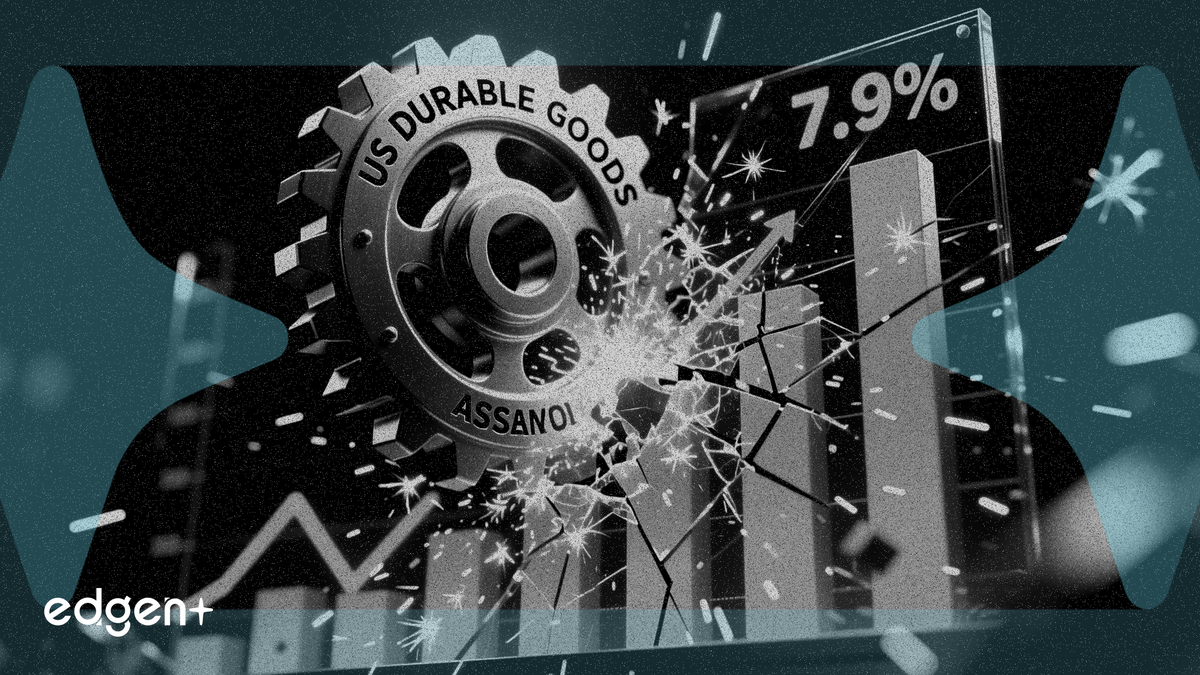
Les commandes de biens durables aux États-Unis ont augmenté de 7,9 % en avril, soit près du double des prévisions consensuelles et la plus forte hausse mensuelle en 11 mois, signe que le secteur manufacturier s'accélère plutôt qu'il ne ralentit.
Les commandes de biens durables ont bondi de 7,9 % en avril, a annoncé mercredi le département du Commerce, soit près du double du consensus de 4 % et la progression mensuelle la plus forte depuis mai 2025.
« L'ampleur de ce dépassement — près du double des attentes — suggère que le secteur industriel gagne une réelle dynamique, et ne se contente pas de se stabiliser », a déclaré James Okafor, analyste macroéconomique chez Edgen. « Lorsque les commandes de biens d'équipement de base se renforcent également, cela indique une confiance des entreprises qui pourrait se maintenir au second semestre. »
Le chiffre du mois précédent a été révisé à la hausse, passant de 0,8 % à 1,3 %, renforçant la tendance à l'amélioration. Le chiffre global a été tiré par des gains généralisés dans les équipements de transport et les machines, des catégories qui représentent une part significative du panier total des biens durables.
Ces données remettent en cause le scénario selon lequel l'économie américaine se refroidit assez rapidement pour justifier des baisses agressives des taux de la Réserve fédérale. Un secteur manufacturier tournant à son rythme le plus soutenu depuis près d'un an pourrait maintenir une pression à la hausse sur les prix, réduisant l'urgence pour la Fed d'assouplir sa politique. Les marchés sont désormais confrontés à une tension : une croissance forte soutient les bénéfices des entreprises, mais pourrait retarder l'allègement des taux que les investisseurs intègrent dans leurs prévisions.
Le rapport sur les biens durables d'avril marque la deuxième augmentation mensuelle consécutive, après le gain de 1,3 % (révisé à la hausse) de mars. Cette accélération sur deux mois contraste avec les signaux d'affaiblissement de certaines données axées sur la consommation et suggère que le côté industriel de l'économie conserve une dynamique significative.
Dynamique manufacturière vs. anticipations de taux
La vigueur des commandes de biens durables complique les perspectives de la politique monétaire. L'indicateur GDPNow de la Fed d'Atlanta signalait un ralentissement de la croissance, mais les données du secteur manufacturier introduisent un risque de hausse pour cette estimation. Si la tendance se maintient, la Fed pourrait devoir maintenir les taux plus élevés plus longtemps que ce que les marchés anticipent actuellement.
La dernière fois que les commandes de biens durables ont dépassé les 7 % en un seul mois, c'était en mai 2025. Au cours des trois mois suivant cette publication, le rendement du Trésor à 10 ans a augmenté d'environ 25 points de base, les marchés ayant réévalué les anticipations de taux, selon des données compilées par Edgen.
Quelle est la prochaine étape ?
Le rapport sur les biens durables de mai, attendu fin juin, sera le prochain test pour déterminer si cette accélération est durable ou s'il s'agit d'un simple pic ponctuel. Pour l'instant, les données ne donnent guère de raisons à la Fed d'envisager des baisses de taux à court terme, ce qui maintient l'attention sur le prochain indice CPI et la réunion de juin du Comité fédéral de l'open market (FOMC) pour d'autres signaux politiques.
Cet article est fourni à titre d'information uniquement et ne constitue pas un conseil en investissement.