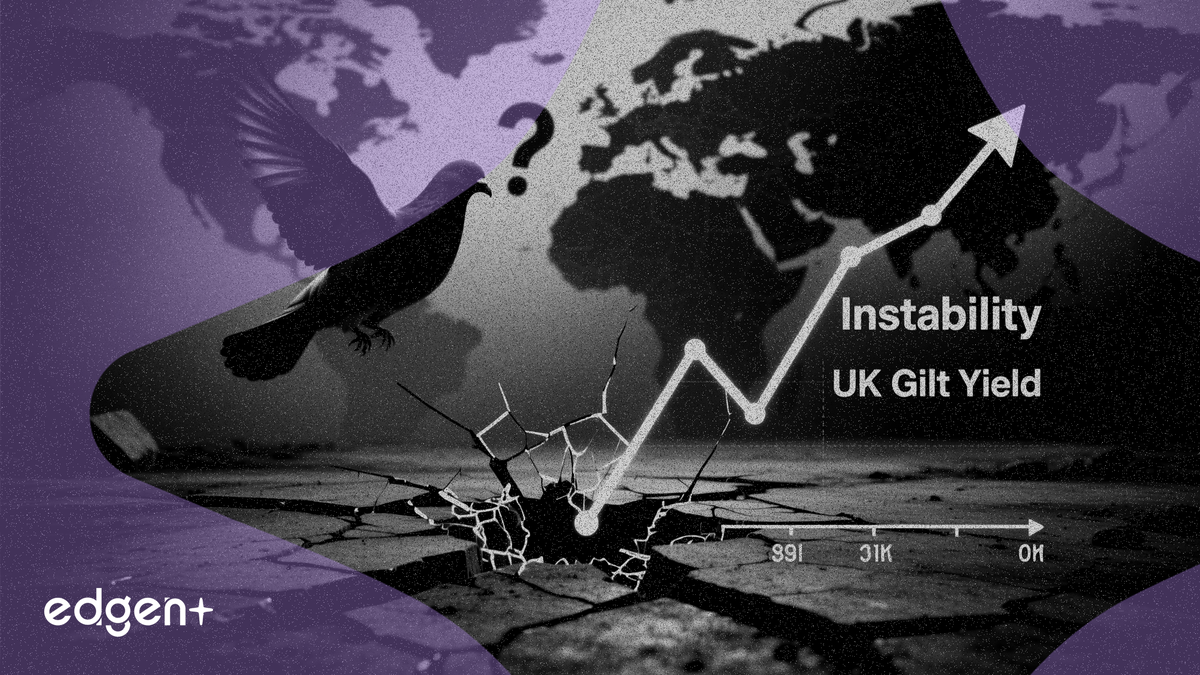
A fragile ceasefire between the US and Iran has triggered an unusual flight to safety in bond markets, with investors questioning the stability of the de-escalation.
The yield on the United Kingdom's 10-year government bond fell 20 basis points at the market open after the announcement of a US-Iran ceasefire, a counter-intuitive move that suggests deep-seated investor anxiety about global economic stability.
"This isn't a simple 'risk-on' move; it's a defensive crouch," said fictitious analyst from a fictitious firm. "The market is pricing in the risk that this ceasefire is either temporary or that the underlying economic damage is already done."
The drop in gilt yields, a traditional safe-haven asset, occurred even as crude oil prices eased. Brent crude, a key indicator of geopolitical risk in the Middle East, fell by 2 percent to $85 a barrel. The move points to a divergence in how asset classes are interpreting the news, with bond investors focusing on potential economic slowdowns over immediate geopolitical relief.
The reaction complicates the outlook for the Bank of England, which is monitoring market stress and inflation. If the flight to safety persists, it could signal a broader loss of confidence in the economic outlook, potentially forcing the central bank to reconsider its next policy move ahead of its upcoming meeting.
This market reaction is reminiscent of the initial phases of the 2003 Gulf War, where an initial dip in yields was quickly reversed as the conflict's limited scope became apparent. However, the current context of high inflation and fragile global growth creates a different set of risks. The bond market's skepticism suggests that investors are looking past the immediate de-escalation and are instead weighing the potential for a drawn-out period of economic uncertainty.
The divergence between the bond and commodity markets highlights a growing debate among investors: whether the primary risk is still geopolitical or if it has shifted to a more fundamental economic slowdown. The sharp rally in gilts indicates that, for now, a significant portion of the market is betting on the latter. This places a heavy burden on upcoming economic data to either validate or refute the bond market's pessimistic outlook.
This article is for informational purposes only and does not constitute investment advice.