
A 25% supply cut in a gas most investors have never heard of is reshaping the balance of power in the $600 billion semiconductor industry.
A 25% supply cut in a gas most investors have never heard of is reshaping the balance of power in the $600 billion semiconductor industry.
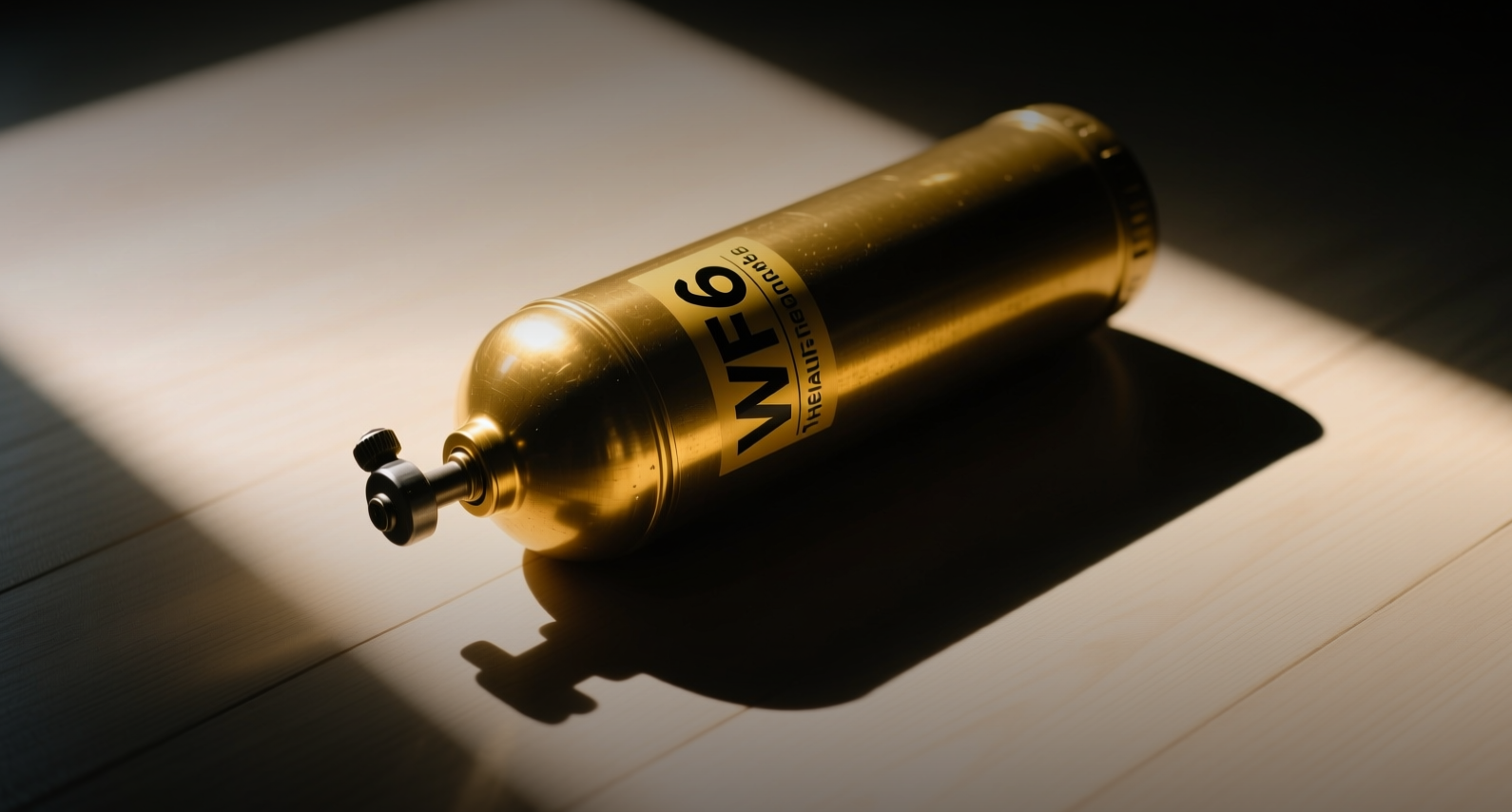
A 25% supply cut in a gas most investors have never heard of is reshaping the balance of power in the $600 billion semiconductor industry.
China's stranglehold on tungsten — a metal it controls 80% of global reserves for — has triggered a 233% surge in tungsten hexafluoride prices, threatening chip production from Samsung to TSMC.
"The supply chain for specialty materials has become the new front line in semiconductor competition," said George Chen, a partner at the Asia Group. "China is demonstrating that resource control can be as effective as technology control."
Two Japanese producers — Kanto Denka and Central Glass — notified customers in late May they would halt production from July 1, removing about 2,200 tons of annual capacity, or 25% of the global total. The reason: China has effectively frozen tungsten exports to Japan since February, with shipments falling to zero for three consecutive months through April. Domestic 5N-grade (99.999% purity) WF6 now trades at 1,670 to 1,810 yuan per kilogram, up from 523 yuan a year earlier. The ultra-high-purity 6N grade used in sub-3nm fabrication has quadrupled to as much as 3 million yuan per ton.
The crisis has minted unlikely winners in China's A-share market. Zhongshan Special Gas, the country's largest WF6 producer with 2,000 tons of capacity, has surged 865% year-to-date, while Zhongju Core gained 180% in 30 trading days. Yet the total addressable market for WF6 is less than 20 billion yuan globally — meaning current valuations, including Zhongshan's 447x trailing P/E, may already price in years of future demand.
Tungsten hexafluoride (WF6) is the essential precursor for depositing tungsten metal films inside semiconductor devices. In chemical vapor deposition (CVD) chambers, WF6 reacts with hydrogen to form pure tungsten layers that serve as conductive interconnects between transistors — the "wires" in a nanoscale skyscraper. Tungsten's low electrical resistance and resistance to electromigration make it irreplaceable in advanced logic chips at 3nm and 5nm nodes, as well as in 3D NAND flash memory where hundreds of layers require reliable vertical connections.
Global foundries consume 8,000 to 11,000 tons of WF6 annually. TSMC alone uses about 900 to 1,000 tons, Samsung roughly 920 to 1,000 tons, and SK Hynix about 700 tons. There is currently no commercially viable substitute for tungsten in these applications, despite market chatter about molybdenum alternatives — those account for less than 0.4% of total demand and are limited to a few word-line layers in 3D NAND.
China's dominance in WF6 did not happen overnight. Twenty years ago, the country supplied more than 80% of the world's tungsten ore but exported it as raw material, leaving the high-value processing — purification, fluorination, distillation — to Japanese and South Korean companies. That changed as Chinese specialty gas producers including Zhongshan Special Gas, Haohua Technology, and Zhongju Core spent years perfecting 6N-grade purification, a process that tolerates no more than one impurity atom per 100 million.
By 2025, Chinese producers had captured about 65% of the domestic WF6 market and, crucially, earned certification from the world's largest chipmakers. Zhongshan Special Gas now supplies TSMC, Micron, SK Hynix, and SMIC with 5N and 6N grade product. When Beijing added tungsten to its export control list in February 2025 and tightened restrictions on Japan in January 2026, it simultaneously ensured domestic producers could fill the gap.
The impact on Japan has been severe. Sumitomo Electric acknowledged in early June that its tungsten supply had been cut since January and its inventory would last only until July, forcing it to raise cutting tool prices by as much as 60%. Mitsubishi Materials has tripled prices for tungsten carbide materials. Kanto Denka has publicly stated it can still source some tungsten from China through alternative channels, but the disruption has already cascaded through the supply chain.
For investors, the WF6 crisis illustrates a structural shift in semiconductor supply chain power. Resource-rich nations are learning to weaponize upstream concentration — China holds 80% of tungsten reserves, 90% of gallium production, and 60% of germanium output — against technology-rich nations that dominate downstream fabrication. Zhongshan Special Gas, Haohua Technology, and Zhongju Core are direct beneficiaries of this realignment, but their current valuations demand extraordinary execution. Zhongshan trades at 447x earnings; Haohua derives just 0.13% of revenue from WF6. The bull case rests on sustained supply tightness and continued certification wins. The bear case: if Japan secures alternative tungsten sources or policy eases, the pricing spike could reverse as quickly as it began.
This article is for informational purposes only and does not constitute investment advice.
