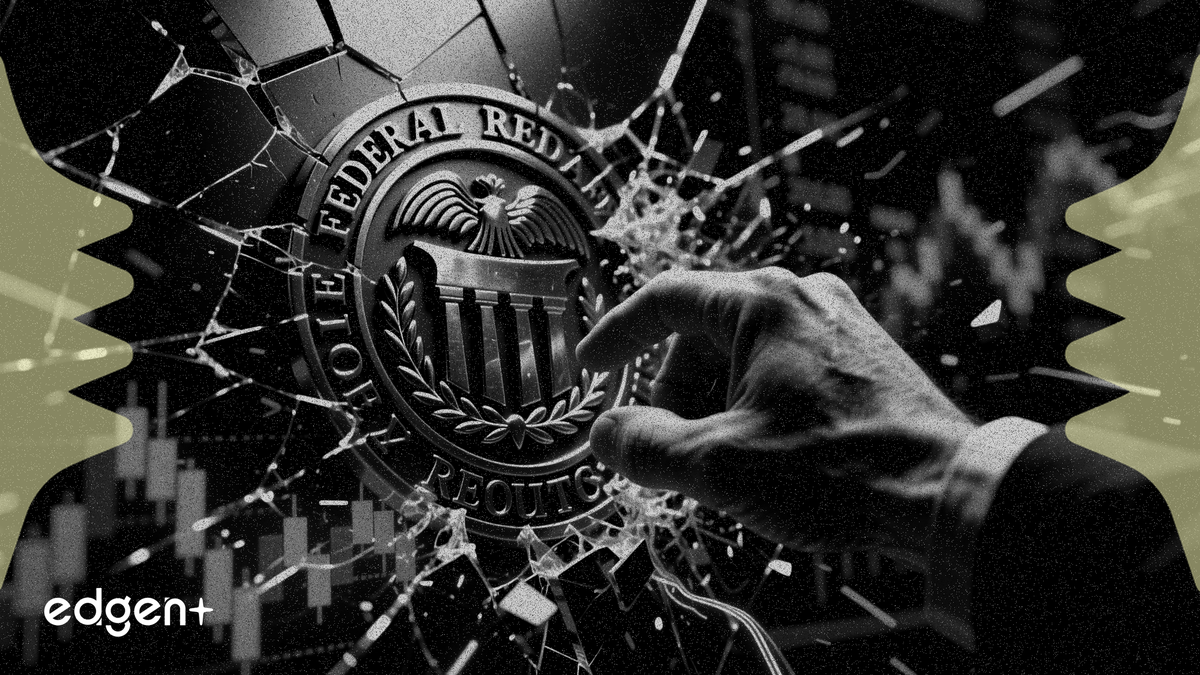
President Donald Trump’s sustained campaign against the Federal Reserve is actively undermining his own stated goal of lower interest rates, forcing central bankers to delay cuts and even consider hikes as inflation resurfaces. The conflict has pushed up inflation and created significant uncertainty, making the Fed’s job of managing the economy even more difficult.
“The President already appears to be losing in court in his attempt to fire Governor Lisa Cook and he will likely lose again if he tries to fire Chair Powell,” Skanda Amarnath, executive director at Employ America and a former economist at the Federal Reserve Bank of New York, said in a statement.
The primary driver of the Fed’s cautious stance is the resurgence of inflation. Trump’s widespread tariffs have increased the cost of goods, while the US-Israeli war with Iran has caused a spike in energy prices. The conflict led to a prolonged closure of the Strait of Hormuz, a critical chokepoint for global trade that handles about 20% of the world's oil supply. This disruption caused US inflation to triple in March, according to the Consumer Price Index. Cleveland Fed President Beth Hammack recently stated, “My baseline is that we’re going to remain on hold for a good while.”
The situation leaves the Federal Reserve in a difficult position, caught between a president demanding lower rates and economic data that suggests a need for tighter policy. The Fed has held the federal funds rate at its current level since last year, and futures markets are now reflecting the growing uncertainty, with some traders betting on a rate hike instead of a cut. The longer the geopolitical instability and trade disruptions continue, the higher the probability that the Fed will be forced to act to contain inflation, regardless of political pressure.
Trump's Attempts to Oust Fed Officials Falter
President Trump's efforts to remove Fed Chair Jerome Powell and Governor Lisa Cook have so far been unsuccessful and may be backfiring. The president has publicly attacked Powell and initiated a criminal probe into the Fed's headquarters renovation, which a federal judge has described as "pretextual." However, these moves have stalled in the courts and have failed to gain traction in Congress.
The legal and political challenges to removing a Fed chair are substantial. Firing Powell would likely trigger a negative reaction from financial markets and face a lengthy court battle. Powell has indicated he would remain as chair pro tempore if a successor is not confirmed by the end of his term. Similarly, the administration's case against Governor Cook over unsubstantiated mortgage fraud allegations appears to be weakening, further solidifying the Fed's institutional independence.
This article is for informational purposes only and does not constitute investment advice.