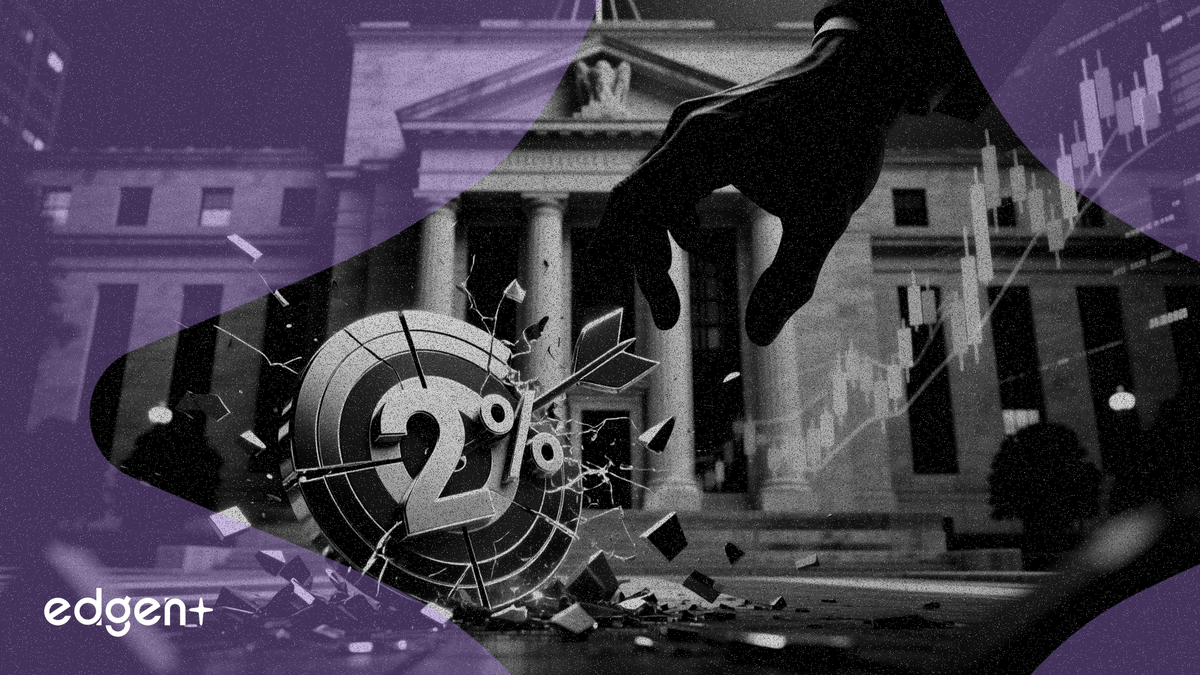
President Trump’s threat to fire Federal Reserve Chair Jerome Powell on April 15 injects significant political risk into US monetary policy, challenging the central bank's decades-long independence and its 2% inflation mandate.
"This is a direct challenge to the institutional framework that has anchored US economic stability for over 40 years," said Julia Ann, chief US economist at MacroPolicy Advisors. "Markets interpret this not as a policy dispute, but as an attack on the Fed's ability to operate without political interference."
The announcement, made on April 15, 2026, also included Trump's assertion that he would not end a government criminal investigation into Powell. The news sent ripples through overnight futures markets, with S&P 500 e-minis slipping 0.8% and the US Dollar Index (DXY) falling 0.5% against a basket of major currencies as investors priced in higher political risk.
At stake is the credibility of the Federal Reserve's commitment to its dual mandate of price stability and maximum employment. A loss of independence could lead to fears of politically motivated interest rate decisions, potentially un-anchoring inflation expectations and forcing a risk premium onto US assets. The last time a president directly clashed with a Fed chair on this scale was in the 1970s, an era that ultimately led to runaway inflation and painful, corrective rate hikes.
A Challenge to Decades of Orthodoxy
The move represents the most significant political pressure applied to the US central bank since the Nixon administration. For the past four decades, a consensus has held in developed economies that an independent central bank, insulated from short-term political cycles, is essential for managing inflation and fostering economic stability. By explicitly linking Powell's tenure to a criminal investigation, the administration is seen by many as crossing a line from commentary to coercion.
This action could force a repricing of US sovereign risk. Investors have long taken for granted the Fed's operational independence, allowing US Treasury bonds to function as the world's primary risk-free asset. If markets begin to suspect that future interest rate decisions will be made to serve political ends rather than economic imperatives, it could lead to higher borrowing costs for the US government and a structural weakening of the US dollar's status as the global reserve currency.
Cross-Asset Contagion
The potential fallout extends across all asset classes. A less credible Fed could lead to higher and more volatile inflation, eroding the real returns on fixed-income investments. Equity markets, which are already navigating a complex macroeconomic environment, would face the dual headwinds of higher discount rates and increased policy uncertainty. This could trigger a sell-off as investors flee to safe-haven assets like gold or the currencies of countries with more stable institutional frameworks, such as the Swiss franc.
The impact would be particularly acute for emerging markets that hold significant US dollar-denominated debt. A volatile or structurally weaker dollar would complicate their own monetary and fiscal policies, potentially leading to a wave of instability across the global financial system. The threat comes at a time when the global economy is already fragile, with geopolitical tensions and supply chain disruptions remaining a key concern for policymakers worldwide.
This article is for informational purposes only and does not constitute investment advice.