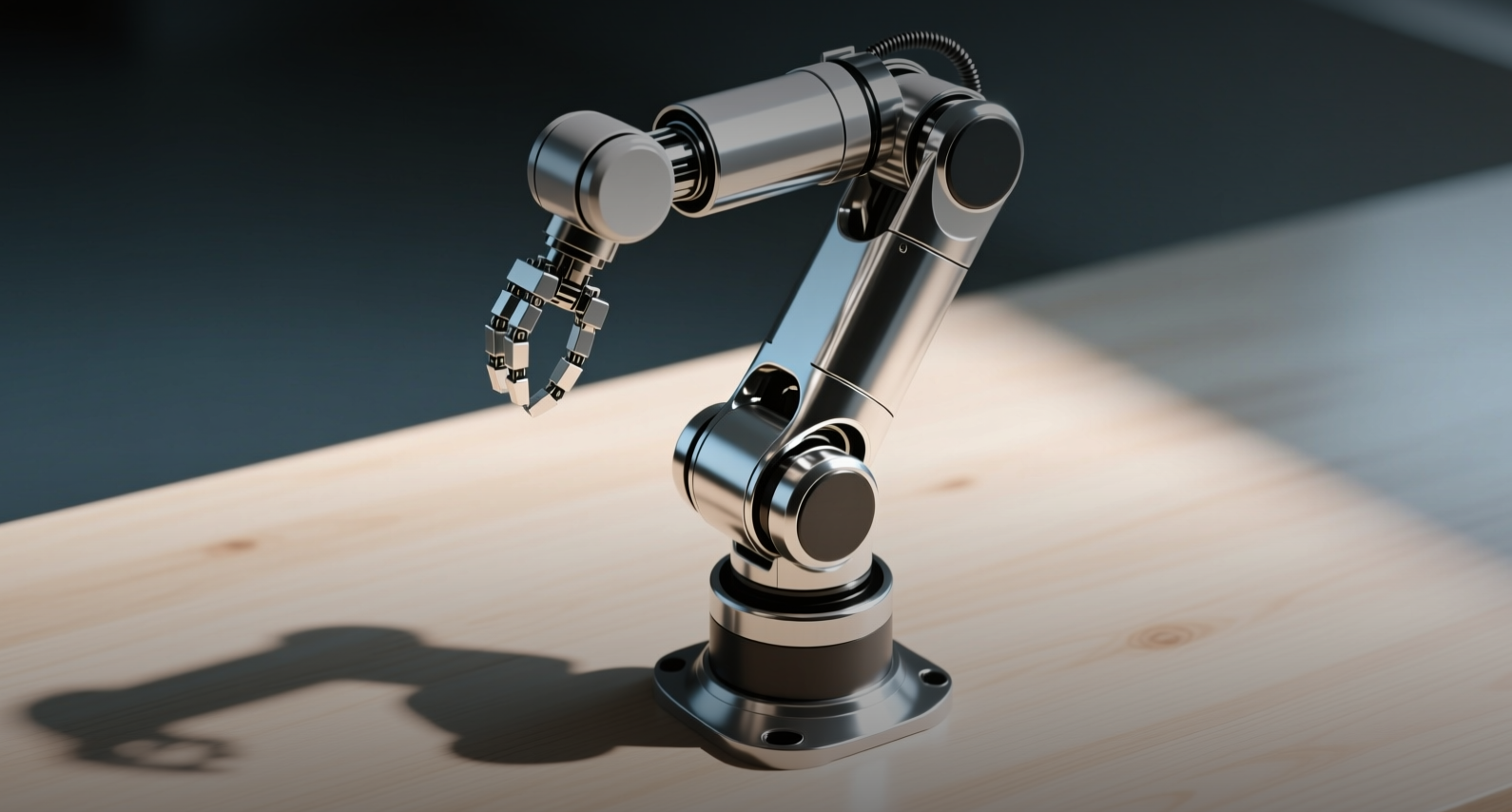
The partnership combines Tencent's Hunyuan large model with Wuwen Zhike's physical AI data foundation to accelerate embodied intelligence deployment.
Tencent Cloud has entered a strategic partnership with Wuwen Zhike to build physical AI infrastructure, joining a race to commercialize embodied intelligence that is drawing $300 billion in global AI spending.
"The two parties will jointly establish an integrated closed-loop infrastructure covering computing power and data for embodied intelligence," Tencent Cloud said, adding that the collaboration spans technology research, scenario deployment and industry partnerships.
Under the agreement, Tencent Cloud provides computing power and scenario-generation capabilities from its Hunyuan model family, while Wuwen Zhike contributes its "Wuyin" general physical AI data foundation and virtual-real closed-loop technologies. The partnership targets benchmark applications for embodied intelligence — AI systems that perceive, navigate and manipulate physical environments — and aims to accelerate large-scale commercialization in the AIGC sector.
The deal positions Tencent Cloud against a growing field of competitors racing to bridge digital AI and the physical world. Alibaba's Tongyi Lab recently launched the Qwen-Robot Suite, a three-model family for robot navigation, manipulation and world simulation that achieved a 76.5% success rate on the VLN-CE RxR benchmark. Nvidia has pledged $2 billion to expand AI manufacturing infrastructure through a partnership with Coherent in Texas. For Tencent, the partnership opens a new revenue stream in AI infrastructure services at a time when its core gaming and advertising businesses face slowing growth.
Physical AI's Data Infrastructure Challenge
The partnership addresses a bottleneck that has stalled many enterprise AI projects: the data layer. More than half of enterprise practitioners cite storage and networking constraints as their top AI limitation, and nearly two-thirds of organizations have not scaled AI beyond pilot programs despite significant investment, according to Garima Kapoor, co-CEO of object storage company MinIO. Wuwen Zhike's "Wuyin" data foundation is designed to solve this for physical AI — a category requiring processing structured data alongside unstructured inputs such as video, sensor streams and spatial logs. The company's virtual-real closed-loop technology allows AI systems to train in simulated environments before deploying in the physical world, a capability that Alibaba's Qwen-RobotWorld model also targets with its language-conditioned world modeling approach.
Rivals Race to Dominate Physical AI
Alibaba's Qwen-Robot suite was trained on 15.6 million navigation samples and roughly 38,100 hours of robotics and human-video data. The Qwen-RobotManip model currently leads the RoboChallenge Table30-v1 benchmark and outperforms previous approaches by 20%, according to Alibaba. In the US, Nvidia has positioned its AI factory concept as the infrastructure backbone for physical AI, with CEO Jensen Huang calling AI factories "the infrastructure of the new industrial revolution." The company's $2 billion partnership with Coherent in Sherman, Texas, aims to produce Indium Phosphide lasers that enable chip-to-chip data transmission at speeds required for real-time physical AI applications. The factory expansion is expected to create 1,000 jobs, with about 550 in advanced manufacturing and engineering roles.
For Tencent, the partnership with Wuwen Zhike represents a bet on embodied intelligence as the next growth frontier after large language models. AI infrastructure spending exceeded $300 billion in 2025, with storage and networking investments growing almost as quickly as compute, according to industry data from MinIO and Forbes. Companies that deliver end-to-end physical AI stacks — combining models, data infrastructure and deployment capabilities — stand to capture a disproportionate share of that spending. Tencent shares traded 0.447% lower in Hong Kong on the day of the announcement, reflecting a market still assessing the financial impact of the partnership, which did not disclose deal terms.
This article is for informational purposes only and does not constitute investment advice.