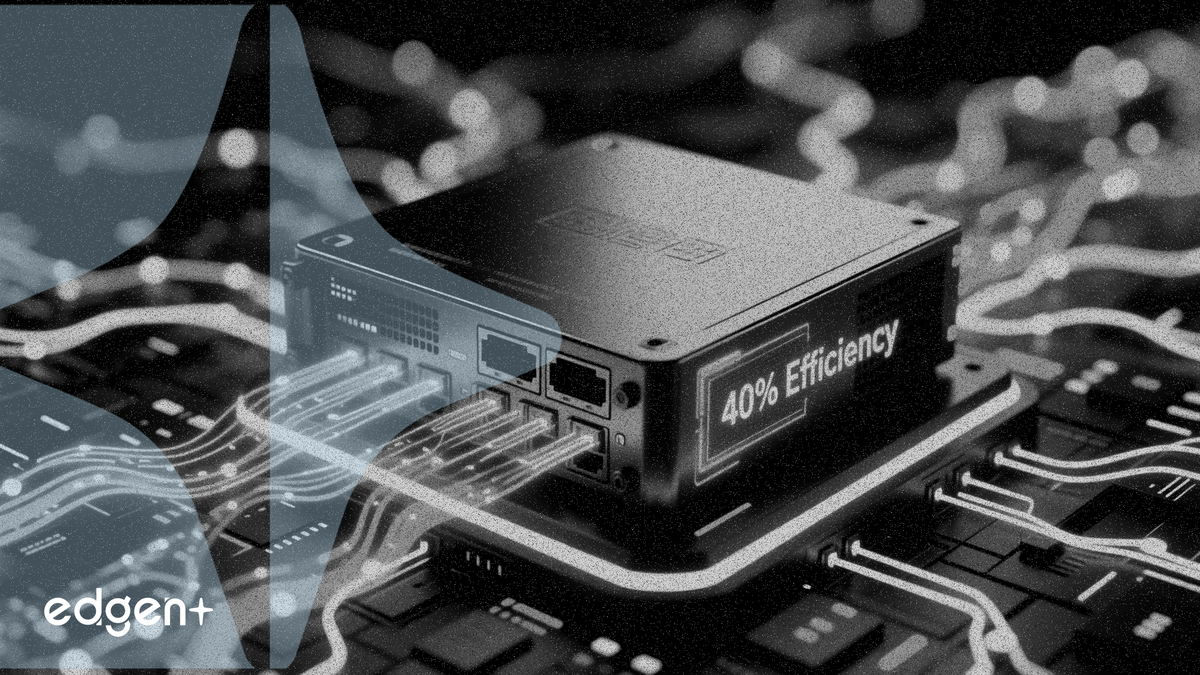
Supermicro is expanding its reach into the intelligent edge with a new family of compact AI systems claiming up to 40 percent better energy efficiency, a direct challenge to incumbents in the rapidly growing market for localized computing.
"These systems deliver data center-class performance in a footprint optimized for the edge, where space and power are at a premium," a Supermicro spokesperson said in a statement. "This closes the cost gap for deploying real-time AI across thousands of business-critical locations."
Announced on April 13, the new platforms are powered by AMD EPYC 4005 series processors. They are designed for business-critical workloads requiring real-time inferencing across retail, manufacturing, and healthcare environments. The company highlighted advanced security features, including TPM 2.0 and AMD SEV, to ensure secure and reliable operations. Availability and pricing for the new systems were not yet disclosed.
The launch positions Supermicro (NASDAQ: SMCI) to capitalize on the expanding edge AI market, which is driven by the need to process data locally rather than in centralized data centers. For investors, this signals a strategic push to diversify revenue and compete in a high-growth segment. The stock, already a major beneficiary of the AI server boom, could see further demand if these edge systems gain traction.
Competitive Landscape at the Edge
Supermicro's entry with AMD-powered systems introduces a new dynamic to the edge hardware market, which includes offerings from companies like Dell Technologies and Hewlett Packard Enterprise, as well as specialized solutions often powered by Nvidia GPUs. By opting for AMD's EPYC 4005 series, Supermicro is providing an alternative for customers seeking performance and energy efficiency outside the typical GPU-centric ecosystem for AI. This could appeal to enterprises looking to avoid vendor lock-in and control costs for large-scale deployments.
The move is significant for investors in both Supermicro and AMD. It strengthens Supermicro's portfolio and market position against competitors, potentially boosting its share of the edge computing market. For AMD, it represents a key design win, pushing its EPYC processors into a new, high-volume segment beyond traditional data centers. The success of these systems will depend on benchmark performance against established players and the speed of adoption in target industries.
This article is for informational purposes only and does not constitute investment advice.