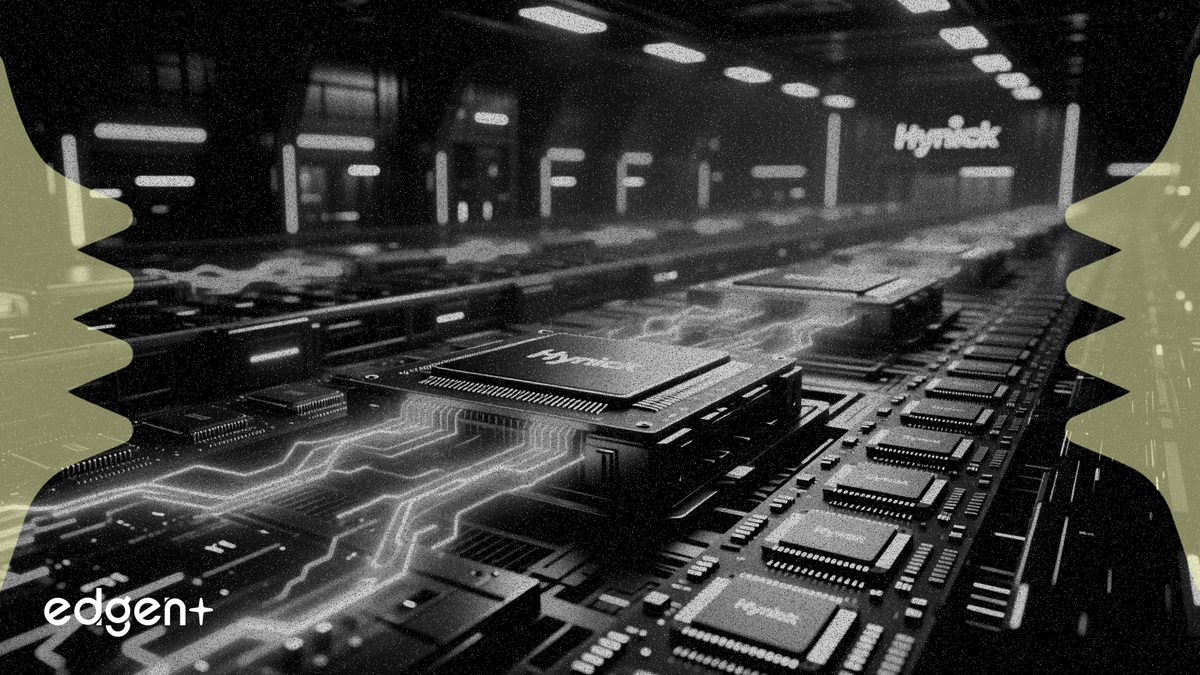
SK Hynix va investir 19 billions de wons (12,85 milliards de dollars) dans une nouvelle usine de fabrication sud-coréenne destinée au conditionnement avancé de puces, une réponse directe à l'explosion de la demande mondiale de mémoire IA et une initiative visant à consolider sa position face à des concurrents comme Samsung et Micron.
« La nouvelle usine de fabrication sera dédiée au conditionnement avancé, un processus essentiel pour la fabrication de produits de mémoire IA tels que les puces de mémoire à large bande passante (HBM) », a déclaré l'entreprise dans un communiqué mercredi.
Cet investissement, dont les travaux débutent ce mois-ci, souligne le rôle critique du conditionnement avancé dans la production de puces HBM, essentielles pour l'entraînement et l'exécution de modèles d'intelligence artificielle. SK Hynix, fournisseur clé du géant de l'IA Nvidia, a vu la demande pour ses puces HBM monter en flèche, ce qui a incité à une accélération de ses plans d'expansion de capacité annoncés plus tôt cette année.
Cette initiative intensifie la rivalité mondiale dans les semi-conducteurs, où la domination du matériel d'IA est primordiale. Alors que des nations comme l'Inde lancent des missions ambitieuses dans les semi-conducteurs, comme le projet « ISM 2.0 » de 15 milliards de dollars, l'investissement de SK Hynix est à la fois défensif et offensif pour sécuriser sa chaîne d'approvisionnement et s'emparer d'une plus grande part du marché à forte marge des accélérateurs d'IA, qui devrait croître de manière significative.
La course à la domination de l'HBM
La mémoire à large bande passante est devenue un goulot d'étranglement critique dans la production d'accélérateurs d'IA. L'HBM empile les puces mémoire verticalement, permettant un transfert de données plus rapide et une consommation d'énergie plus faible par rapport à la mémoire traditionnelle. Cela la rend indispensable pour les puissants GPU conçus par Nvidia, qui dominent le marché de l'entraînement d'IA. Le conditionnement avancé est la technologie qui rend possible cet empilement vertical.
La décision de SK Hynix d'injecter près de 13 milliards de dollars dans une installation de conditionnement dédiée souligne l'importance stratégique de cette étape de fabrication. En contrôlant une plus grande partie du processus de production de l'HBM, l'entreprise peut mieux protéger sa technologie et assurer un approvisionnement stable à ses clients clés.
La course aux armements mondiale des semi-conducteurs
Cet investissement reflète également une tendance géopolitique plus large. Les gouvernements du monde entier poussent à la relocalisation de la production de semi-conducteurs pour réduire la dépendance vis-à-vis de quelques pôles concentrés. La Corée du Sud est déjà une puissance des semi-conducteurs, et cette nouvelle usine, ainsi que les efforts pour développer un pôle dans la province de Gangwon, renforce sa position.
Pendant ce temps, les autres nations ne restent pas immobiles. L'Inde s'apprête à lancer son « ISM 2.0 » étendu avec une enveloppe allant jusqu'à 15 milliards de dollars pour renforcer sa propre fabrication de puces, sa conception et ses chaînes d'approvisionnement. La poussée mondiale pour diversifier la fabrication de semi-conducteurs met la pression sur les leaders établis comme SK Hynix pour investir massivement afin de maintenir leur avance. Pour les investisseurs, l'initiative de SK Hynix signale une forte confiance dans la demande soutenue tirée par l'IA, mais laisse également présager un avenir de concurrence intense et capitalistique.
Cet article est à titre informatif uniquement et ne constitue pas un conseil en investissement.