

Seagate tire parti de sa technologie exclusive de disque HAMR pour capturer une part dominante de l'essor des centres de données IA, verrouillant des contrats jusqu'en 2027 et projetant une nouvelle ère de croissance structurelle.
Seagate tire parti de sa technologie exclusive de disque HAMR pour capturer une part dominante de l'essor des centres de données IA, verrouillant des contrats jusqu'en 2027 et projetant une nouvelle ère de croissance structurelle.
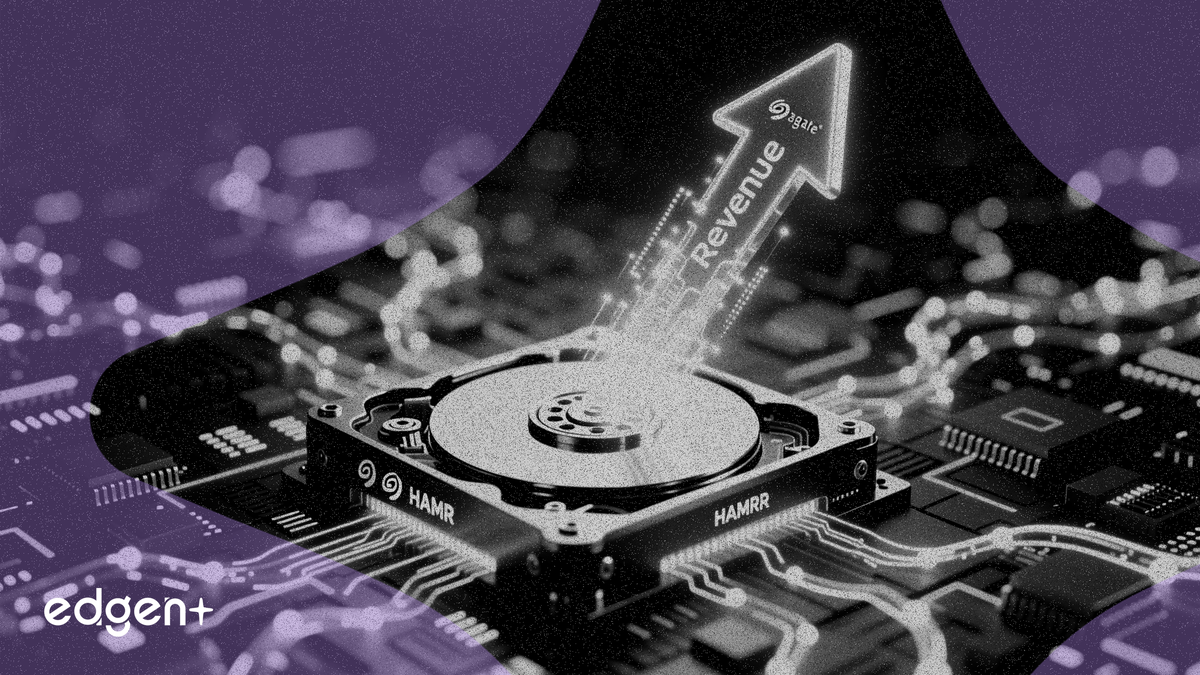
Seagate Technology a relevé ses prévisions de croissance annuelle des revenus à au moins 20 %, signalant que sa technologie de disque dur HAMR lui confère un avantage décisif en termes de coûts sur le marché des centres de données pilotés par l'IA, où son concurrent Western Digital n'a pas encore commercialisé de produit comparable. Ces perspectives ont fait bondir les actions de plus de 17 % lors des échanges avant-Bourse.
« Nous pensons que Seagate entre dans une nouvelle ère de croissance structurelle alors que les applications d'IA amplifient la création de données et soutiennent une demande de stockage soutenue », a déclaré le PDG Dave Mosley dans le communiqué de résultats. « Notre stratégie produit axée sur la densité surfacique nous permet de fournir un stockage de plus grande capacité, économe en énergie et en capital à grande échelle. »
La société de stockage a publié un chiffre d'affaires pour le troisième trimestre fiscal de 3,1 milliards de dollars et un BPA non-GAAP de 4,10 dollars, dépassant les estimations consensuelles de 2,94 milliards de dollars et 3,26 dollars, respectivement. Pour son quatrième trimestre, Seagate prévoit un chiffre d'affaires de 3,45 milliards de dollars avec un BPA attendu entre 4,80 et 5,20 dollars par action, pointant vers une dynamique soutenue.
Ces résultats, qui ont poussé les actions Seagate à un niveau record au-dessus de 680 dollars, renforcent une reprise structurelle pour l'industrie des disques durs. Avec des contrats de fabrication à la commande substantiellement verrouillés jusqu'en 2027, Seagate est positionné pour capturer des profits exceptionnels avant que Western Digital ne puisse produire en masse ses propres disques HAMR, une étape qui n'est pas attendue avant au moins 2028.
### Le moteur économique de la technologie HAMR
La clé de la performance de Seagate réside dans l'économie supérieure de sa technologie d'enregistrement magnétique assisté par la chaleur (HAMR). La société a atteint une marge brute non-GAAP record de 47,0 %, une expansion spectaculaire par rapport aux 36,2 % du même trimestre de l'année dernière. La marge brute incrémentale était de 71,6 %, ce qui signifie que près de 72 cents de chaque nouveau dollar de revenus se sont convertis directement en profit brut.
Cette expansion de la marge ne provient pas principalement de hausses de prix, mais d'efficacités de coûts. Les coûts par EB (exaoctet) ont chuté de 14,4 % en glissement annuel, tandis que les revenus par EB n'ont augmenté que de 5,4 %. Le HAMR permet à Seagate d'augmenter la capacité des disques de plus de 30 % — en livrant des disques de plus de 40 To — avec un changement minimal des coûts de matériaux, ce qui booste directement la rentabilité par unité. La direction s'est montrée confiante quant à la poursuite de cette tendance, alors que la feuille de route technologique s'étend à des disques de 50 To avec « Mozaic 5 » d'ici la fin de l'année civile 2027.
### Un fossé concurrentiel qui s'élargit
Le segment des centres de données, qui représente désormais 80 % de l'activité de Seagate, a vu ses revenus croître de 55 % en glissement annuel pour atteindre environ 2,5 milliards de dollars. Cette croissance des revenus a nettement dépassé l'augmentation de 47 % des exaoctets livrés, soulignant le bénéfice financier d'un mix produit plus riche.
Cette performance contraste avec celle de son principal rival Western Digital (WDC), dont les revenus des centres de données ont augmenté plus lentement, de 25 %, au cours de son dernier trimestre. WDC s'appuie actuellement sur la technologie ePMR, qui plafonne à 28 To, ce qui le place dans une position de désavantage significatif en termes de densité et de coût par téraoctet. Bien que WDC ait prévu une marge brute solide de 47-48 % pour son prochain trimestre, montrant la force générale de l'industrie, l'avance technologique de Seagate avec le HAMR offre une fenêtre concurrentielle d'au moins 12 à 18 mois.
Cette solide performance a permis à Seagate d'assainir rapidement son bilan. La société a généré près de 1 milliard de dollars de flux de trésorerie disponible, remboursé 641 millions de dollars de dette et vu son levier net tomber à seulement 0,7x. Fitch a récemment relevé la note de crédit de la société à la catégorie investissement. Ses objectifs de bilan étant presque atteints, la direction a signalé un pivot vers le retour de capital aux actionnaires par le biais de rachats d'actions.
Cet article est fourni à titre informatif uniquement et ne constitue pas un conseil en investissement.
