


Key Takeaways:
- SanDisk revenue surged 251% to $5.95 billion on AI flash demand
- Seagate free cash flow nearly quadrupled to $953 million
- Both stocks fell 19%-23% in the past month as expectations ran high
Key Takeaways:
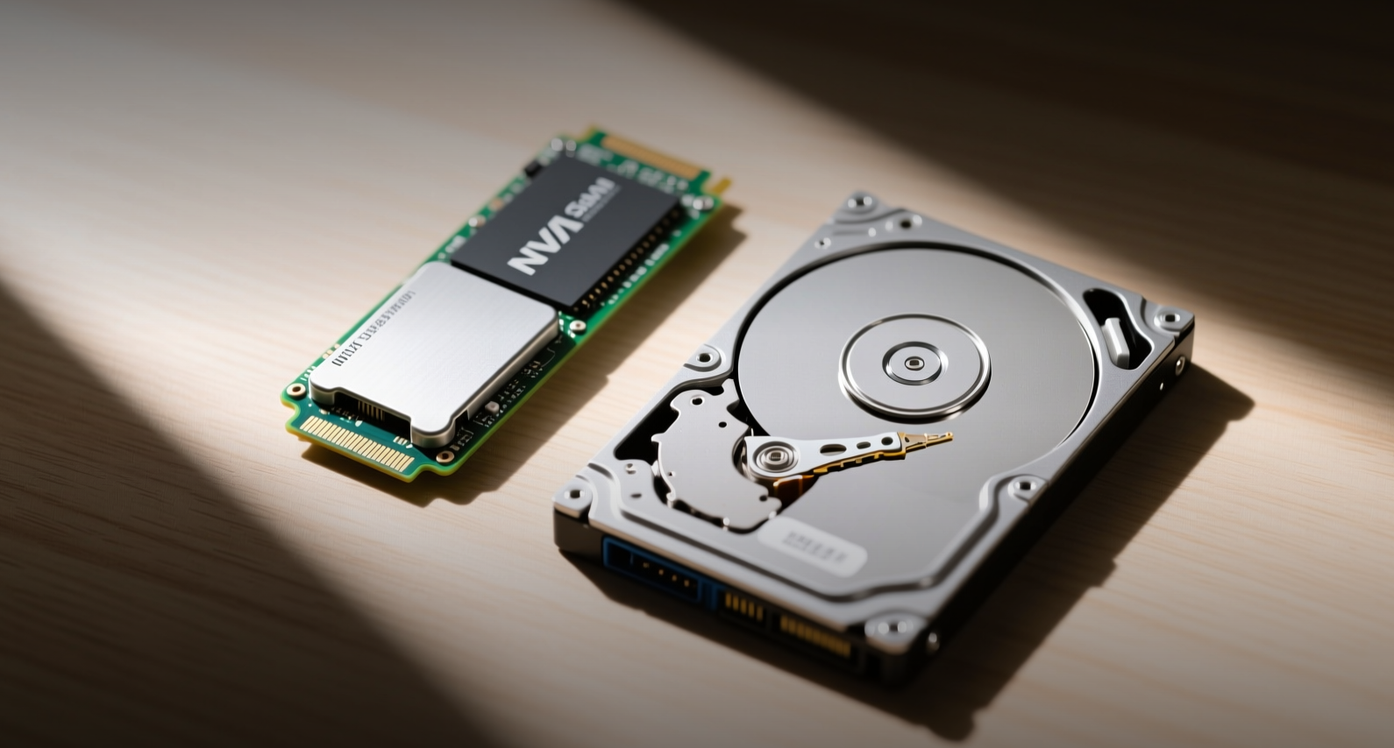
The AI storage boom is creating two distinct winners — one selling speed, the other selling scale — and their diverging financial profiles show which strategy carries more risk.
SanDisk's revenue surged 251% to $5.95 billion and Seagate's free cash flow nearly quadrupled to $953 million in the March quarter, with both companies crediting AI data creation as the primary growth engine.
"This is a fundamental inflection point tied to BiCS8 flash and High Bandwidth Flash for AI inference," SanDisk Chief Executive Officer David Goeckeler said. Seagate CEO Dave Mosley described the quarter as "a new era of structural growth as AI applications amplify data creation."
SanDisk's datacenter revenue jumped 645% year over year to $1.467 billion, while gross margins swung to 78.4% from 22.5% a year ago — a move that reflects scarce NAND pricing in a market where supply has not kept pace with hyperscaler demand. Seagate posted non-GAAP gross margins of 47%, with nearline capacity committed through mid-calendar 2026, a level of visibility rare in the hard disk drive industry.
The divergence highlights how AI storage is splitting into two supply chains: NAND flash for high-speed inference workloads and nearline HDDs for cheap exabyte-scale archiving. SanDisk trades at roughly 60 times earnings, pricing in sustained NAND scarcity, while Seagate's 47% gross margins offer durability but slower growth — leaving investors to weigh which model holds up as capacity catches up with demand.
SanDisk is locking hyperscalers into five New Business Model agreements with firm financial commitments, attempting to convert a historically brutal commodity cycle into something resembling subscription revenue. The company carries zero long-term debt but remains exposed to NAND pricing swings and its reliance on Kioxia for flash wafer supply.
Seagate is taking the opposite approach, leaning on decades of areal density expertise through its Mozaic HAMR platform, now qualified with five of the world's largest cloud customers. The company's build-to-order model means capacity is spoken for before it ships, but HDD cyclicality and tariff exposure remain risks. Cantor Fitzgerald recently raised its price target on SanDisk to $1,000 from $800, maintaining an overweight rating, while Bernstein lifted its target to $1,250 from $1,000, citing NAND pricing that continues to "surprise to the upside."
Both stocks have pulled back sharply — SanDisk down 23% and Seagate off 19% over the past month — suggesting elevated expectations were already baked into prices after a year of AI-driven gains. SanDisk's 60x P/E multiple demands continued NAND pricing acceleration, while Seagate's debt paydown and free cash flow generation of $953 million provide a buffer against cyclical downturns.
For investors, the choice comes down to speed versus durability. SanDisk offers explosive growth tied to NAND scarcity that could reverse as supply normalizes. Seagate offers structural demand for cheap storage with margins that have proven resilient. Both benefit from the same AI data creation wave, but they are fundamentally different bets on how that wave will be stored — and the market is still pricing in both outcomes.
This article is for informational purposes only and does not constitute investment advice.
