

Key Takeaways: Salesforce is betting its 27 years of CRM data, not its interface, is the moat that survives AI agents.
Key Takeaways: Salesforce is betting its 27 years of CRM data, not its interface, is the moat that survives AI agents.
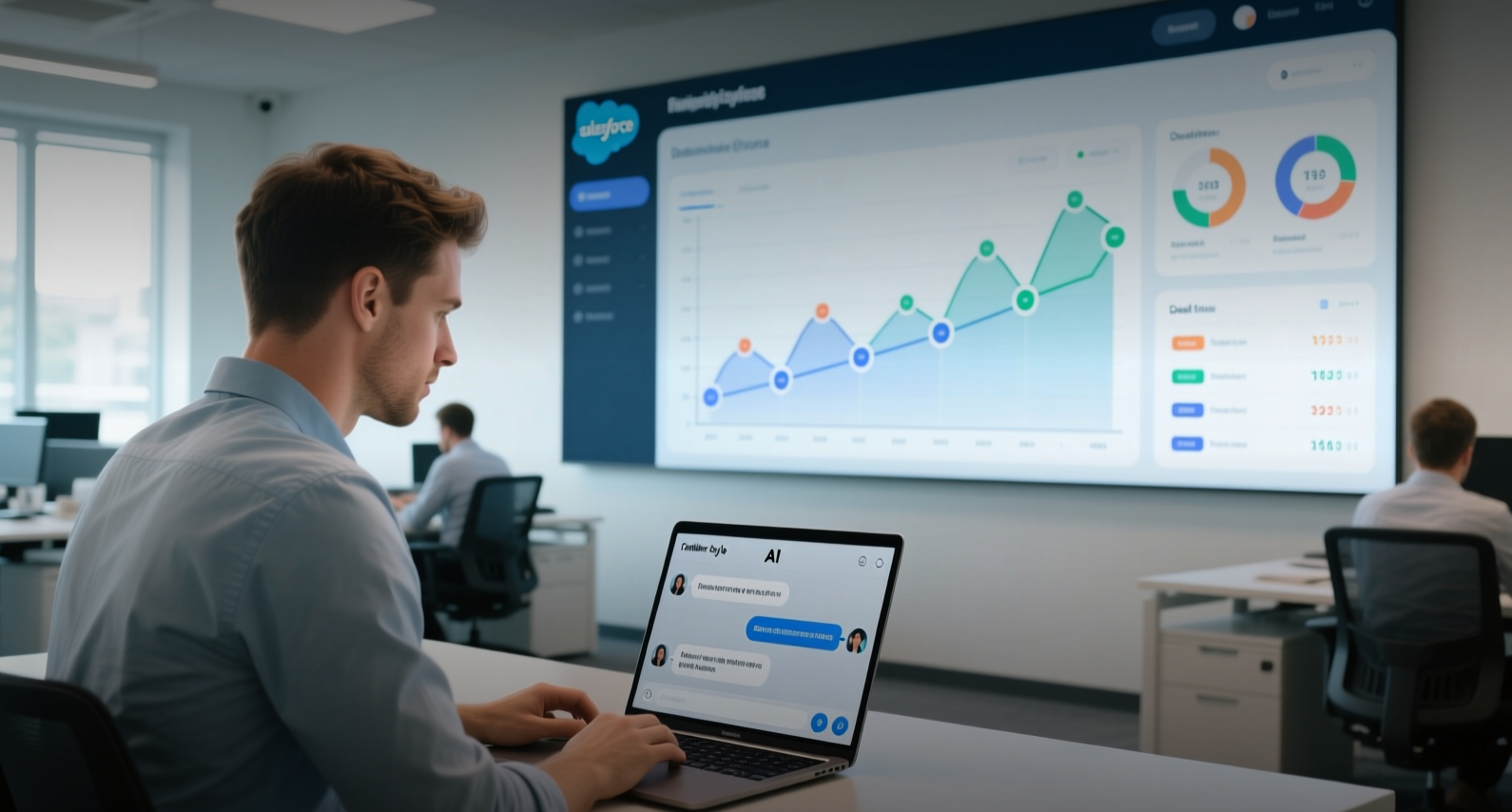
Salesforce is putting its entire CRM inside Anthropic's Claude, betting that 27 years of accumulated data — not its interface — is the moat that survives AI agents.
"Probabilistic intelligence alone doesn't run a company, and deterministic systems don't reason. By fusing Claude's extraordinary reasoning with the trusted data, workflows, and governance every enterprise runs on, we're delivering a dynamic interface that thinks, reasons, and acts," Marc Benioff, chair and CEO of Salesforce, said.
The plugin, called Salesforce in Claude, ships with 37 prebuilt sales skills covering meeting preparation, deal health reviews, and pipeline analysis. It is available to pilot customers now, with an open beta planned for September and additional skills for service, marketing, and commerce later this year. The launch follows Salesforce's March release of Headless 360, a set of APIs and MCP servers that let agents call Salesforce data directly.
Salesforce shares rose 12% in extended trading Wednesday after the company reported fiscal second-quarter results that beat expectations, alongside the partnership news. The stock is still down about 22% this year after dropping 20% in 2025, as investors weigh whether AI tools from Anthropic and OpenAI will replace traditional SaaS. Anthropic's annualized revenue run rate hit $65 billion at the end of July, a sevenfold increase from a year earlier.
The strategic tension at the heart of the deal is obvious: if sellers live in Claude instead of Salesforce, does the CRM become less important? Patrick Stokes, president of applications and marketing at Salesforce, rejects the premise. "The value of Salesforce is not in our UI itself. It's not the application. The value of Salesforce is in the data and the metadata, the years worth of encoded workflows and business practices that have been built up inside of Salesforce," he told VentureBeat.
He offered a concrete example of the productivity math. A seller's morning ritual — deciding which opportunities to work — traditionally means opening an opportunities list, clicking into each record, and synthesizing everything mentally. "That process of evaluating all of those records and synthesizing it and coming up with a plan is like 10,000 clicks inside of Salesforce," Stokes said. "Now you just go to Claude and it's going to execute all of that for you, and it's going to do it in like 30 seconds."
Salesforce charges for the new usage through its headless consumption pricing, which ties incremental access to API calls under a user's license edition. Customers separately contract with Anthropic for the Claude inference itself. That two-invoice structure points to a broader shift in enterprise software economics from seats to consumption — if agents become the primary consumers of SaaS functionality, per-user licensing loses coherence.
The partnership extends well beyond the plugin. Claude is now the default model across Slack, powering Slackbot, the Claude Tag feature, and the new Slack Code product. Salesforce says 83% of its workforce uses Claude-powered Slackbot, saving what it claims is 3.8 million productivity hours annually. Slackbot has driven 8.1 million hours of annualized productivity gains, up more than double quarter over quarter, according to the companies.
The deepening ties follow Salesforce's roughly $5 billion investment in Anthropic, reported by Bloomberg in June. Claude is also available in Agentforce, Salesforce's agent platform, serving as a reasoning model for the Atlas Reasoning Engine and powering Agentforce Vibes and Agentforce Coworker by default. Through Amazon Bedrock, Claude runs within the Salesforce Trust Boundary, letting regulated customers deploy domain-specific AI while keeping data secure.
The deal gives Anthropic distribution into the daily workflow of millions of sellers at companies that already trust Salesforce with sensitive commercial data. It also delivers token consumption. "Once you start using this, you get very excited and you start to see how it can improve your day," Stokes said. "And yes, that is going to drive token consumption, which is obviously part of the reason why Anthropic is excited about this as well."
The bet carries real risks. If the interface layer commoditizes, pricing power could migrate toward whoever owns the intelligence — and Anthropic, not Salesforce, owns Claude. The consumption-pricing transition could cannibalize seat revenue faster than API calls replace it. Gartner forecast worldwide end-user spending on generative AI models at $14.2 billion for 2025, yet McKinsey's State of AI research has repeatedly found that most organizations still struggle to translate pilots into measurable bottom-line impact. Whether Claudeforce closes that gap will play out as the beta opens in September and skills expand beyond sales.
This article is for informational purposes only and does not constitute investment advice.
