


Walmart, e.l.f. Beauty and Tractor Supply are funneling Supreme Court-ordered tariff refunds into lower shelf prices as stretched shoppers pull back.
Walmart, e.l.f. Beauty and Tractor Supply are funneling Supreme Court-ordered tariff refunds into lower shelf prices as stretched shoppers pull back.
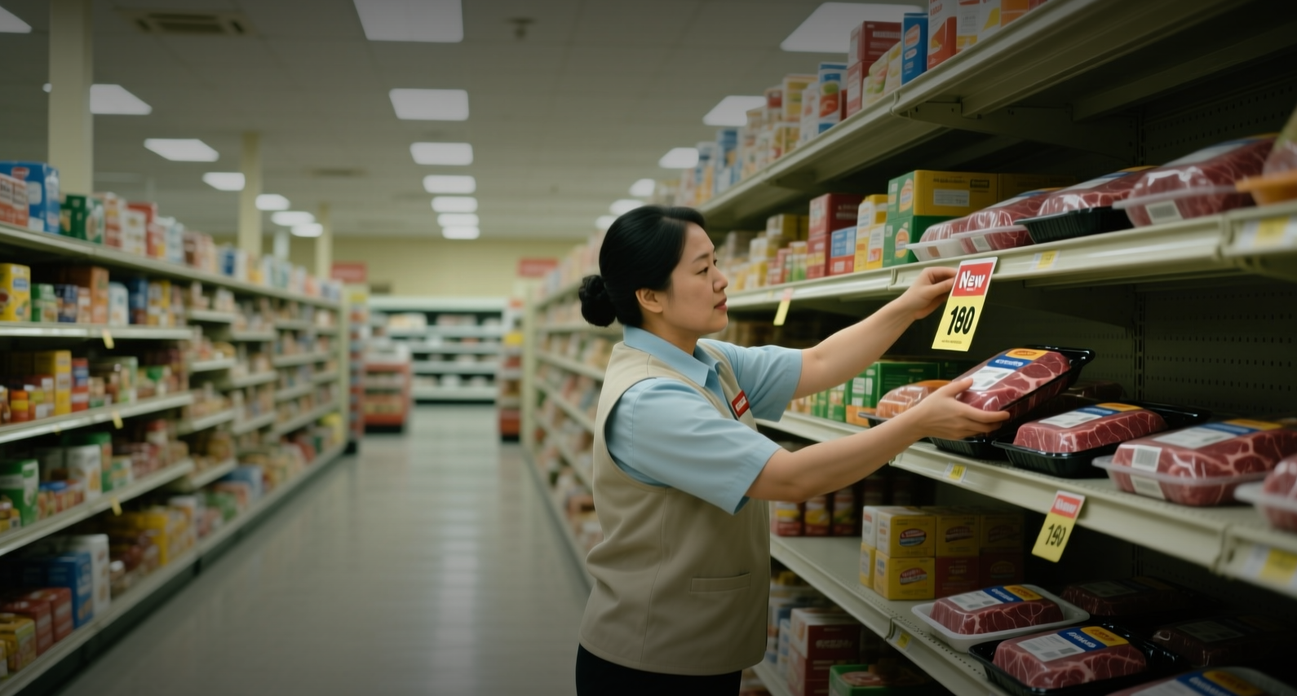
Walmart, e.l.f. Beauty and Tractor Supply are directing more than $160 billion in Supreme Court-ordered tariff refunds toward price cuts, betting lower shelf prices will revive demand from inflation-fatigued shoppers.
"How does a consumer know that the price went down commensurate with the level of rebate?" said Bryan Eshelman, managing director in the retail practice at AlixPartners.
Walmart said it rolled back prices on 11,000 items, including ground beef, using roughly $2.9 billion in refunds, with the impact hitting shelves in the current fiscal third quarter. E.l.f. Beauty, which received about $50 million, cut prices across roughly 10 percent of its catalog after a test that dropped the Halo Glow Skin Tint by $4 drove unit sales up close to 40 percent. Home Depot applied $685 million of its $730 million refund to reduce cost of goods sold, while Lowe's directed its $80 million toward shareholder returns and Kohl's put $100 million into gross margin.
The divergence reflects a broader reckoning for retailers: S&P 500 earnings per share surged 53 percent in the second quarter, the strongest in five years, but Walmart's same-store sales growth slowed to a six-year low and Dollar General's chief executive said its core customer "remains financially constrained." With refunds a one-time windfall, the price cuts set a higher bar for comparisons next year.
The refunds trace to a Supreme Court ruling in February that the International Emergency Economic Powers Act did not give President Donald Trump authority to impose the global tariffs, triggering more than $160 billion in repayments to importers. Apollo Global Management estimates the payments will contribute more than four percentage points to third-quarter economic growth, adding roughly 0.2 percentage points on top of the Atlanta Fed's 4 percent to 5 percent forecast.
Price Cuts vs. Margin Boosts
Retailers split sharply on how to deploy the windfall, a choice shaped by their price positioning. Value-driven operators used the cash to defend their low-price image. Tractor Supply channeled its refunds into shielding customers from freight and fuel cost increases, lowering prices on pine shavings and premium pet food rather than passing those expenses on, according to CFO Kurt Barton. Burlington Stores said it will reinvest all $55 million of its refunds into lower prices over the second half of its fiscal year, while TJX used its $331 million to benefit second-quarter cost of sales.
Others chose shareholders. Lowe's CEO Marvin Ellison told CNBC the company received roughly $80 million and did not plan to follow "any aggressive pricing action," preferring to deliver strong profitability. Target booked a $752 million boost to net earnings, or $1.65 per share, and a $994 million pretax benefit to gross margin and operating income, even as it lowered prices on more than 10,000 items. Kohl's CEO Michael Bender said the company put $100 million into gross margin and plans to invest the remainder in deeper inventory.
Eshelman said the calculus is complicated by record-keeping: tariff expenses were typically absorbed into broader cost structures rather than assigned to specific products, making it nearly impossible to determine what share of a refund corresponds to what a consumer paid. "It's not a simple task," he said.
A One-Time Windfall Sets a Higher Bar
The refunds skewed second-quarter comparisons in retailers' favor, but they also raise the hurdle for next year. "It's an unfair positive comparison to last year's quarter, and it's going to be an unfair negative comparison to next year's quarter," Eshelman said. "I think investors need to just, where it's material, make that adjustment in their expectations."
The timing is awkward. Walmart CFO John David Rainey said shoppers began making visible spending trade-offs in June as gas prices climbed above $4 a gallon, and the company's same-store sales growth fell to its lowest level in more than six years. Dollar General posted its fifth consecutive quarter of traffic growth with comparable sales up 3.5 percent, but CEO Todd Vasos said the core customer remains financially constrained. Gap reported declining sales, with Old Navy and Athleta dragging on performance.
For consumers, the price cuts may be hard to verify. "How does a consumer know what percentage of a price increase was tariff-related versus diesel or fuel related?" Eshelman said. Still, the tariff episode may push retailers toward more diverse and agile supply chains, and he said much of the calculus comes down to how retailers want their core customer to perceive them. "A lot of this is marketing," he said. "It's trying to create a price perception with consumers, which is an important part of any retailer's job."
This article is for informational purposes only and does not constitute investment advice.
