
Key Takeaways:
- Jerome Powell warned politicizing the Fed would destroy its credibility
- Kevin Warsh was confirmed as Fed chair in a 54-45 Senate vote
- A DOJ investigation into Fed renovations adds further institutional pressure
Key Takeaways:
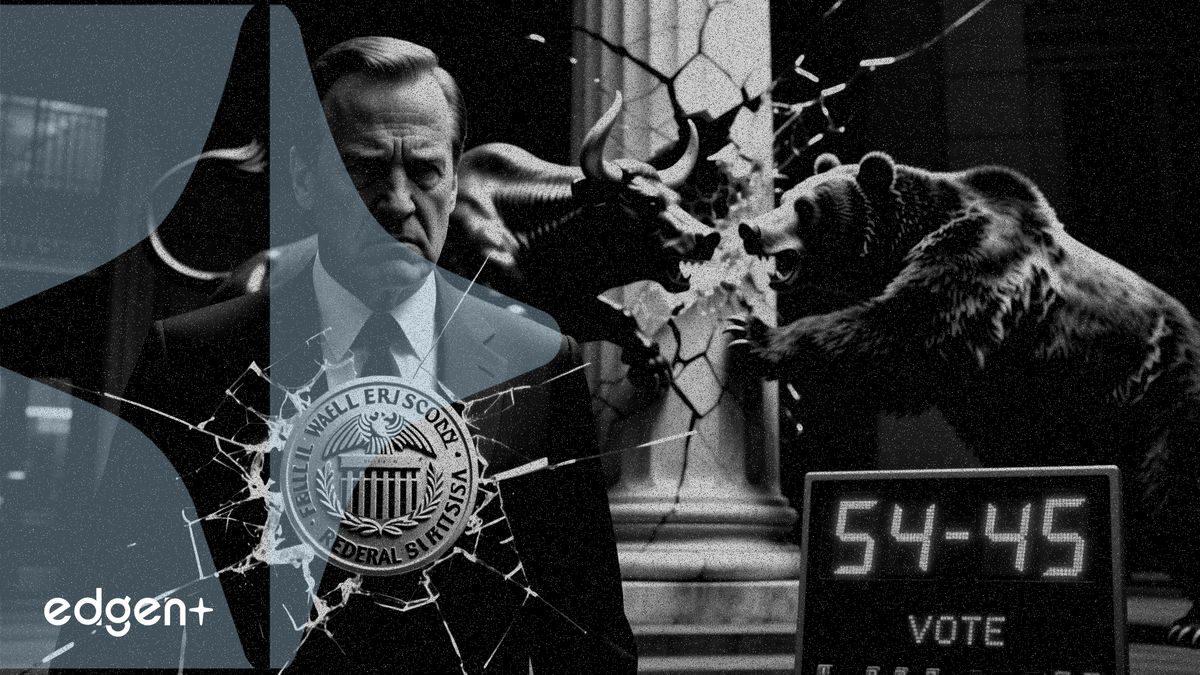
Jerome Powell used his first public remarks since leaving the Fed chair to warn that political interference in monetary policy would destroy the central bank's credibility.
The former Federal Reserve chair accepted the John F. Kennedy Profile in Courage Award on Sunday at the JFK Presidential Library and Museum in Boston, using the platform to deliver a pointed defense of institutional independence. Powell, who stepped down as chair on May 15 but remains a Fed governor, described the current political environment as a "stress test" for the central bank — not of its balance sheet, but of its institutional credibility.
"The Federal Reserve's independence is a priceless asset that must be protected," Powell said, according to prepared remarks. Removing central bank officials because they hold different policy views than the sitting administration "would erode the public trust that makes the central bank functional in the first place."
The speech came just over a week after Kevin Warsh was confirmed as Fed chair in a 54-45 Senate vote on May 22, a sharply partisan outcome that underscored the political polarization surrounding the institution. Powell's decision to remain on the Board of Governors — a break with convention, as former chairs typically resign — has fueled speculation about tensions between the old and new leadership.
A separate Department of Justice investigation into renovations at Federal Reserve buildings is also underway, adding another layer of scrutiny to an institution already navigating an unusually public political crossfire.
The stakes for monetary policy credibility
The fed funds rate has been held at its current level since the last adjustment, with markets pricing an uncertain path ahead. Powell's warning carries weight because the Fed's ability to manage inflation and employment independently — without regard to the electoral calendar — is the foundation of its global credibility. The last time a sitting administration openly pressured the Fed on rate policy was in 2018-2019, when then-President Donald Trump's public attacks on Powell preceded a series of rate cuts that some economists argued undermined the institution's perceived independence.
The current environment presents a different challenge. Warsh, a former Fed governor, inherits an institution where the previous chair remains on the board, a DOJ investigation is active, and political pressure points are multiplying. How he navigates these dynamics will determine whether the Fed's independence narrative holds or fractures.
What markets are watching
For bond and currency markets, the key question is whether political interference becomes priced into the term premium. If investors begin to discount the Fed's inflation-fighting credibility, long-term yields could rise as compensation for perceived policy uncertainty. The dollar, which has benefited from the Fed's relative hawkishness compared to other major central banks, could face headwinds if the independence premium erodes.
Powell's speech did not mention any specific administration or political figure by name. But the timing — his first major address since leaving the chair, delivered while accepting an award for political courage — was itself a signal. The subtext was unmistakable: the institutional norms that have protected Fed independence for decades are under strain, and the consequences of breaking them would be measured in higher borrowing costs, weaker currency, and diminished policy credibility.
The next Fed meeting under Warsh's leadership will be closely watched for any shift in tone or forward guidance that might confirm or allay the concerns Powell raised.
This article is for informational purposes only and does not constitute investment advice.
