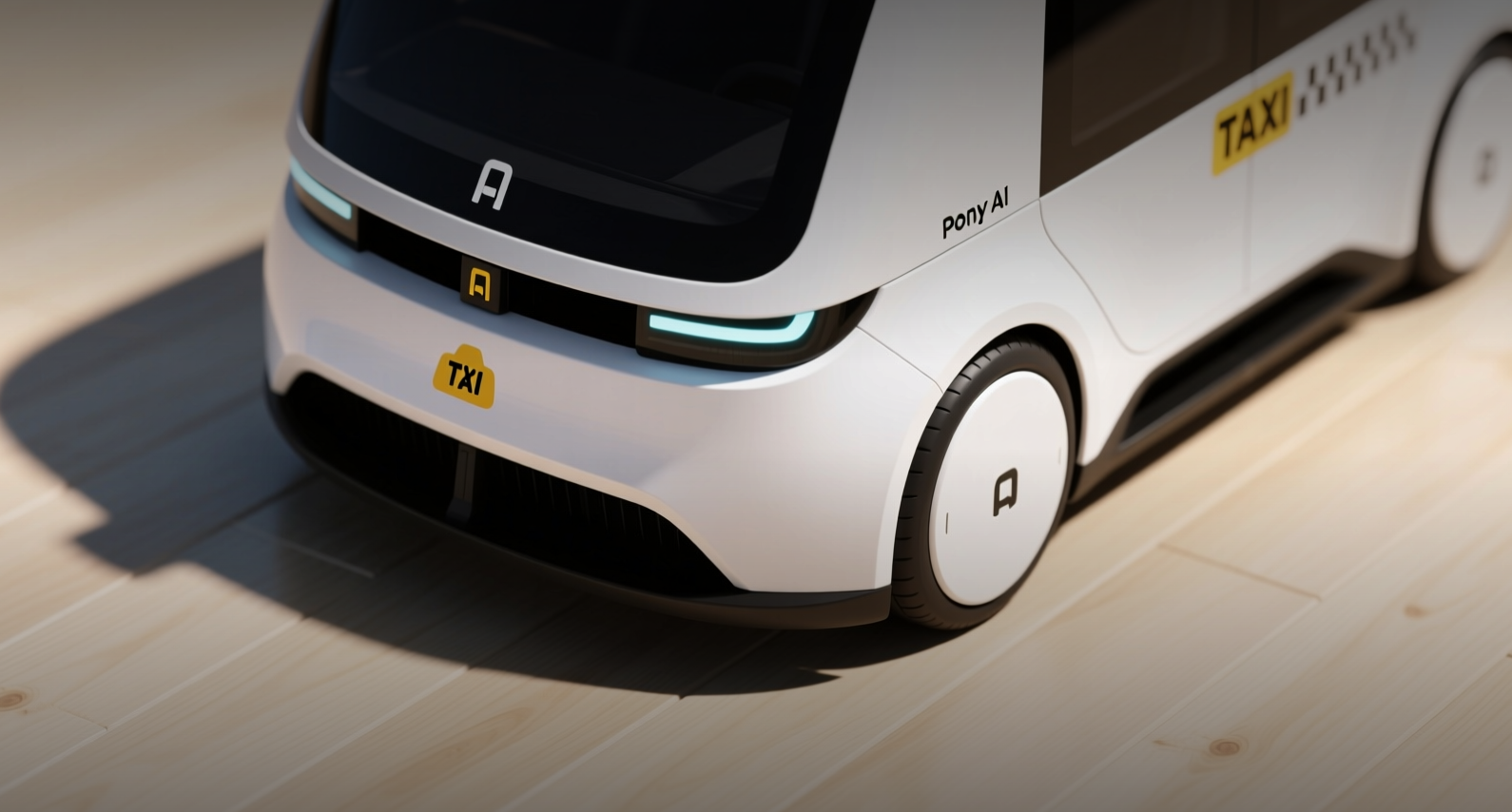
Pony AI's city-level break-even in two Chinese cities and tariff-proof supply chain give it an edge over Uber's partnership-driven autonomous strategy.
Pony AI has reached city-level unit economics break-even in Guangzhou and Shenzhen, while Uber's partnership model faces a widening gap in the race to commercialize robotaxis. The global robotaxi market, valued at $400 million in 2023, is projected to reach $45.7 billion by 2030, a compound annual growth rate of 91.8%, according to Markets and Markets.
"Pony AI's ability to achieve per-vehicle profitability in specific cities demonstrates that the unit economics can work at a local level before scaling nationally," the company said in its latest operational update. The Guangzhou-based autonomous driving firm hit the milestone in its home city in November 2025 and followed with Shenzhen in February 2026.
Pony AI's fleet stood at 1,446 vehicles as of late March 2026, with operations spanning Guangzhou's urban core, including the Haizhu District, Canton Tower and Pazhou business district. The company recently expanded its Singapore service with ComfortDelGro, allowing bookings through the Zig app in Punggol since June 22. Management targets operations in more than 20 cities worldwide by the end of 2026.
The contrast with Uber's approach is stark. Uber sold its self-driving division in 2020 and now relies on partnerships with WeRide, Amazon's Zoox and others to supply autonomous vehicles. It has committed more than $10 billion across 20-plus AV partnerships and targets 100,000 autonomous vehicles on its platform by 2027. But the asset-light model carries risk: if riders switch to first-party apps like Waymo or Pony AI, Uber's take rate goes to zero.
Why Pony AI's supply chain matters
Pony AI sources most of its components domestically, insulating it from the tariff uncertainties that could raise costs for US-based competitors. China's robotaxi market, where the company is a major participant, benefits from favorable government policies and a large addressable market. Baidu's Apollo Go, the country's largest robotaxi operator, delivered 3.2 million fully driverless rides in the first quarter of 2026, up more than 120% year over year, underscoring the scale of domestic demand.
Uber's path to large-scale commercialization faces regulatory hurdles. Compliance requirements could slow deployment timelines, and the widespread adoption of self-driving vehicles may eventually reduce the need for intermediary ride-hailing platforms. Uber shares carry a Zacks Rank #3 (Hold), while Pony AI ranks #2 (Buy).
Investment implications
Pony AI's domestic supply chain and early break-even milestones position it to capture a disproportionate share of China's robotaxi market, which Goldman Sachs Research estimates at roughly $61 billion by 2035. Uber's global ride-hailing network remains a formidable asset, but its reliance on third-party autonomy providers creates structural uncertainty. Both stocks have declined by double-digit percentages over the past year, though Pony AI's narrower losses and clearer path to profitability in its home market give it the stronger near-term narrative.
This article is for informational purposes only and does not constitute investment advice.