


The auto industry's earnings season laid bare a stark reality: selling pickup trucks to Americans is far more profitable than competing with Chinese EV makers in a world slowly going electric.
The auto industry's earnings season laid bare a stark reality: selling pickup trucks to Americans is far more profitable than competing with Chinese EV makers in a world slowly going electric.
The auto industry's earnings season laid bare a stark reality: selling pickup trucks to Americans is far more profitable than competing with Chinese EV makers in a world slowly going electric.
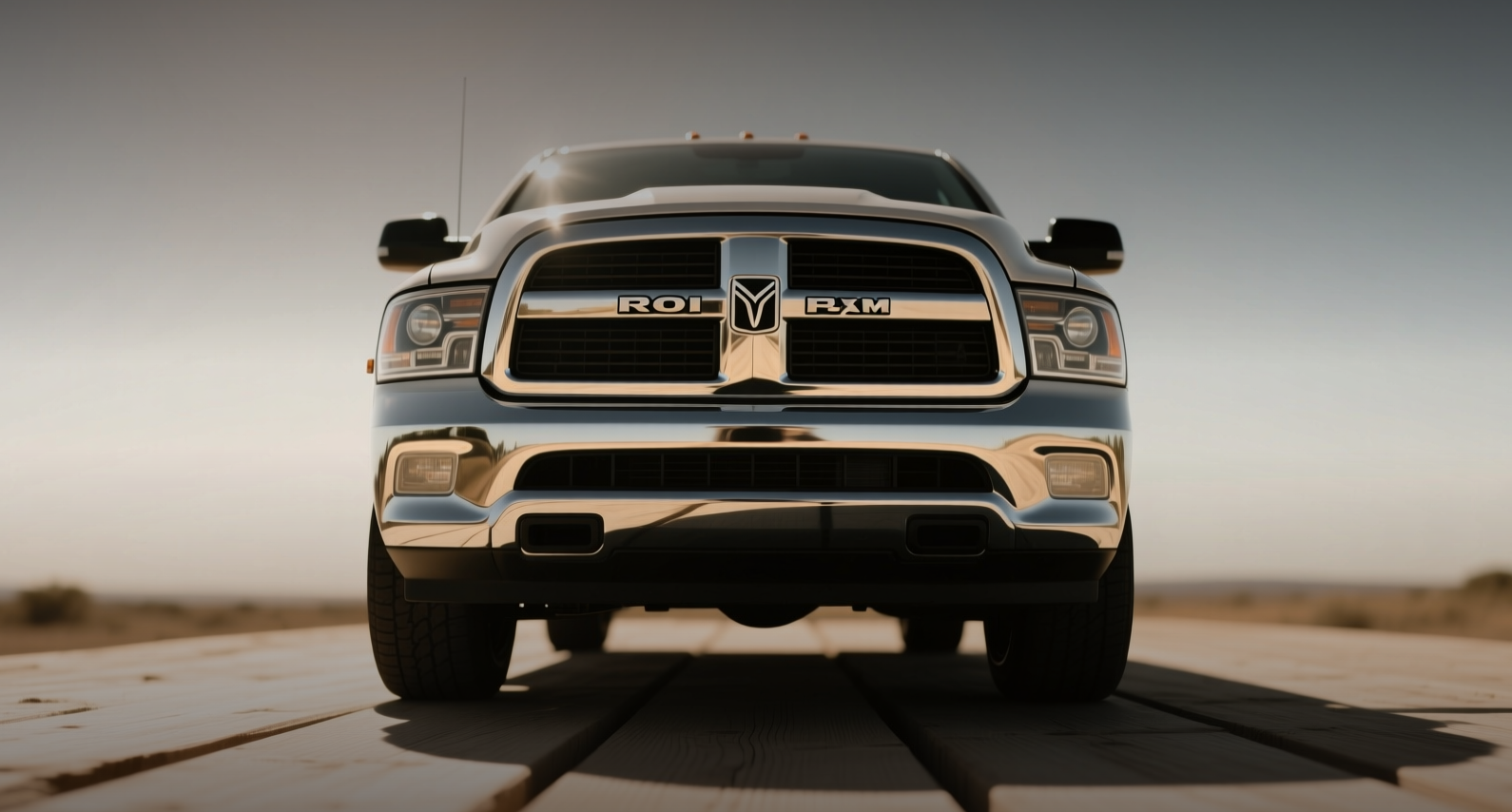
Stellantis swung to a €293 million net profit in the second quarter from a €1.87 billion loss a year earlier, powered by a 32% surge in North American revenue as Ram and Jeep pickup sales outpaced a shrinking U.S. market.
"The second quarter was marked by continued progress, led by North America," Chief Executive Antonio Filosa said. "We improved performance across our key financial metrics."
The automaker's North American adjusted operating income reached €284 million, reversing a €440 million loss, as U.S. sales rose 6% while the broader industry contracted 0.3%. Jeep Grand Wagoneer retail sales jumped 43% and Ram 1500 rose 9%. Stellantis' net revenues climbed 13% to €43.5 billion, with adjusted operating income surging 263% to €773 million.
The results highlight a widening gulf between automakers with dominant U.S. pickup truck franchises and those exposed to the EV transition, where Chinese competitors like BYD — which overtook Tesla as the global EV sales leader — are driving down prices and squeezing margins across Europe and Asia.
Renault's EV Push Shows the Pressure on European Margins
Renault swung to a €700 million net profit in the first half from an €11.18 billion loss, with fully electric vehicle sales jumping 47.6% — one in every five vehicles it sold was electric. But its operating margin narrowed to 5.2% from 6%, and the French carmaker confirmed its 2026 target of 5.5%, down from 6.3% in 2025. Revenue rose 9.4% to €30.25 billion, beating analyst expectations of €29.4 billion.
"Our first-half results confirm that our strategic model works, even in a complex environment," Chief Executive Francois Provost said. The company is relying on partnerships with China's Geely in markets like Latin America and South Korea to spread development costs.
The Divergence Has Investment Implications
The contrast between Stellantis' North American recovery and the margin compression at European automakers signals a structural shift. Stellantis' North America segment generated €284 million in AOI on €18.2 billion in revenue — a 1.6% margin that, while thin, represents a 480 basis point improvement from a year ago. In Enlarged Europe, the company posted a €94 million loss.
BMW reported a second-quarter earnings slump and announced job cuts, while Toyota's first-half global output and sales fell for the first time in two years on China weakness. Lamborghini's operating profit also declined as geopolitical turmoil shook the luxury car sector.
For investors, the takeaway is clear: automakers with dominant U.S. pickup truck franchises — Ford, General Motors, and Stellantis — are better positioned to fund their EV transitions through ICE profits than European peers facing Chinese competition on their home turf. Stellantis confirmed its 2026 financial guidance, including mid-single-digit percentage revenue growth and positive industrial free cash flows by 2027.
This article is for informational purposes only and does not constitute investment advice.
