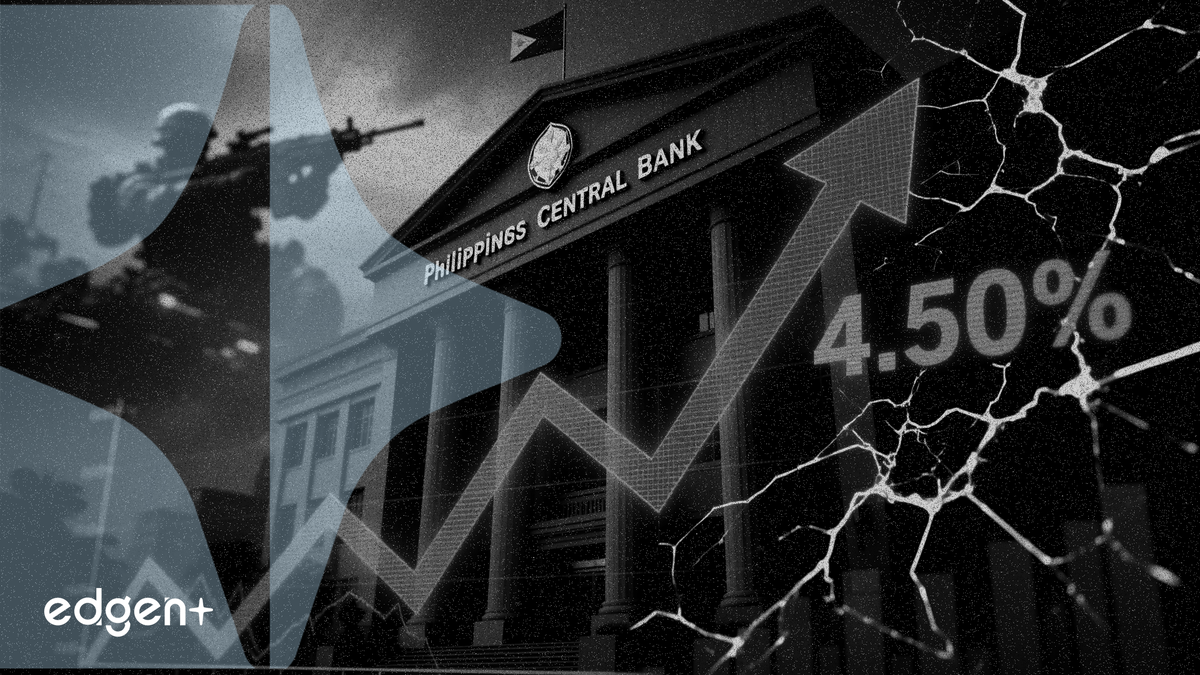
The Bangko Sentral ng Pilipinas unexpectedly raised its key interest rate by 25 basis points to 4.50% on Thursday, a preemptive strike against rising inflation risks as the Middle East conflict threatens to drive up global energy and food prices.
"After considering its options, the Monetary Board deemed it necessary to take timely and preemptive policy action to safeguard price stability,” the BSP said in a statement. The move, which surprised 10 of 14 economists in a Wall Street Journal poll who expected a hold, lifts the overnight reverse repurchase rate from 4.25%. The benchmark lending rate was also increased to 5.00% from 4.75%.
The central bank said its inflation outlook has worsened, with projections now showing average headline inflation is likely to exceed the 4.0% ceiling in 2026 and 2027. The primary driver is the disruption to oil and gas shipments through the Strait of Hormuz, which has raised concerns about a spillover from higher energy costs into local fuel and food prices. Core inflation is also rising, pointing to broader price pressures.
“I think it’s fairly safe to say [that the easing cycle] is over,” BSP Gov. Eli Remolona said at a press conference. He signaled a sequence of moves may be necessary, stating, “Once we start raising the policy rate, we’re likely to raise it again. That’s a better strategy than raising it just one time and making a big hike instead of a small hike.”
Domino Effects Feared
The decision highlights a growing dilemma for Asian central banks: tighten policy to curb imported inflation at the risk of slowing fragile economic growth, or wait and risk inflation becoming entrenched. So far, only Singapore and Australia have tightened policy since the conflict began, with most regional peers holding steady.
The BSP is particularly wary of energy shocks spilling over into food prices, a dynamic seen during the 2022 energy crisis. “These domino effects should not be ignored,” said HSBC economist Aris Dacanay, who warned the oil shock could turn into a food inflation shock.
Policymakers acknowledged the risks to the domestic economy, which was hit by a confidence-damaging scandal last year. At an off-cycle meeting in late March, officials noted that a rate hike could slow the recovery. However, the central bank’s mandate is focused on inflation, and the latest data prompted the preemptive action.
“We thought we’re heading for calm seas, but a storm hit, and now we feel that just monetary policy may not be enough, because we’re so vulnerable to oil price hikes,” Remolona said.
Some analysts believe the tightening may be short-lived if geopolitical tensions ease. Capital Economics noted that if the war ends soon, “concerns about the inflation outlook will probably dissipate and they would probably shift their attention back to bolstering economic growth.”
The BSP said it will remain data-dependent and “stands ready to take all necessary monetary actions” to bring inflation back toward its 3.0% target.
This article is for informational purposes only and does not constitute investment advice.