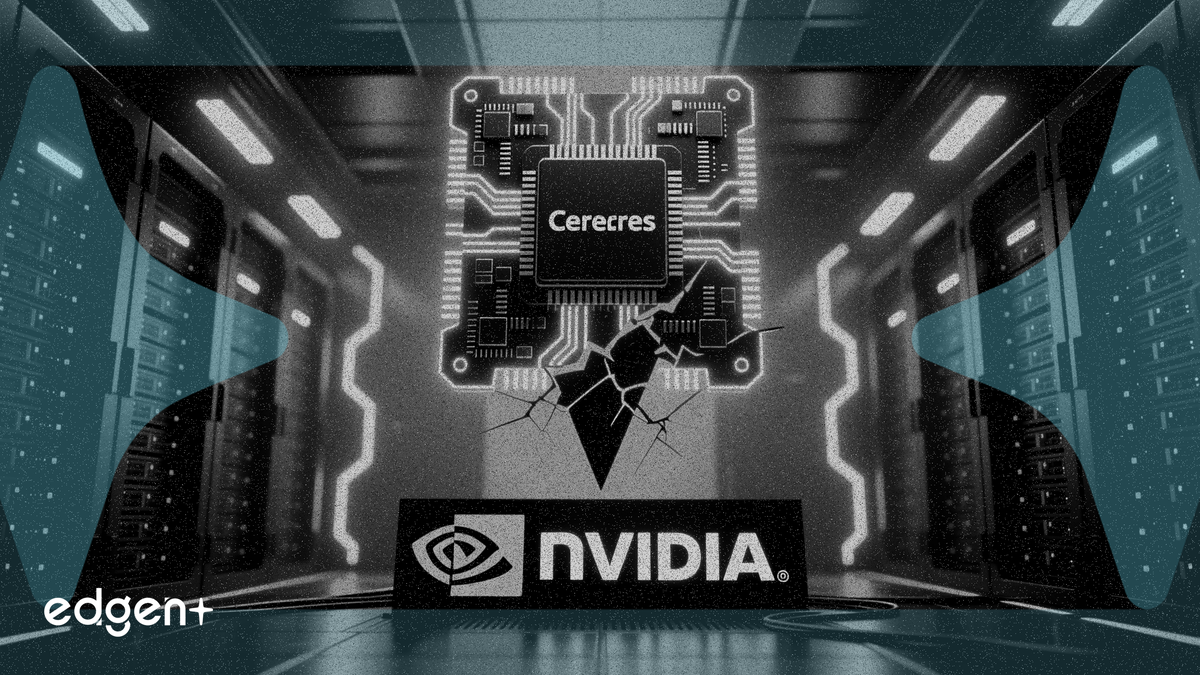
OpenAI’s agreement to spend more than $20 billion on hardware from chip startup Cerebras represents one of the most significant challenges yet to Nvidia’s dominance in the AI sector, a deal that could reshape the landscape for specialized processors. The three-year deal for servers powered by Cerebras chips provides a massive validation for the smaller firm and signals that top AI labs are aggressively financing the development of large-scale alternatives to Nvidia's hardware.
The deal was first reported by The Information on April 16, 2026, citing sources familiar with the matter. While neither OpenAI nor Cerebras have publicly commented, the scale of the investment underscores a strategic push to diversify the supply chain for essential AI infrastructure.
Under the terms of the agreement, OpenAI will pay Cerebras more than $20 billion over three years to access its chip-powered servers. The deal also includes a provision for OpenAI to receive an equity stake in Cerebras, creating a powerful alignment of interests between the AI developer and the hardware maker.
This partnership is set to pressure Nvidia's near-monopoly on the AI chip market, which has seen its valuation soar to over $2 trillion. For investors, the deal highlights a growing trend of de-risking and could temper long-term growth expectations for Nvidia, while providing a major boost to Cerebras and other alternative chip architects like Groq and SambaNova Systems.
A Direct Challenge to the GPU King
Cerebras has long differentiated itself by producing wafer-scale chips, with its Wafer Scale Engine 3 (WSE-3) boasting 4 trillion transistors and 900,000 AI-optimized cores. This design contrasts with Nvidia's approach of linking together thousands of smaller GPUs, such as the H100 or B200, to create a supercomputer. Cerebras argues its architecture can train large AI models more efficiently and with less programming complexity.
The OpenAI deal provides Cerebras with a foundational, large-scale customer that can utilize its technology to the fullest. It also gives the startup a stable revenue stream and the resources to accelerate its research and development, potentially closing the performance gap with Nvidia's next-generation products.
Implications for the AI Supply Chain
The move by OpenAI, a leader in large language model development, is a clear signal that the industry is actively seeking to reduce its dependence on a single supplier. This could encourage other major AI labs and cloud providers, such as Google, Meta, and Microsoft, to further accelerate their own internal chip development projects or sign similar deals with other Nvidia competitors.
For Nvidia, while the immediate financial impact is negligible relative to its massive data center revenue, the strategic threat is significant. The company's stock, which trades at a high multiple, is priced for continued overwhelming market dominance. The Cerebras deal demonstrates that the moat is not insurmountable, potentially leading to increased competition and pricing pressure in the coming years. The development may also affect the stock of key Nvidia supplier TSMC, which handles the manufacturing of its advanced chips.
This article is for informational purposes only and does not constitute investment advice.