

A pair of $20 billion deals by OpenAI and Nvidia have ignited a war for the future of AI computing, shifting the battlefield from training models to the far larger market of inference.
A pair of $20 billion deals by OpenAI and Nvidia have ignited a war for the future of AI computing, shifting the battlefield from training models to the far larger market of inference.
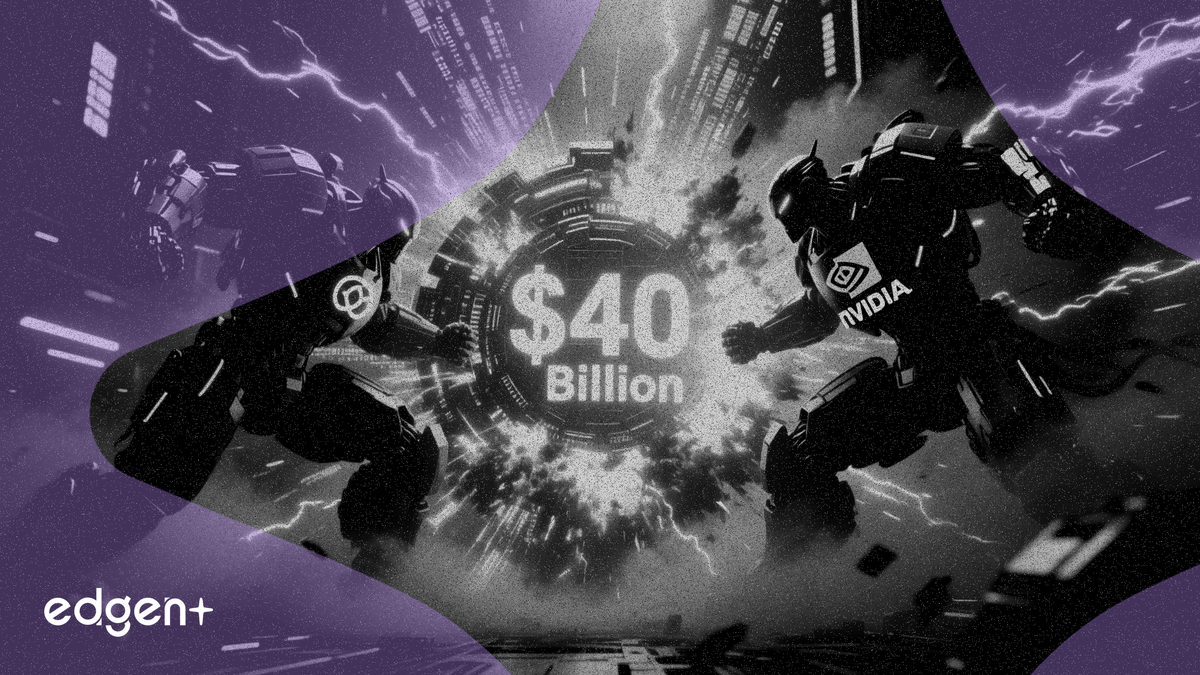
A strategic battle for the next phase of artificial intelligence is escalating, with OpenAI and Nvidia collectively committing over $40 billion to secure dominance in AI inference—the process of using a trained model to generate responses. The moves threaten to upend a market that Nvidia has single-handedly controlled and signal a major architectural shift in the semiconductor industry.
The conflict’s opening shots were fired in December 2025 with Nvidia’s quiet $20 billion acquisition of Groq, a startup specializing in high-speed inference chips. The countermove came on April 17, 2026, when reports revealed OpenAI will spend more than $20 billion on chips from rival startup Cerebras Systems, taking an equity stake of up to 10 percent in the company. Cerebras filed for a $35 billion IPO the same day.
The two deals highlight a fundamental rebalancing in the AI industry. While training large models like GPT-4 is computationally expensive, it is a one-time cost. Inference, which happens every time a user asks a question, represents a continuous and ultimately larger expense. According to market research from CES 2026, inference is expected to account for two-thirds of all AI compute spending in 2026, a figure some executives believe could reach 80 percent.
"The AI industry's center of gravity is rapidly shifting from one-off training runs to billions of daily inference requests," one technology analyst noted. "This isn't just a bigger market; it's a technically different one, and Nvidia's dominance here is no longer guaranteed."
The core of the conflict lies in chip design. Nvidia’s GPUs, such as the H100, are optimized for the massive parallel calculations required for training. However, their reliance on external High-Bandwidth Memory (HBM) creates a bottleneck for inference, where the speed of retrieving model weights from memory is the primary limiting factor.
Cerebras and Groq have pursued a different path. Their chips—the Wafer Scale Engine (WSE) and Language Processing Unit (LPU), respectively—integrate large amounts of ultra-fast SRAM directly onto the silicon alongside the processing cores. This design dramatically reduces memory latency, allowing for inference speeds reportedly 15 to 20 times faster than Nvidia's current offerings for certain tasks.
Nvidia’s $20 billion purchase of Groq is a tacit acknowledgment of this architectural vulnerability. Rather than rely solely on its own product roadmap, like the new Blackwell B200 which boosts inference performance, the company paid a steep premium to acquire a competing technology. For the world's largest AI chip seller, it was a defensive move to plug a potential gap in its portfolio.
In contrast, OpenAI’s deal is a clear offensive strategy. The world's largest AI model provider is not just diversifying its suppliers; it is actively cultivating a challenger to Nvidia. The agreement includes more than $20 billion in chip procurement, warrants for up to a 10 percent stake in Cerebras, and a $1 billion investment to help build out the data centers needed to house the new hardware.
This move mirrors Apple's historical strategy of deeply integrating with and eventually controlling its chip supply chain. By securing a dedicated, high-performance inference provider, OpenAI reduces its dependence on Nvidia and gains leverage over the cost of running its models at scale. The company is also reportedly developing its own custom ASIC chips with partner Broadcom, signaling a multi-pronged push for compute independence.
For investors, the Cerebras IPO presents a complex picture. The company, which will trade under the ticker "CBRS," is now targeting a $35 billion valuation, a significant jump from its $23 billion valuation in February 2026 and an $8.1 billion valuation in September 2025. This second IPO attempt comes after a 2024 filing was withdrawn due to national security concerns over its then-largest customer, the UAE-based fund G42.
While replacing G42 with OpenAI as the anchor customer improves the quality of revenue, it does not solve the underlying issue of customer concentration. Investors in the IPO are betting that OpenAI's demand will be sustained and that Cerebras can successfully diversify its customer base before OpenAI's in-house chips become a viable alternative. The $35 billion question is whether that optimism is already priced in.
This article is for informational purposes only and does not constitute investment advice.