

Nvidia's stock, once a titan of the AI boom, now faces a valuation reset as formidable competitors like Amazon enter the chip-making arena.
Nvidia's stock, once a titan of the AI boom, now faces a valuation reset as formidable competitors like Amazon enter the chip-making arena.
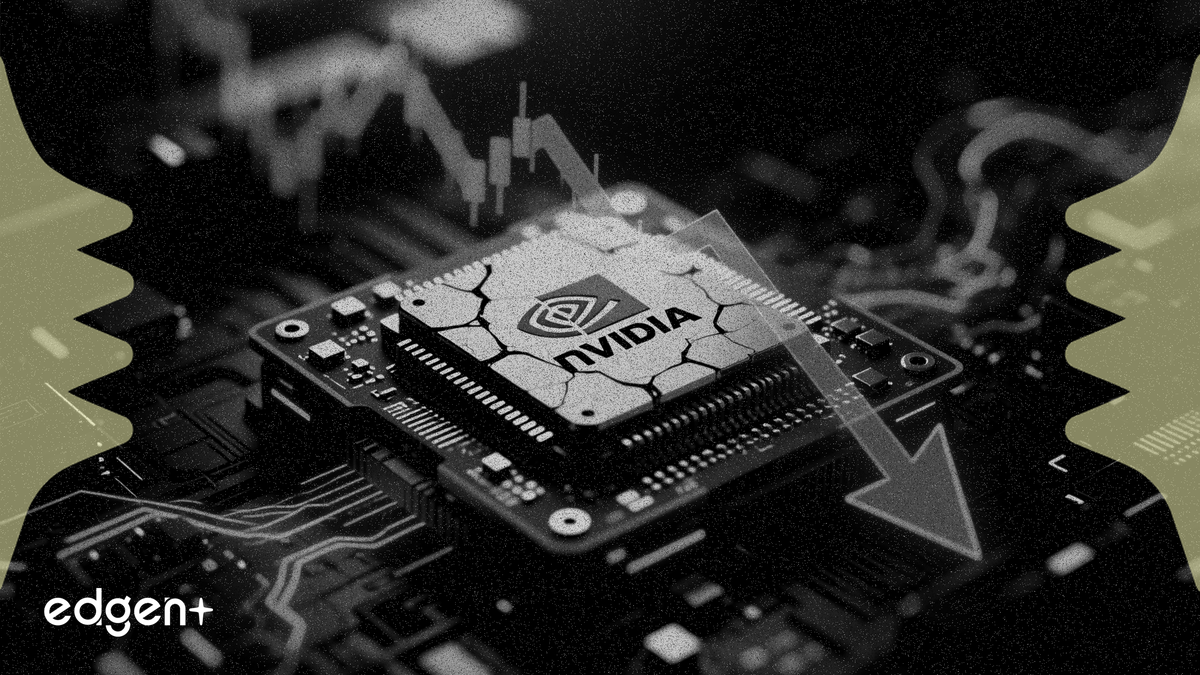
(P1) Nvidia's dominant position in the artificial intelligence chip market is facing a significant re-evaluation, with its valuation multiple contracting by more than 50 percent from its peak. The market is beginning to price in a future with heightened competition from cloud giants developing their own silicon, signaling a potential end to the company's era as a hyper-growth outlier.
(P2) "When its price/earnings multiple falls to the low 20s, it tends to go on to see strong performance for some time thereafter," Alliance Bernstein analyst Stacy Rasgon, who maintains an Overweight rating on the shares, has pointed out in past analyses.
(P3) After soaring roughly 300 percent since the end of 2022, Nvidia's stock has cooled. During the height of the AI boom, the company traded at more than 50 times expected earnings for the coming 12 months. That price-to-earnings multiple has now fallen to just under 24 times. This compression comes as Amazon.com revealed its internal chip business now runs at an annualized rate of over $20 billion, double the $10 billion figure from just months ago.
(P4) The shift suggests the market is accepting that even the pioneering Nvidia isn't immune to competition. This could dampen future stock price appreciation and cause investors to re-evaluate the entire AI chip sector, with Nvidia potentially performing more in line with peers like Advanced Micro Devices and Broadcom rather than continuing its meteoric solo run.
Nvidia’s shares are in this position because of a powerful combination of factors. The stock's extreme outperformance, which saw its price as a percentage of the S&P 500’s level hit a 10-year high in late 2023, made it ripe for profit-taking. This coincided with the flare-up of competitive threats, primarily from Amazon Web Services. While Amazon doesn’t break out chip revenue separately, it charges its cloud customers for using its custom Trainium, Graviton, and Nitro chips, effectively taking market share from established data center suppliers.
This development raises concerns that growth for the incumbent chip makers could slow. With a combined addressable market expected to be in the hundreds of billions this year, Amazon's ability to capture even a small slice is a material threat. Nvidia is the primary focus of this concern, given its long-term outperformance and previously rich valuation compared to the broader VanEck Semiconductor Exchange-Traded Fund, which trades at a multiple just under 22 times.
The current, more modest valuation presents a complex picture for investors. Rasgon's historical analysis suggests that a P/E multiple in the low 20s has often been a buying opportunity for Nvidia. After its multiple fell to a similar level in early 2025, the stock doubled over the following year. However, while the stock may be cheaper, the competitive landscape has fundamentally changed. It is unlikely that Nvidia’s multiple will return to the lofty heights of 50 times anytime soon.
For investors, this signals a potential re-rating of the stock. Buying Nvidia here is a defensible position on a high-growth, best-in-class chip company. Yet, those seeking the kind of explosive, market-beating returns seen in the early days of the AI revolution might need to adjust their expectations or look elsewhere. The stock may now be more of a high-quality performer that moves in line with other major semiconductor names, rather than the unstoppable force it once was.
This article is for informational purposes only and does not constitute investment advice.