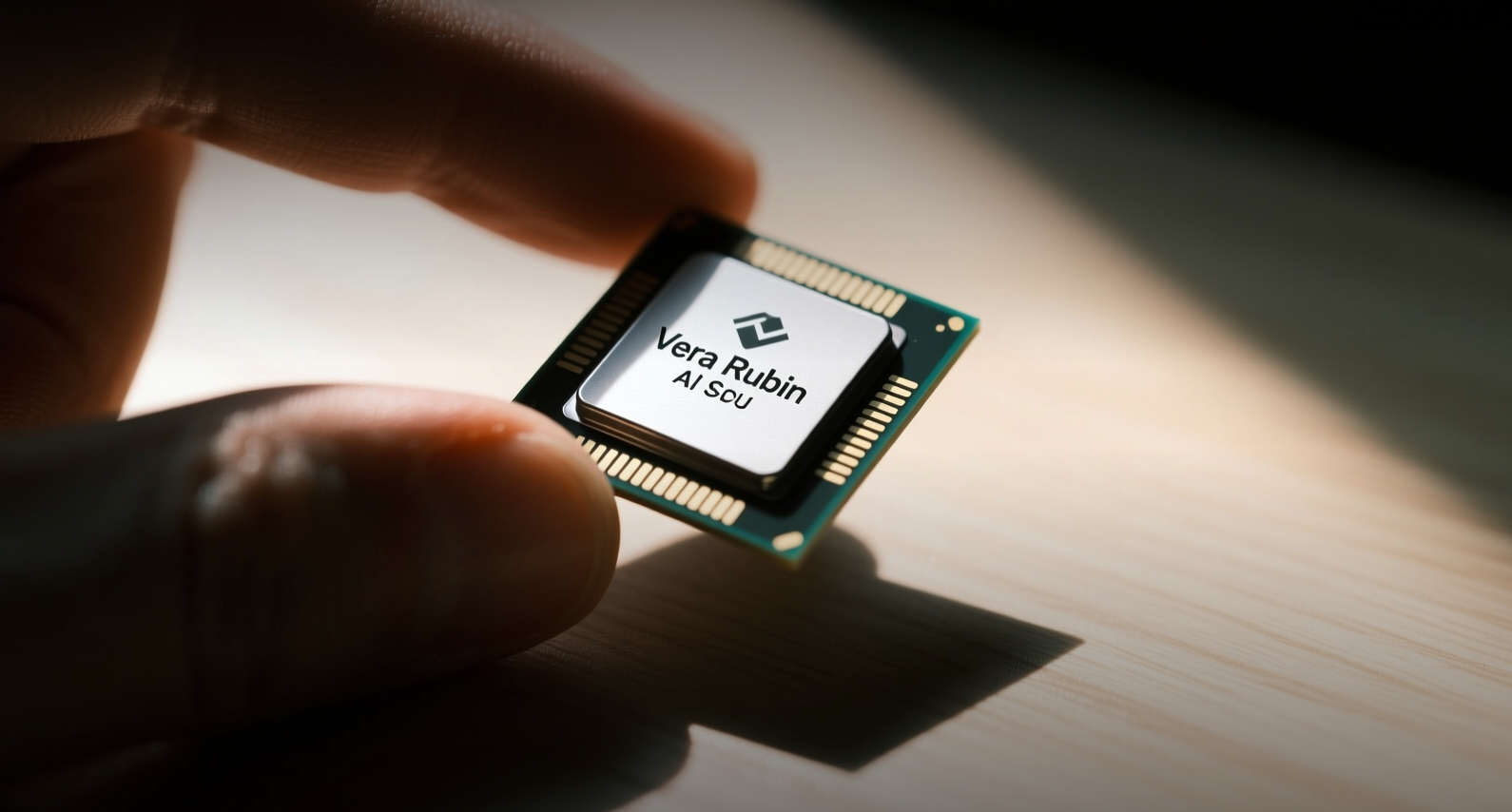
Jensen Huang declared the era of intelligent agents has arrived and positioned Nvidia's new Vera Rubin platform as the company's most important product launch in its history, framing the shift as the largest computing reset in 60 years.
"The AI factory is a new kind of data center — it doesn't store files, it produces tokens," Huang, Nvidia's chief executive officer, said at the company's annual shareholder meeting Wednesday. "Every token is a monetizable unit of intelligence."
Huang said Nvidia's Blackwell platform has been recognized as the "King of Inference," delivering 30 times the token throughput of the next-best platform, according to Semi Analysis Inference X benchmark results. The company's international market revenue has surpassed $300 billion, more than tripling from a year earlier, with nearly 40 countries deploying AI factories powered by Nvidia infrastructure. Customers including Capital One, Hyundai Motor, Jane Street and Eli Lilly have begun large-scale deployments, signaling the customer base has expanded beyond hyperscale cloud providers into finance, manufacturing and pharmaceuticals.
The Vera Rubin platform, now in full production, includes a CPU purpose-built for agents — a first for Nvidia. Huang argued that all previous CPUs were designed for humans, allocating cores in slices, while agents operate in a nanosecond-scale world where CPU bottlenecks idle expensive GPUs and erode AI factory revenue. Vera Rubin encompasses the Rubin GPU, Vera CPU, NVLink, Spectrum-X Ethernet, InfiniBand and BlueField security modules. Huang noted that Nvidia is the only company operating three networking businesses simultaneously, with Spectrum-X alone larger than all other Ethernet networking peers combined.
The CUDA moat deepens for the agent era
Huang described the CUDA X library ecosystem as Nvidia's "crown jewel" and one of the most important strategic investments the company has ever made. The platform now supports more than 7,000 applications, creating a flywheel where a unified architecture attracts developers, who build breakthrough applications that open new markets, which in turn expand the installed base.
With the shift to agentic AI, CUDA X is transitioning from a toolkit for human developers to a toolbox for autonomous agents. Huang announced BioNeMo, a suite of digital biology and drug discovery tools designed specifically for agents, marking the first major migration of Nvidia's core software assets into the agent paradigm. He described Nvidia's strategy as "vertically integrated, horizontally open" — building the full stack in-house for end-to-end optimization while making it available to the broader industry.
Huang cited GitHub data showing the number of merged pull requests grew from 400 million in 2024 to 500 million in 2025, then nearly tripled in the first months of 2026 — evidence, he said, that AI has crossed from "interesting" to "economically useful," driving accelerating compute demand.
China uncertainty and the smuggling warning
On China, Huang said the U.S. government has approved licenses for H200 chip exports to Chinese customers, but Nvidia has generated zero related revenue and faces uncertainty about whether products can be successfully imported. He declined to offer any forecast for China business scale or name specific customers, reiterating that national security takes precedence when it conflicts with commercial interests.
In a rare public warning, Huang addressed the risk of Nvidia products reaching restricted end users through smuggling. He said the company's compliance efforts have repeatedly intercepted attempted smuggling cases, with perpetrators facing prosecution risks in multiple jurisdictions. Huang called black-market data centers built from smuggled parts a "dead end," noting that Nvidia provides no support or repair services for restricted products, making it "extremely difficult" to operate advanced AI infrastructure built from diverted hardware.
What this means for investors
Nvidia shares have gained 6.7% year to date through Wednesday's close, trailing the S&P 500's 7.5% advance, as the market's focus shifts from near-term earnings to the durability of the AI infrastructure investment cycle. Huang's shareholder meeting remarks were designed to reinforce the view that the AI capex supercycle remains in its early stages. The Vera Rubin platform opens a new product cycle targeting the agent market, which Huang said will reach billions of agents globally. Nvidia has committed to returning more than 50% of free cash flow to shareholders as a long-term policy. The company trades at roughly 35 times forward earnings, a premium that hinges on whether the AI factory buildout sustains its current trajectory.
This article is for informational purposes only and does not constitute investment advice.