

Nvidia has told its largest customers that AI server prices will rise more than 15 percent in many cases, driven by soaring memory chip costs.
Nvidia has told its largest customers that AI server prices will rise more than 15 percent in many cases, driven by soaring memory chip costs.
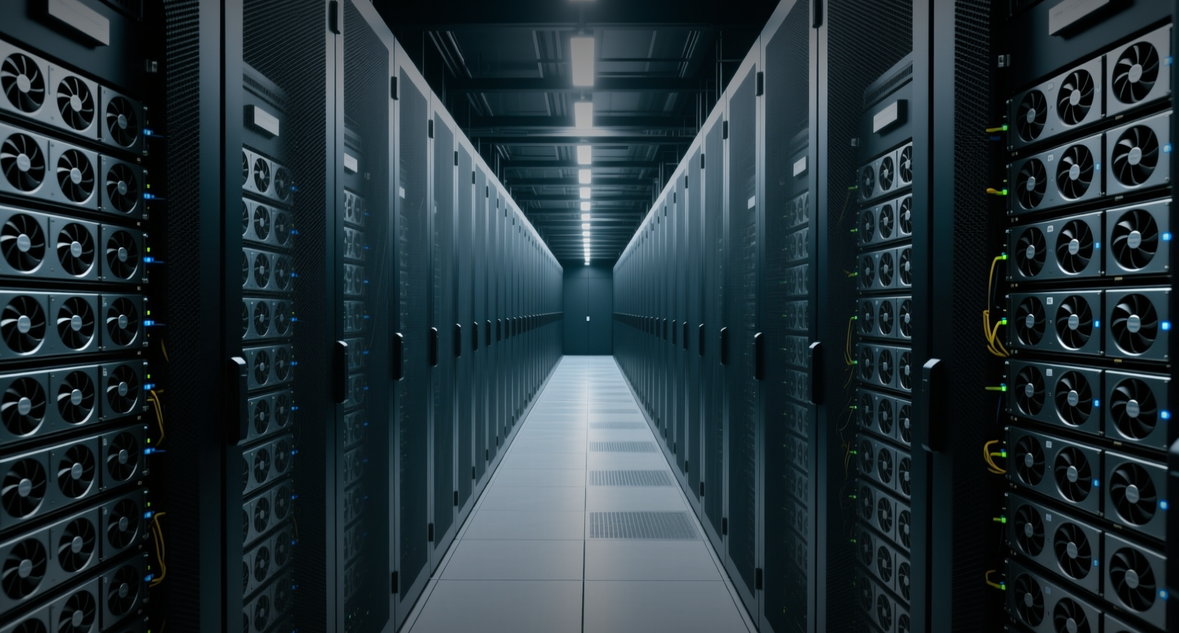
Nvidia Corp. has notified its largest customers that AI server prices will rise more than 15 percent in many cases, as soaring memory chip costs drive up the cost of systems built around its flagship Vera Rubin and Grace Blackwell processors.
The increases will take effect on systems shipped early next year and will vary depending on the generation of Nvidia chips and memory configurations, according to people familiar with the process who asked not to be identified discussing communications that haven't yet been made public.
The price hikes stem from a sharp rise in high-bandwidth memory (HBM) costs — the specialized memory stacked alongside AI accelerators to feed data to the processor. Memory suppliers including SK Hynix Inc., Samsung Electronics Co. and Micron Technology Inc. have been raising prices as AI demand outstrips supply. The increases will affect systems built around Nvidia's Vera Rubin and Grace Blackwell platforms, with the exact magnitude depending on the chip generation and memory configuration.
The move gives Nvidia greater pricing power at a time when AI infrastructure spending continues to expand, but it could squeeze margins for cloud providers and enterprises purchasing AI servers. Microsoft Corp., Alphabet Inc.'s Google and Oracle Corp. are among the largest buyers of Nvidia's AI systems. Memory makers stand to benefit from the pricing environment, with SK Hynix and Micron positioned to capture higher revenue per unit.
The price increases reflect a broader shift in the AI supply chain, where memory has become a bottleneck. HBM production requires advanced packaging and yields remain constrained, limiting supply even as demand from AI data centers accelerates. Nvidia's decision to pass through higher costs marks a departure from absorbing component price increases, a sign that memory inflation has become too large to absorb.
The memory crunch traces back to the AI boom's insatiable appetite for bandwidth. HBM stacks multiple DRAM dies vertically, connected through silicon interposers, and the manufacturing process is complex and yield-sensitive. SK Hynix, which supplies the majority of HBM for Nvidia's accelerators, has been operating at full capacity, and its competitors have struggled to ramp production quickly enough to meet demand.
For cloud providers, the higher prices arrive at a time when AI infrastructure budgets are already under scrutiny. Hyperscalers have committed tens of billions of dollars to AI data center buildouts, and a 15 percent or higher increase in server costs could force adjustments to capacity plans or push some enterprises to delay purchases. The price increases could also accelerate the shift toward custom silicon, as some cloud providers explore in-house chip designs to reduce dependence on Nvidia's pricing.
Nvidia's pricing power remains intact, with demand for its accelerators far exceeding supply. The company's data center revenue has grown at triple-digit rates in recent quarters, and the price increases could further boost average selling prices. However, the move also creates an opening for competitors. Advanced Micro Devices Inc. and custom silicon from cloud providers could become more attractive if Nvidia's systems become more expensive.
Memory makers are the clearest beneficiaries. SK Hynix, the dominant HBM supplier, has seen its shares rally as memory prices have climbed. Micron and Samsung are also positioned to benefit from the pricing environment, though their exposure to the broader memory market means they face cyclical risks. The memory upcycle has been a key driver of the semiconductor sector's recent strength, and these price increases could extend that trend.
For investors, the key question is whether Nvidia can sustain its pricing power without losing market share. The company's shares trade at a premium valuation reflecting its dominant position in AI accelerators. If the price increases hold, Nvidia's revenue per system could rise, supporting margins even as input costs climb. But if customers push back or delay purchases, the pricing power could prove short-lived. The first test will come early next year, when the new pricing takes effect on shipped systems.
This article is for informational purposes only and does not constitute investment advice.
