

A $1,000 investment in Nvidia at its June 2024 stock split is now worth $1,755, a 76% gain driven by the chipmaker's dominance in artificial intelligence infrastructure.
A $1,000 investment in Nvidia at its June 2024 stock split is now worth $1,755, a 76% gain driven by the chipmaker's dominance in artificial intelligence infrastructure.
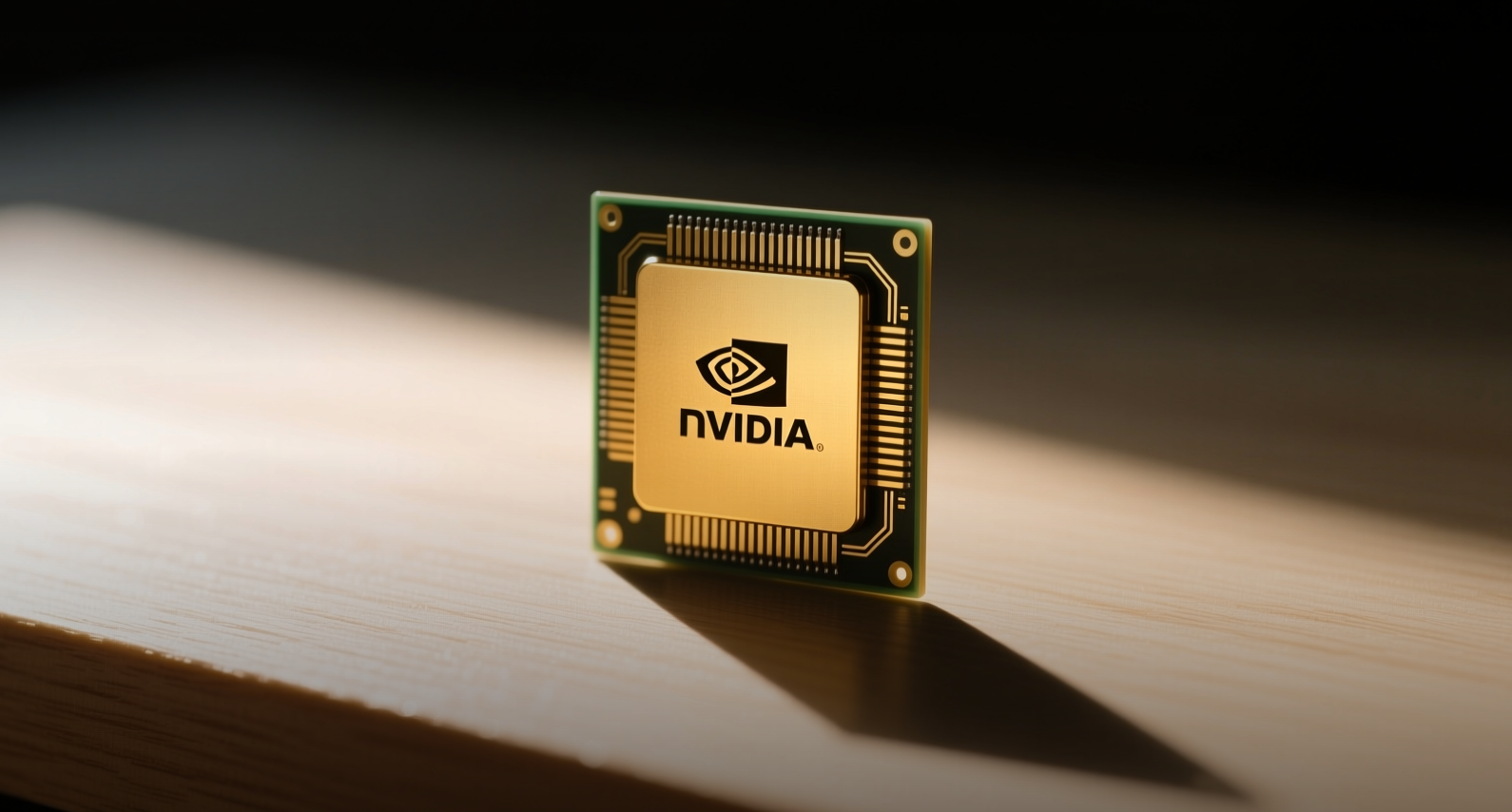
A $1,000 investment in Nvidia Corp. at its June 2024 stock split is now worth $1,755, a 76% gain fueled by the chipmaker's expanding grip on the AI infrastructure market.
"We've never seen a technology grow as rapidly as AI," Amazon Chief Executive Officer Andy Jassy said on the company's earnings call, as the cloud giant committed to buying 1 million Nvidia graphics processing units through 2027.
Nvidia's revenue surged to $215.9 billion in fiscal 2026, up 65% from a year earlier, with data center revenue exceeding $170 billion. The company's Blackwell architecture generated $11 billion in a single quarter, becoming one of the fastest product ramps in its history. Gross margins held between 73% and 75%, while Nvidia captured an estimated 74% of AI inference revenue through April 2026.
The gains reflect a business transformation that has turned Nvidia from a gaming graphics company into the central supplier of AI computing infrastructure, a shift that has pushed its market value past $5 trillion. But analysts caution that the next two years are unlikely to replicate the post-split surge, noting that Nvidia shares have historically declined an average of 23% in the 12 months following past stock splits.
The Blackwell Ramp and the Data Center Boom
Nvidia's Blackwell platform scaled faster than any product in the company's history, with customers deploying GB300 systems for both AI training and inference workloads. The transition from the previous Hopper architecture proceeded smoothly as supply constraints eased, helping Nvidia maintain its technological lead over rivals such as Advanced Micro Devices Inc. and Intel Corp.
The demand is being driven by hyperscale cloud providers racing to build out AI capacity. Amazon Web Services, Nvidia's largest customer alongside Microsoft Corp. and Alphabet Inc.'s Google, reported first-quarter revenue of $37.6 billion, up 28% from a year earlier, its fastest growth in more than three years. Amazon's AI services alone are generating more than $15 billion in annualized revenue after just three years, compared with a $58 million revenue run rate at the same point in AWS's history.
Amazon's in-house Trainium chip business has reached an annual revenue run rate above $20 billion, with Trainium 2 capacity largely sold out and Trainium 3 nearly fully subscribed. Still, Jassy said Nvidia GPUs will remain a key part of Amazon's infrastructure stack. "We continue to have a deep partnership with Nvidia," he said. "We'll be partners for as long as I can foresee."
The $30 Billion China Headwind
Nvidia faces a significant constraint in export restrictions that have eliminated an estimated $30 billion opportunity in China. The U.S. government has tightened controls on advanced chip sales to Chinese customers, forcing Nvidia to develop lower-specification products for the market. Strong demand in other regions has so far offset the impact, but the restriction represents a structural ceiling on the company's addressable market.
The company raised $25 billion in a bond offering in June 2026 to support ongoing AI expansion, and management has reported visibility into hundreds of billions of dollars in potential future revenue from Blackwell and the next-generation Rubin platform.
What This Means for Investors
Nvidia shares trade at roughly 35 times forward earnings, a premium that reflects the market's expectation that AI infrastructure spending will continue to grow. The company's market capitalization has surpassed $5 trillion multiple times, cementing its position among the world's most valuable companies. But the post-split historical pattern — shares declining 23% on average in the 12 months after past splits and remaining down 3% after 24 months — suggests that the pace of gains may moderate, even if the underlying business continues to expand.
This article is for informational purposes only and does not constitute investment advice.
