

Jensen Huang projects the semiconductor industry will need to grow tenfold to $7.9 trillion within a decade to power agentic AI.
Jensen Huang projects the semiconductor industry will need to grow tenfold to $7.9 trillion within a decade to power agentic AI.
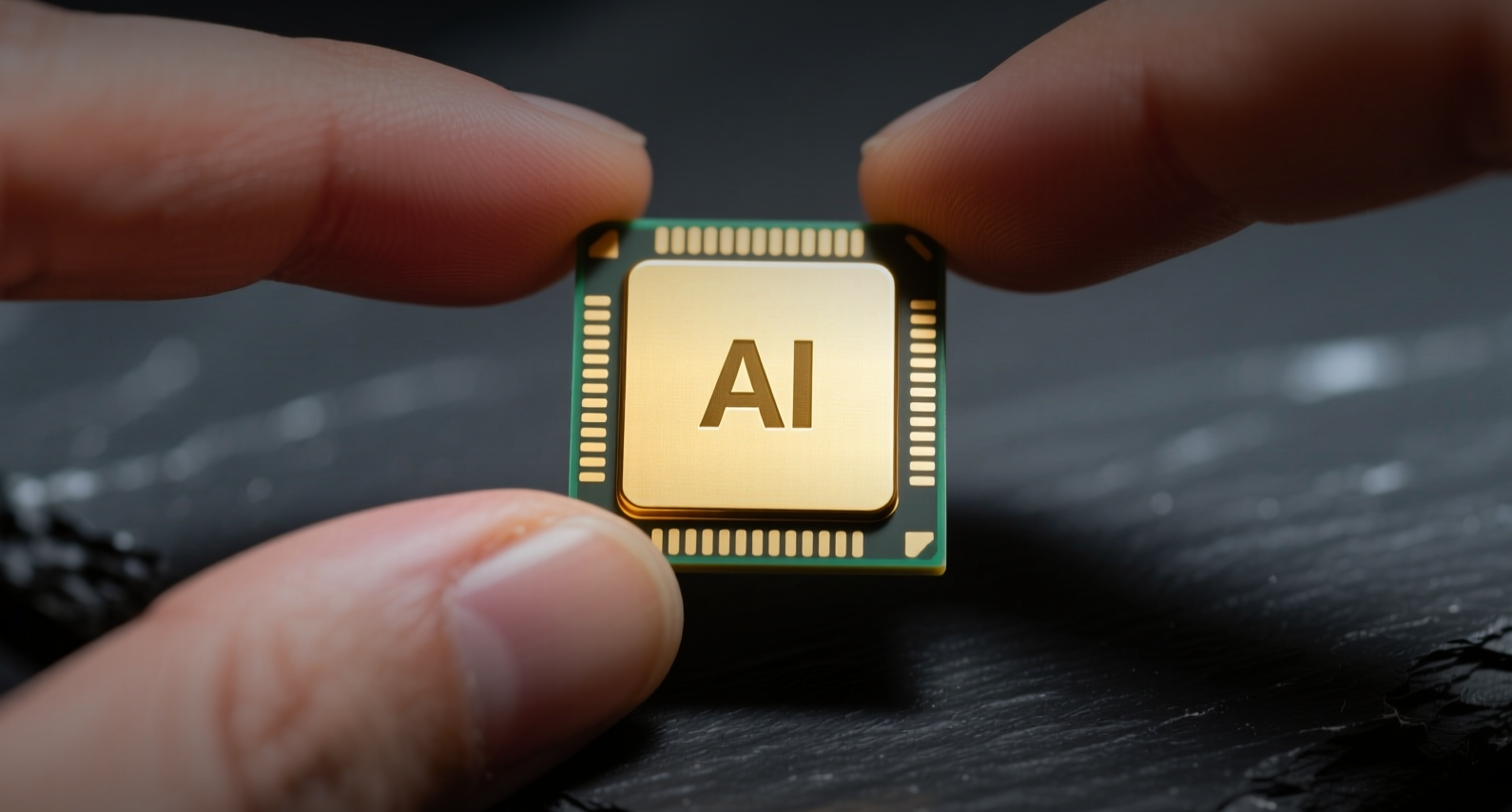
Agentic AI — self-directed systems that execute tasks autonomously — will require the semiconductor industry to grow tenfold to roughly $7.9 trillion within a decade, Nvidia Chief Executive Jensen Huang said.
"My guess is the semiconductor industry will probably have to be 10 times larger than it is today over the next decade or so," Huang said in a Bloomberg interview, after predicting the world will eventually have billions of AI agents.
The industry was valued at roughly $791.7 billion last year, according to some estimates, implying a $7.9 trillion market in a decade. Nvidia, the dominant maker of graphics processing units (GPUs) that train and run AI models, posted revenue of $81.6 billion in the first quarter of fiscal 2027 ended April 26, up 85 percent year over year, with adjusted earnings per share of $1.87, up 140 percent.
Two companies stand to capture much of that expansion: Nvidia itself and memory maker Micron Technology. Nvidia trades at 22.9 times forward earnings, versus an average of 20 times for information technology stocks, while Micron trades at 5.3 times forward earnings after its shares fell 15 percent over the past month.
Agentic AI systems run on central processing units (CPUs), not just GPUs, which is why Nvidia's new Vera Rubin architecture — released this year — includes a stand-alone Vera CPU. The company projects $20 billion in stand-alone CPU revenue through the end of 2026 and sees a $200 billion addressable market in that niche alone. Nvidia has also projected $1 trillion in purchase orders for its Blackwell and Vera Rubin platforms through 2027.
That marks a shift from Nvidia's roots as a pure GPU seller. The company now builds the systems, software, and networking that power AI, giving it a broader claim on the industry's growth. Its gross margin widened to 74.9 percent in the latest quarter from 60.5 percent a year earlier.
Micron makes the memory and storage chips packed into data centers, and its data center business has been the biggest growth driver as a memory chip shortage gives it pricing power. In the third quarter of fiscal 2026 ended May 28, revenue rose almost 346 percent year over year to $41.46 billion, with adjusted earnings per share of $25.11, up about 1,215 percent.
Rival Samsung Electronics expects the memory shortage to last at least until 2028, and Micron has signed several long-term supply agreements that cushion it against a sharp slowdown in demand. The stock's 15 percent pullback over the past month reflects profit-taking after a strong run, but at 5.3 times forward earnings it remains cheap relative to growth.
For investors, the question is whether Huang's projection is directionally right. If agentic AI drives the semiconductor industry toward $7.9 trillion, Nvidia's position across GPUs, CPUs, and networking gives it the broadest exposure, while Micron's memory franchise — with Samsung and SK Hynix as the only other major suppliers — offers a cheaper entry point. Nvidia's valuation at 22.9 times forward earnings looks fair given its leadership; Micron's at 5.3 times looks like a bargain if the memory shortage persists. Both stocks carry the risk that AI infrastructure spending slows before the decade is out.
This article is for informational purposes only and does not constitute investment advice.
