

Nvidia and Coherent broke ground on a Texas factory expansion to produce indium phosphide optical interconnects, solving a physical bottleneck that copper cables cannot overcome at the scale of next-generation AI systems.
Nvidia and Coherent broke ground on a Texas factory expansion to produce indium phosphide optical interconnects, solving a physical bottleneck that copper cables cannot overcome at the scale of next-generation AI systems.
Nvidia and Coherent broke ground Tuesday on a factory expansion in Sherman, Texas, that will produce the optical interconnects needed to link thousands of AI chips as a single computing system — a physical bottleneck that copper cables can no longer solve at scale.
"AI factories are the infrastructure of the new industrial revolution," Jensen Huang, Nvidia's chief executive officer, said at the ceremony.
The expansion scales the world's first 6-inch indium phosphide (InP) wafer production line, a compound semiconductor that enables lasers with the optical intensity of the Sun's surface. Each second, light pulses hundreds of billions of times through a fiberglass strand the width of a human hair, allowing Nvidia's graphics processing units to share data across racks without the signal degradation that plagues copper at high speeds.
The factory is the first tangible milestone from Nvidia's $2 billion investment in Coherent, announced in March, along with multi-billion dollar purchasing commitments for advanced laser and optical networking products. Coherent received $50 million in CHIPS Act funding — $33 million approved under the Biden administration and $17 million added by the Trump administration — plus roughly $17 million from Texas state and local incentives.
Why copper fails at AI scale
When 576 GPUs span eight racks as a single system — the configuration Nvidia's upcoming Vera Rubin Ultra NVL576 will require — copper cables cannot carry signals across the distance without consuming enormous power on signal conditioning and retiming. Optical transmission requires a one-time electrical-to-optical conversion penalty, but after that, distance imposes almost no additional cost.
"AI runs on compute, but it scales on connectivity — Sherman is where that connectivity gets made," Coherent CEO Jim Anderson said.
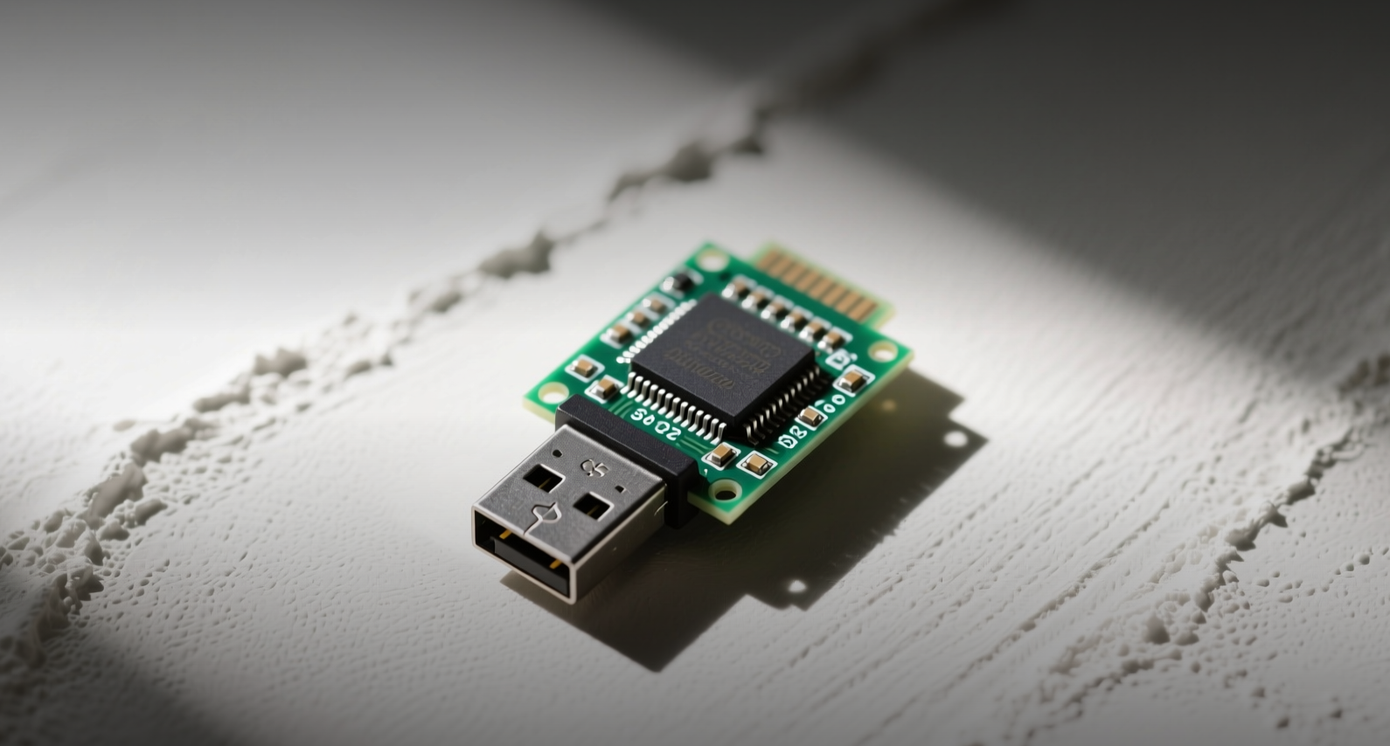
The factory will produce InP wafers that are eventually packaged into pluggable optical modules roughly the size of a USB drive. These modules plug directly into the front panel of Nvidia's network switches, including the Spectrum-X Photonics and Quantum-X Photonics co-packaged optical switches, transmitting data where copper cannot reach.
Power consumption drops as much as 50% compared with copper-based alternatives, enabling faster computations at lower cost. Reducing the price of tokens — the industry's unit of AI usage — would accelerate AI adoption across more applications.
Jobs, supply chains and the reshoring bet
Coherent estimates the expansion will create 1,000 jobs, including about 550 in advanced manufacturing, engineering and technical roles. The buildout is part of a broader Nvidia strategy to cluster more production in the US, with chip fabrication increasingly centered in Arizona and assembly in Texas, creating a domestic supply chain for AI infrastructure.
One Nvidia executive, speaking on background, described the company's shift from selling individual chips to providing complete AI systems — "brains and a nervous system," in their words — that customers can deploy on factory floors to "move atoms," not just process data. Manufacturers that depend on foreign suppliers could use these systems to restore production in the US.
In a paper published this month, economists Jessica Wachter and Jonathan Wachter estimated that the five largest US technology firms invested $380 billion last year in the AI buildout, a sum that could roughly double this year. AI accounts for about 3% of US gross domestic product now, they said, but that figure could grow to between 8% and 39%.
Nvidia, now the world's most valuable company at roughly $5 trillion, is deepening its vertical integration at a time when demand for AI computing shows no sign of slowing. For Coherent, the partnership provides multi-year revenue visibility and a government-backed mandate to scale US manufacturing of a component that is critical to the next generation of AI systems.
Competitors in optical components, including Lumentum and II-VI, face pressure to match Coherent's capacity and Nvidia's purchasing commitment. The optical interconnect sector is emerging as a key battleground in AI infrastructure, where the physical limits of data transmission are becoming as important as the performance of the chips themselves.
This article is for informational purposes only and does not constitute investment advice.
