

Nio's 4,000th battery swap station in Quanzhou doubles as its first fifth-generation site, opening the network to the Firefly compact brand for the first time.
Nio's 4,000th battery swap station in Quanzhou doubles as its first fifth-generation site, opening the network to the Firefly compact brand for the first time.
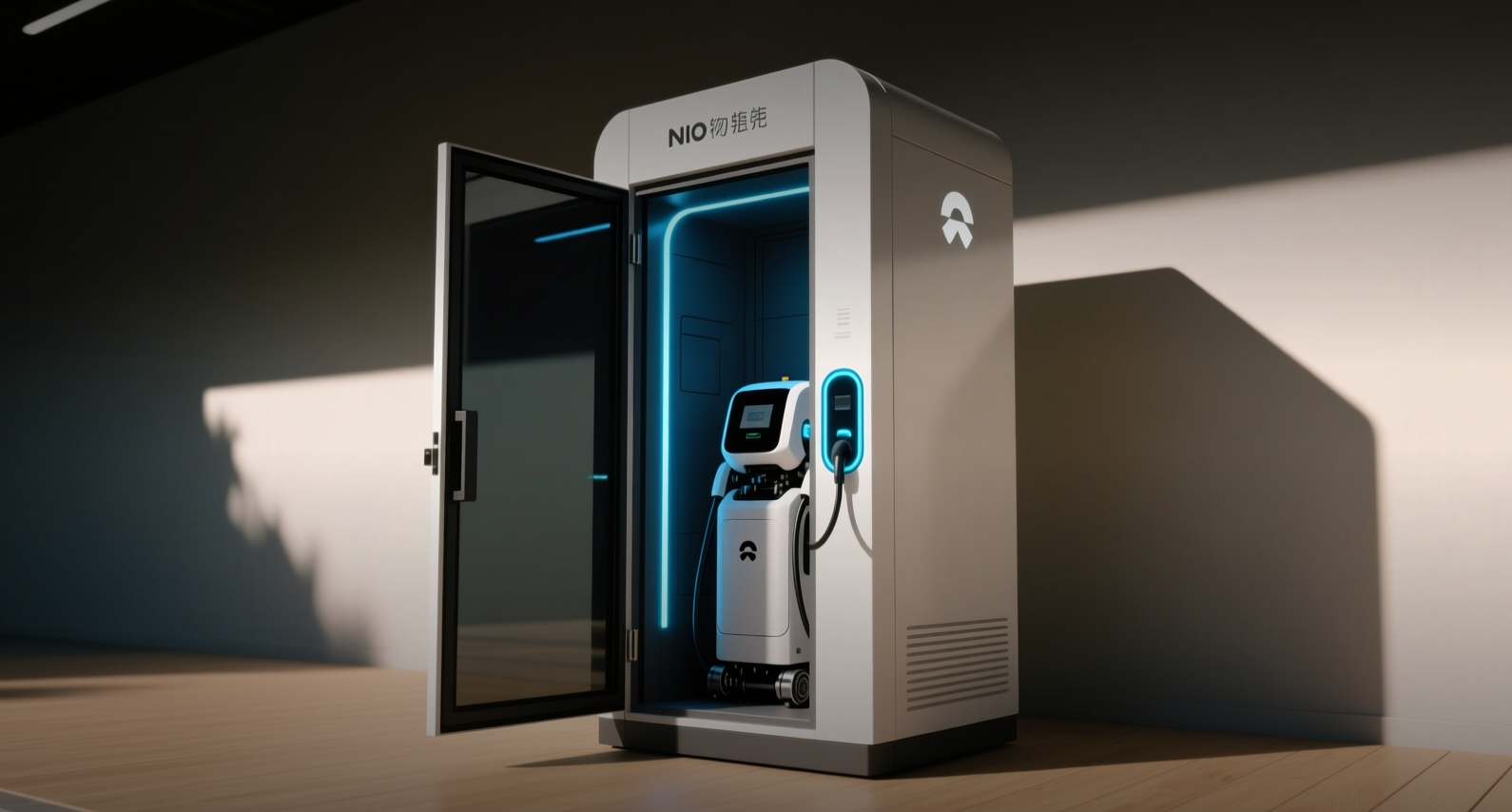
Nio's fifth-generation battery swap stations now serve all three of its brands — Nio, Onvo and Firefly — after the first batch went live in seven Chinese cities on Friday, expanding the network's addressable user base to include compact vehicles for the first time.
"The charging and swap network has achieved network effects at scale, delivering an experience where 'recharging is as convenient as refueling,' and has become an important driver of sales growth," William Li, founder, chairman and CEO of Nio, said at a ceremony in Quanzhou, Fujian province.
The fifth-generation station uses a rebuilt swap platform that adjusts its configuration in real time to locate fastening bolts, supporting wheelbases up to 3.5 meters. That covers all body sizes from small cars to large SUVs — the 4.003-meter-long Firefly was previously unable to use existing stations because its wheelbase was too short. The Quanzhou site is both Nio's 4,000th swap station in China and its first fifth-generation station.
Nio's cumulative battery swaps topped 120 million at 8:09:16 am Beijing time on Friday, just six months after reaching 100 million on Feb. 6. The company operates 4,006 swap stations and 1,049 highway sites across 550 cities, with 80.1 percent of users having a station within three kilometers of home or work. Nio maintains its target of adding more than 1,000 swap stations in 2026, increasingly leaning on partnerships such as the Zhongan Energy deal to co-build 500 stations.
The 20 million swaps added since February represent accelerating adoption. Nio users have consumed 6.35 billion kWh through swaps, equivalent to a year of electricity use by 3.17 million households. Compared with charging, swapping has saved users 99.91 million hours, or an average of 83 hours per user. Against gasoline vehicles, swapping has saved a cumulative 31.2 billion yuan ($4.6 billion), or 26,000 yuan per user.
The infrastructure buildout is also supporting premium vehicle sales. Cumulative deliveries of the ES8 have topped 130,000 units, making it the best seller in the large SUV segment and in the market above 400,000 yuan ($58,910) in the first half of 2026. The flagship ES9 SUV is about to exceed 20,000 deliveries.
Nio added 679 swap stations in 2024 and 681 in 2025, according to data compiled by CnEVPost, slowing its own construction pace to control capital spending. The 2026 target of 1,000-plus stations increasingly depends on partners. In June, Nio Power signed an agreement with Anhui's Zhongan Energy to jointly build 500 swap stations within one year; 90 have been delivered so far, with the footprint expanding beyond Anhui province to the Yangtze River Delta, Beijing-Tianjin-Hebei, the Greater Bay Area and northwest China.
Zhongan operates under an asset-light model for Nio: Nio handles the swap technology and daily operations while partners own the heavy assets. The model helps the EV maker share the capital burden of infrastructure construction.
The expansion comes as Nio competes with Tesla and BYD in China's EV market, where battery swapping remains a differentiator. Nio's swap network now covers 16 major city clusters, linking nine north-south and 11 east-west highway corridors. The company's energy infrastructure has grown from its first swap station in 2018 to 4,006 today.
For investors, the milestone strengthens Nio's competitive moat in battery-swap infrastructure — a key differentiator against rivals that rely solely on charging. The integration of Firefly expands the addressable swap network user base, potentially driving higher vehicle sales and service revenue across all three brands.
This article is for informational purposes only and does not constitute investment advice.
