

Micron Technology has become the third most profitable US company after Nvidia and Google, posting a record $28.2 billion quarterly net profit as AI-driven demand for high-bandwidth memory transforms the chipmaker's business model.
Micron Technology has become the third most profitable US company after Nvidia and Google, posting a record $28.2 billion quarterly net profit as AI-driven demand for high-bandwidth memory transforms the chipmaker's business model.
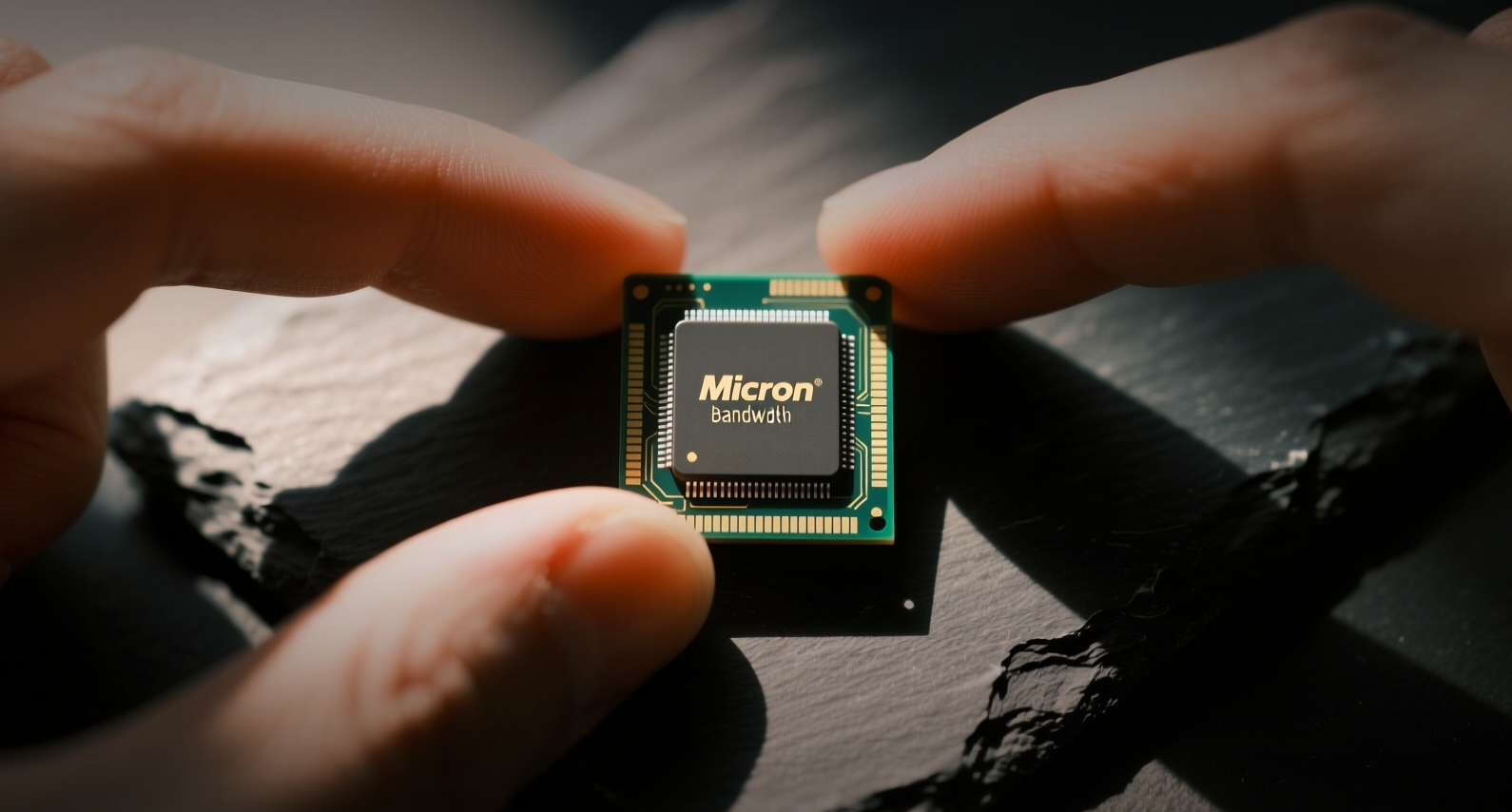
Micron Technology has become the third most profitable US company after Nvidia and Google, posting a record $28.2 billion quarterly net profit as AI-driven demand for high-bandwidth memory transforms the chipmaker's business model.
Micron Technology earned $28.2 billion in net profit last quarter — more than triple its year-ago result — as Big Tech's spending on AI memory components turned the 48-year-old chipmaker into a profit machine.
"Memory has never been such a valuable part of the computing stack as it is today," Manish Bhatia, executive vice president of global operations at Micron, said. "Nvidia had its AI moment with GPUs a few years ago, and now memory is having its own."
Revenue for the fiscal third quarter ended May 28 hit $41.46 billion, beating the $35.69 billion consensus. Non-GAAP gross margin reached a record 84.9%, surpassing Nvidia's peak GPU margin of about 79% in early 2024. DRAM sales contributed $31.3 billion, or 76% of total revenue, while NAND added $9.9 billion. Adjusted earnings per share of $25.11 topped the $20.49 estimate. Operating cash flow of $25.4 billion generated $18.3 billion in free cash flow, both quarterly records.
The results show a structural shift in the memory industry, long plagued by boom-bust cycles. Micron has signed 16 long-term Strategic Customer Agreements covering about 20% of its DRAM capacity and one-third of its NAND output, locking in minimum contract revenue of roughly $100 billion. Customers including AI hyperscalers have placed $22 billion in deposits to secure supply through 2030. For the current quarter, Micron guided revenue of $50 billion and gross margin of 86%, with CEO Sanjay Mehrotra saying tight conditions will persist "beyond calendar 2027."
High-bandwidth memory, or HBM, is specialized DRAM stacked vertically alongside AI accelerators to feed data to GPUs at extreme speeds. Unlike commodity memory, HBM commands premium pricing and requires advanced manufacturing — TSV silicon vias and advanced packaging — that create high barriers to entry. Micron is one of only three companies globally capable of producing advanced HBM, alongside Samsung Electronics and SK Hynix.
The supply-demand imbalance is stark. AI giants are paying premium prices and placing multi-year deposits, diverting advanced production lines from general-purpose memory. This has created a ripple effect: commodity DRAM and NAND prices have surged, raising costs for smartphone makers and PC manufacturers. For a flagship phone with 16GB of memory and 512GB of storage, memory component costs have risen by $100 to $150 per unit, according to Counterpoint Research.
The memory price surge has forced handset makers to adjust. OPPO, vivo, Xiaomi and Honor implemented what analysts described as the largest collective price increase in five years in March. Apple CEO Tim Cook told the Wall Street Journal that price increases are "inevitable," pointing to memory costs as a primary driver. Goldman Sachs cut its 2026 global smartphone shipment forecast by 10% to 1.14 billion units, with the $200-to-$600 mid-range segment bearing the brunt.
The contrast with Micron's fortunes could not be starker. The Boise, Idaho-based company's stock has returned about 812% over the past 12 months, surging from a 52-week low of $103.38 to an all-time high of $1,089.29. Shares added another 17% in after-hours trading following the earnings release, pushing Micron's market capitalization to approximately $1.39 trillion.
Micron trades at a premium reflecting its structural shift. Of 41 analysts covering the stock, 32 rate it a Strong Buy, with a mean price target of $1,078. D.A. Davidson set a Street-high target of $2,000, arguing the memory cycle "is far from over." J.P. Morgan said the shift toward multi-year customer agreements is "fundamentally transforming" Micron's earnings profile, making it less cyclical and more akin to an infrastructure provider. For investors, the key question is whether the current valuation already prices in the full HBM opportunity — or whether Micron's new business model justifies a structural re-rating above historical memory-cycle peaks.
This article is for informational purposes only and does not constitute investment advice.
