

Meta is outspending every tech giant on AI infrastructure, yet Wall Street remains skeptical about when the $145 billion annual bet starts paying off.
Meta is outspending every tech giant on AI infrastructure, yet Wall Street remains skeptical about when the $145 billion annual bet starts paying off.
Meta Platforms is outspending every tech giant on AI, planning $130 billion to $145 billion in 2026 capital expenditures as Zuckerberg pushes the company to become a frontier AI lab. The figure is more than double Meta's combined 2024-2025 spending and follows the CEO's declaration on an earnings call that he was "very focused on establishing Meta as the leading frontier AI lab."
"Rather than centralizing superintelligence, we should distribute it widely and give every person the ability to direct it," Zuckerberg wrote in a 6,537-word August manifesto outlining his vision of "personal superintelligence" for small business owners and children alike.
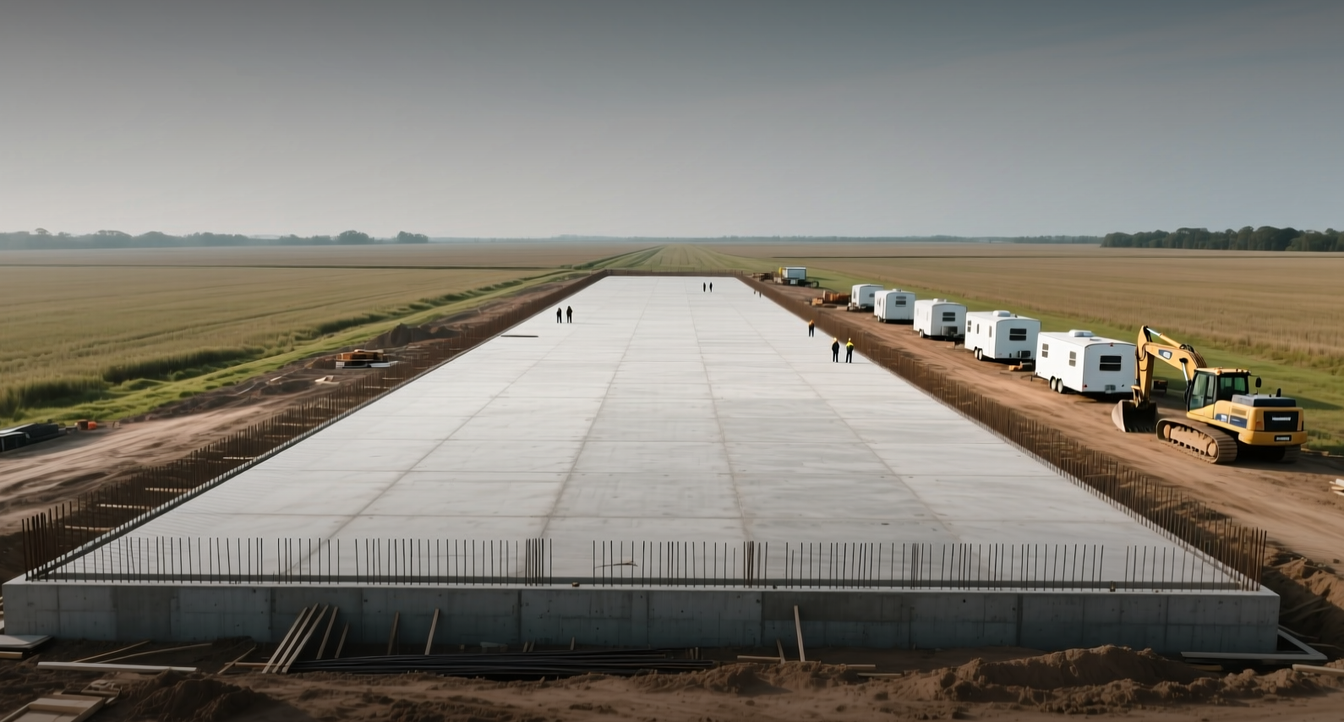
The investment program includes a $14 billion purchase of a 49 percent stake in training data company Scale AI in June 2025, with cofounder Alexandr Wang now heading the newly formed Meta Superintelligence Labs. Meta has broken ground on nine data centers since 2024, including a 10-million-square-foot, $50 billion facility in Richland Parish, Louisiana — roughly half again as large as the Pentagon's footprint. The company has also offered some AI recruits first-year compensation packages exceeding $100 million, according to reports.
The question is whether Zuckerberg can convert this spending into products that generate revenue. Meta's core advertising business remains its cash engine, but the AI push has compressed margins and drawn investor scrutiny. The company also agreed in August to pay $18 billion to settle US lawsuits over children's social media addiction, adding to its financial obligations.
Meta established its first AI lab in 2013, well before most competitors. But Zuckerberg's pivot to virtual reality and the metaverse — culminating in the October 2021 rebrand from Facebook to Meta — diverted attention from generative AI. Thirteen months later, OpenAI launched ChatGPT, and the race to command the technology began in earnest.
Since then, Meta has been playing catch-up against OpenAI, Anthropic, and Google DeepMind. A $2 billion deal for Manus, the maker of a buzzy AI agent, was ultimately undone by Chinese regulators. The company's open-source Llama models have gained traction among developers, but Meta has yet to ship a consumer AI product that matches the viral adoption of ChatGPT or Claude.
The competitive gap is measurable. Nvidia, whose GPUs power most AI training runs, forecast 70 percent sales growth next year, confirming that demand for AI compute remains strong across the industry. Nvidia also agreed to acquire Hugging Face for $12.9 billion, consolidating its position in the AI development stack. Meanwhile, OpenAI and Anthropic continue to set the frontier benchmark with each model release, forcing Meta to match both capability and cost efficiency in its Llama line.
Meta's AI spending has come at a cost. Operating margins have compressed as capital expenditures more than doubled, and investors have shown signs of unease. Yet some analysts argue the market is underpricing Meta's AI position. The company's distribution advantage — more than 3 billion users across Facebook, Instagram, and WhatsApp — gives it a potential edge in deploying consumer AI at scale that rivals like OpenAI and Anthropic cannot match without their own distribution partnerships.
Zuckerberg's bet is that "personal superintelligence" — AI assistants that know each user's context and preferences — will become the next major computing platform. If Meta can deliver that through its existing apps, the $145 billion annual spend could eventually translate into new revenue streams. If not, the company faces years of margin compression with no clear payoff, a scenario that would pressure the stock further given the $18 billion settlement already weighing on the balance sheet.
Meta shares have been volatile as investors weigh the AI spending against the company's advertising cash flow. The stock's valuation will likely hinge on whether Meta can demonstrate AI-driven revenue growth in the coming quarters, with the company expected to provide more detail on its AI monetization strategy in upcoming earnings calls. For now, Zuckerberg's bet is that the distribution moat — billions of daily active users — will prove more valuable than raw model capability in the race to put AI in everyone's hands.
This article is for informational purposes only and does not constitute investment advice.
