


Meituan's LongCat-2.0 proves frontier AI can be trained without Nvidia GPUs, using 50,000 domestic Chinese ASICs instead.
Meituan's LongCat-2.0 proves frontier AI can be trained without Nvidia GPUs, using 50,000 domestic Chinese ASICs instead.
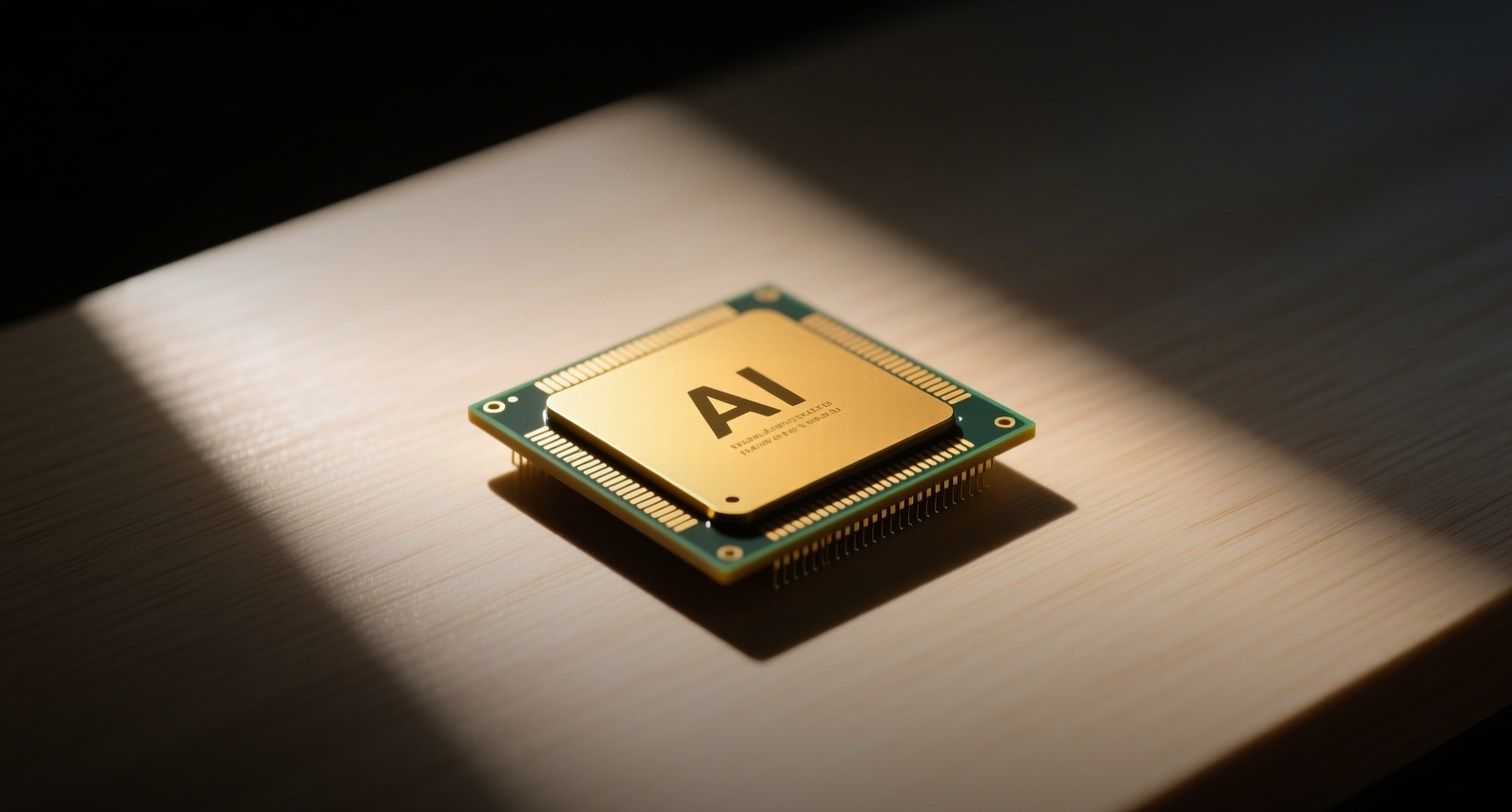
Meituan's LongCat-2.0 proves frontier AI can be trained without Nvidia GPUs, using 50,000 domestic Chinese ASICs instead.
Meituan's LongCat-2.0, a 1.6-trillion-parameter open-source model trained entirely on domestic Chinese ASICs, threatens to reshape the global AI hardware supply chain by proving Nvidia GPUs are no longer mandatory for frontier-scale training.
"LongCat-2.0 demonstrates that near-frontier AI performance is achievable without access to advanced Western GPUs," Wang Xing, founder and chief executive officer of Meituan, said in a statement.
The model activates an average of 48 billion parameters per token — ranging from 33 billion to 56 billion depending on query complexity — and supports a 1-million-token context window. On SWE-bench Pro, it scored 59.5, surpassing OpenAI's GPT-5.5 at 58.6, though it trails Anthropic's Claude Opus 4.8 on broader agentic benchmarks. Standard API pricing is set at $0.75 per million input tokens and $2.95 per million output, with a limited-time promotion cutting those rates to $0.30 and $1.20 respectively — undercutting GPT-5.5's $5 and $30 per million tokens.
The release arrives as Washington restricts access to top-tier American models, with OpenAI forced to limit GPT-5.6 access and Anthropic ordered to take Claude Fable 5 offline. For global developers facing rising API costs from locked-down Western labs, LongCat-2.0 offers a cheaper, open-license alternative — and for Nvidia, it shows that China's $10 billion-plus annual GPU procurement pipeline may face structural competition from homegrown silicon.
The training cluster comprised more than 50,000 domestically produced ASICs organized into superpods, using Huawei's Collective Communication Library to manage chip-to-chip coordination — a direct substitute for Nvidia's NCCL software stack. Meituan said the pretraining run, spanning more than 35 trillion tokens, finished with "no rollbacks or irrecoverable loss spikes," a stability claim that matters given how often large training runs on unproven hardware fail midway. DeepSeek's V4-Pro, by comparison, used Huawei chips only for inference while pretraining ran on Nvidia hardware — making LongCat-2.0 the first trillion-parameter model to complete both training and inference on domestic Chinese accelerators.
The architecture uses a Mixture-of-Experts design with LongCat Sparse Attention, an evolution of DeepSeek's sparse attention mechanism that resolves quadratic scoring costs through three techniques: streaming-aware indexing for coalesced memory access, cross-layer indexing that amortizes calculation costs across adjacent layers, and hierarchical indexing that applies a coarse-to-fine two-stage scoring layout. An N-gram Embedding module adds 135 billion parameters to a 5-gram token combination framework, expanding the core embedding space roughly 100-fold and allowing the model to capture dense local token relationships while reducing memory input-output bottlenecks.
After training, Meituan applied a Multi-Teacher Optimization via Mixture of Specialized Experts framework that segregates post-training into three independent clusters: Agent Experts for tool invocation and self-correcting loops, Reasoning Experts for multi-hop logic and mathematics, and Interaction Experts for human alignment and safety guardrails. A dynamic gate-routing mechanism fuses these specialized behaviors at runtime, allowing the model to coordinate deep reasoning, stable tool execution, and safe interaction simultaneously.
Meituan's commercial strategy targets the cost-sensitive developer market that Western labs have ceded through price increases. Context cache hits are processed free of charge — a feature that alters economics for agentic coding workflows where a model repeatedly reads the same multi-million-token code repository. For non-cache hits, the limited-time promotional pricing of $0.30 per million input tokens and $1.20 per million output positions LongCat-2.0 near DeepSeek V4-Pro's permanent $0.435 and $0.87 rates and Xiaomi's MiMo-V2.5 Flash at $0.10 and $0.30. The standard pricing of $0.75 and $2.95 still undercuts Google's Gemini 3.1 Pro Preview at $2 and $12 per million tokens for context windows under 200,000 tokens.
The model spent two months running anonymously on OpenRouter under the alias Owl Alpha, where it accounted for roughly 10.1 trillion monthly tokens — a 242% month-over-month surge that propelled it into the platform's global top three. By the time Meituan stepped forward, the model had secured first place on the Hermes Agent workspace, second place on Claude Code deployments, and third place across OpenClaw environments. On Terminal-Bench 2.1, it scored 70.8, and on SWE-bench Multilingual it reached 77.3, while on the general corporate workflow simulator FORTE it scored 73.2 — tied with Claude Opus 4.6 but trailing GPT-5.5's 77.8.
For investors, the implications cut two ways. Nvidia shares, trading at elevated multiples on the assumption that its CUDA software and hardware lead is unassailable, now face a credible challenge from Chinese ASIC clusters that can deliver competitive performance at lower cost. Meituan, meanwhile, has transformed from a food delivery super app with 770 million annual transacting users into a foundational AI infrastructure provider — a pivot that could open new revenue streams beyond its core logistics business. The company has not disclosed the total cost of the training cluster, but the successful deployment of 50,000 domestic accelerators at scale suggests China's AI chip sector has reached a maturity level that few Western analysts had anticipated. As analyst Yuchen Jin noted on X, the development echoes Nvidia Chief Executive Officer Jensen Huang's own observation that export controls on GPUs "won't stop China — they'll just accelerate the development of AI that runs on Chinese chips."
This article is for informational purposes only and does not constitute investment advice.
