

Key Takeaways:
- May payrolls surged 172,000, more than double consensus estimates
- Rate hike probability for December jumped to 70% from 50%
- New Fed Chair Kevin Warsh faces divided committee ahead of June 16-17 meeting
Key Takeaways:
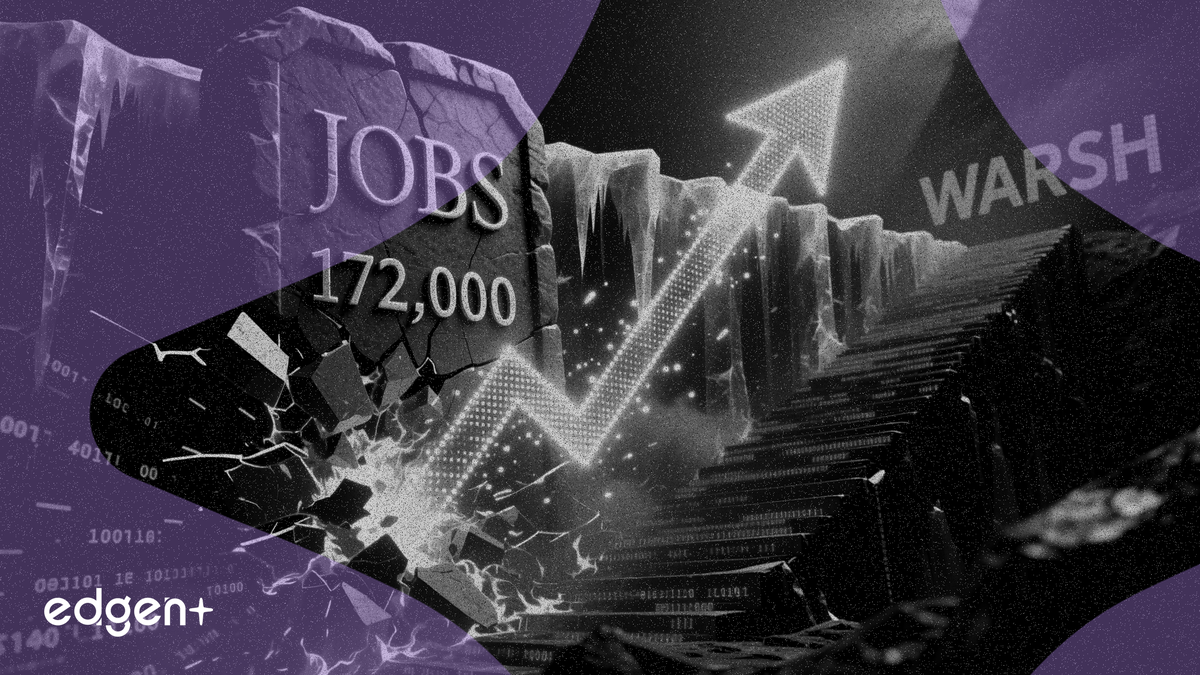
Kevin Warsh's first FOMC meeting is shaping up as a test of whether the Fed can resist rate hike pressure from its own ranks.
The May jobs report delivered 172,000 new positions, more than double consensus estimates, shifting the debate at the Federal Reserve from when to cut to whether to hike — and putting new Chair Kevin Warsh in an immediate bind.
"The third consecutive consensus-beating gain in nonfarm payrolls should further reduce concern among the FOMC about downside risks to the labor market," Stephen Brown, chief North America economist at Capital Economics, said. "It looks increasingly likely that the committee will enact a couple of insurance hikes later this year."
Investors responded by pricing a 70 percent probability of a rate hike by December, up from about 50 percent the prior day. The two-year Treasury yield rose 8 basis points on the data, while the S&P 500 trimmed earlier gains. The three-month average of hiring has returned to levels typical of the decade before the pandemic, and the unemployment rate held at 4.3 percent. Cleveland Fed President Beth Hammack said in a LinkedIn post that "it may soon be appropriate to act" on inflation.
For Warsh, who took office May 22 after arguing that productivity gains from artificial intelligence could allow lower rates, the data creates a collision between White House expectations and a committee increasingly leaning hawkish. The June 16-17 FOMC meeting will be his first test.
Hiring Rebound Reshapes the Debate
The jobs data marks a sharp reversal from early 2025, when monthly payroll gains averaged fewer than 10,000 as uncertainty over tariffs and immigration policy weighed on hiring. Through the first five months of 2026, payroll growth has averaged about 113,000 per month — enough to shift the Fed's focus back to inflation.
Fed Governor Christopher Waller, who had supported rate cuts through early 2026, said last month he "can no longer rule out rate hikes further down the road if inflation does not abate soon." Three policymakers dissented at the April 28-29 meeting in favor of shifting the policy stance to explicitly hawkish, opening the door to a rate increase.
Inflation Stays Sticky Above Target
Inflation has remained above the Fed's 2 percent target for a sixth straight year, with recent readings near 3.5 percent, according to Kansas City Fed President Jeffrey Schmid. The International Monetary Fund does not expect inflation to return to target until the end of 2027, citing the effects of the U.S.-backed war with Iran and the resulting oil shock.
"The big question now is do we stay patient?" Schmid said at an economic forum in Oklahoma. "Do we say, 'okay, now it's time to raise rates a quarter or two and see if we can't tamp this thing down?'"
The Fed's balance sheet, at roughly $6.7 trillion, adds another layer of complexity. Warsh has called the size bloated and favors returning closer to the pre-2008 crisis level of about $800 billion. Shrinking the portfolio through quantitative tightening would drain reserves and push longer-term borrowing costs higher, effectively tightening financial conditions even if the policy rate stays unchanged.
Warsh Faces Divided Committee
The new chair must manage a committee he did not appoint. His Senate testimony stressed patience, arguing that lower rates would follow only after inflation settles. But the jobs data has shifted the market-implied path, and Warsh now faces pressure from both sides — a White House that wants lower borrowing costs and a Fed that increasingly sees rate hikes as necessary.
The last time the Fed confronted strong labor data alongside political pressure for easier policy was in the late 1990s, when Alan Greenspan raised rates despite Clinton administration objections. The outcome was a soft landing. Whether Warsh can replicate that depends on whether inflation cooperates in the months ahead.
For investors, the implications cut across asset classes. Higher-for-longer rates pressure growth and tech stocks most directly, while banks and insurers with floating-rate exposure stand to benefit from wider net interest margins. The S&P 500's valuation multiple, already compressed by the shift in rate expectations, could face further headwinds if the Fed follows through on a hike. The next inflation reading, due next week, will provide the next data point in a debate that now centers not on whether the Fed can cut, but on whether it will have to raise.
This article is for informational purposes only and does not constitute investment advice.
