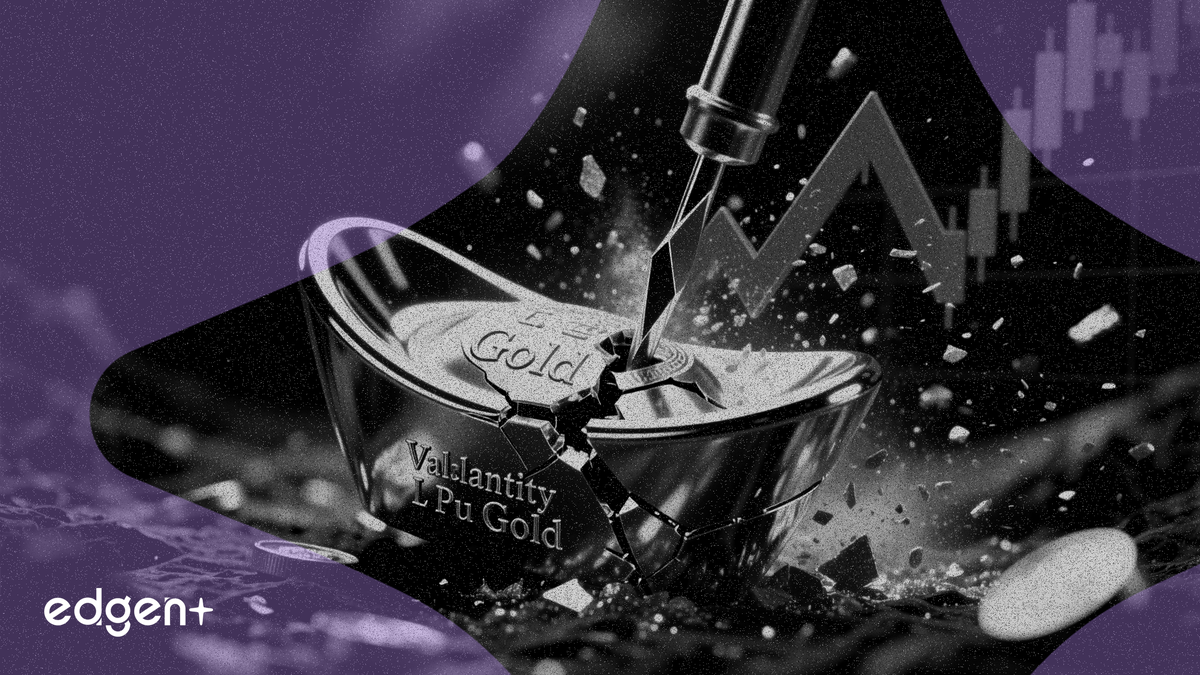
A sharp downturn in gold prices has erased all year-to-date gains, putting luxury retailer Lao Pu Gold (06181.HK) in a difficult position just weeks after a major price increase. The spot price of gold fell from a high of 1,250 yuan per gram earlier in the year to around 980 yuan per gram.
"Do not assume Lao Pu can only make money when gold prices go up, and not when they go down," Xu Gaoming, founder of Lao Pu Gold, said at the company's 2025 annual results conference, expressing confidence in the brand's ability to weather price volatility.
The correction followed Lao Pu's February 28 decision to increase prices on multiple product lines by about 30 percent, pushing the per-gram cost of many items to 2,500 yuan. This move has significantly widened the price differential between Lao Pu's products and the underlying spot price, from around 400 yuan to over 1,500 yuan per gram.
The event creates a critical test for Lao Pu's luxury-focused strategy, which has successfully positioned its "ancient-method" gold as a premium product with margins exceeding 40 percent. The key question is whether brand loyalty and perceived craftsmanship can sustain sales momentum during a "demand vacuum" period.
Price Gap With Peers Widens
The drop in gold prices has prompted competitors to act differently. Chow Tai Fook, another major jewelry brand, saw its gold jewelry price fall from 1,600 yuan per gram in early March to 1,366 yuan per gram by March 27 and has reportedly paused its own planned price hikes for fixed-price products. This has stretched the per-gram price difference between Lao Pu and Chow Tai Fook from around 200 yuan to nearly 1,200 yuan.
The immediate effect on customer traffic was apparent. Stores that saw hours-long queues before the price hike now have few customers, and shoppers are reportedly browsing more and buying less.
High-Margin 'No Hedge' Strategy Faces Test
Unlike many peers such as Chow Tai Fook and Caiibai Jewelry, which use hedging instruments to mitigate gold price volatility, Lao Pu Gold does not engage in hedging. The company relies on its substantial gross margin, which has consistently remained above 40 percent, compared to 30 percent for Chow Tai Fook and around 20 percent for Chow Tai Sang.
This strategy is underpinned by regular price increases, typically two to three times per year, which have been supported by a rising gold market since 2023. The company's 2025 revenue grew 220.3 percent to 313.75 billion yuan, with net profit increasing 235 percent to 50.3 billion yuan. However, analysts at China Merchants Securities noted that this growth relies heavily on consumer "fear of missing out," and a cooldown in gold sentiment poses a downside risk.
Despite the market downturn, founder Xu Gaoming remains bullish on the commodity itself. "I am certain that gold cannot fall further this year; even if it does, it will be temporary," he stated at the earnings call. This view is partially supported by long-term institutional forecasts. UBS, in a March 26 note, projected a 2027 gold price target of $5,900 per ounce, viewing the current drop as a pullback within a long-term uptrend.
This article is for informational purposes only and does not constitute investment advice.