
Key Takeaways:
- Kioxia shares fell 40% from ¥112,750 to ¥63,100 since late June
- Revenue surged 188% YoY to ¥1 trillion, yet the stock underperformed the Nikkei
- The broader memory complex lost 30-38% as profit-taking and rotation fears mounted
Key Takeaways:
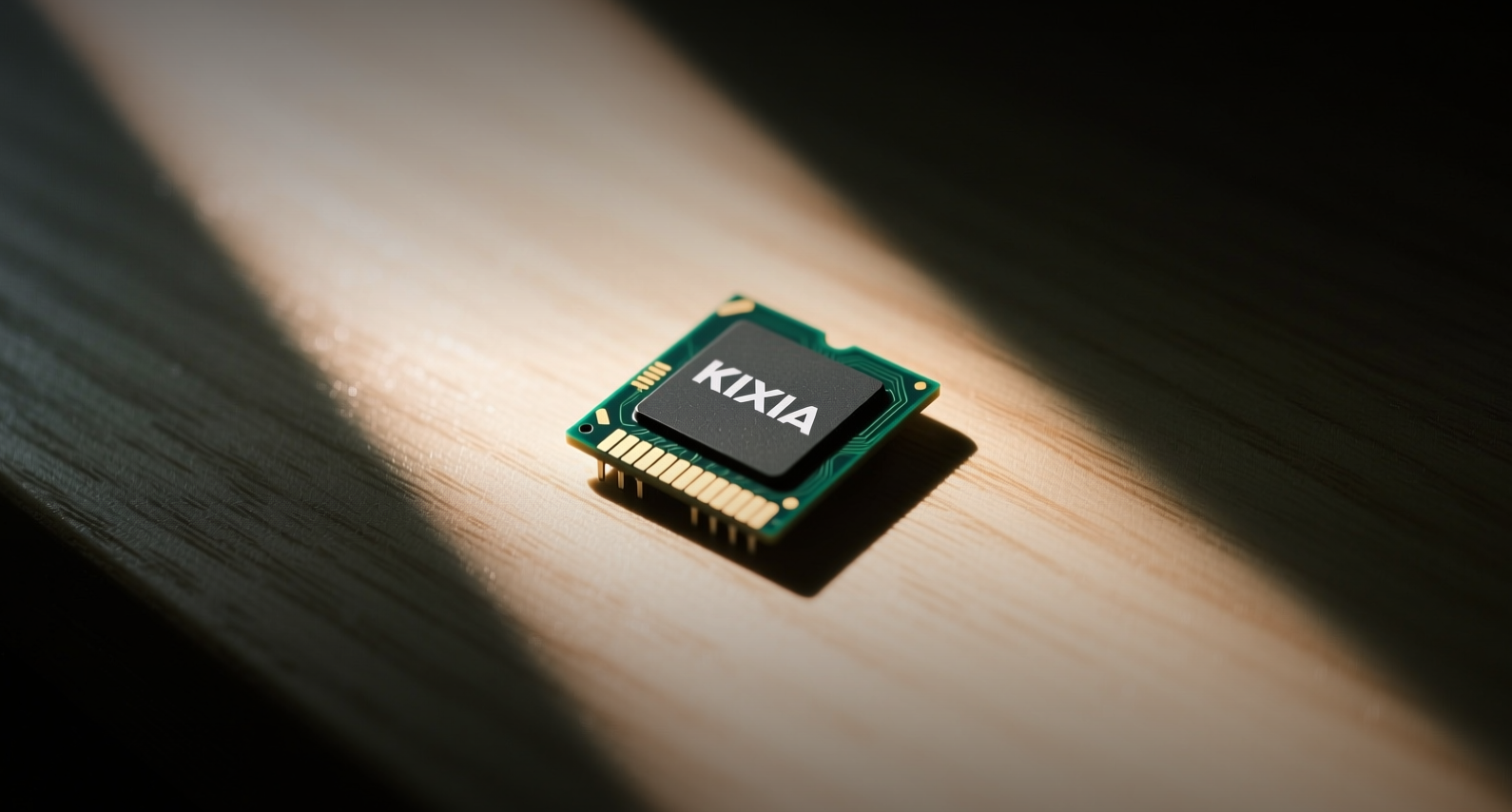
Kioxia Holdings Corp. shares have plunged more than 40% from a June record high to ¥63,100, making it the worst performer among major memory-chip stocks even as the Japanese company posted a 188% revenue surge to ¥1 trillion ($6.8 billion) in its fiscal fourth quarter.
"The market is pricing in peak memory pricing before the fundamentals actually roll over," said Rachel Kim, semiconductor analyst at Edgen. "When the entire memory complex drops 30% to 40% in three weeks despite record earnings, something beyond profit-taking is at work."
The selloff has swept across the memory industry. SK Hynix Inc. dropped 38% from its peak, Samsung Electronics Co. fell 30%, and Micron Technology Inc. slid from $1,246 to $904. In the US, Sandisk Corp. declined from $2,343 to $1,615. The declines persisted Wednesday even after ASML Holding NV raised its full-year 2026 outlook for the second time this year, citing strong AI-driven demand for logic and DRAM chips. Western Digital Corp., which re-entered merger discussions with Kioxia, fell about 8% on the day.
Kioxia's fundamental performance tells a different story from its stock price. The company's fourth-quarter operating profit jumped 1,499% year over year to ¥599 billion, while net income surged 2,990% to ¥409 billion. Revenue of ¥1 trillion exceeded the company's own guidance range of ¥845 billion to ¥935 billion. Analysts expect full-year revenue to reach ¥9.64 trillion — a 9,584% increase — and grow another 28% to ¥12.4 trillion in the next fiscal year.
The divergence between earnings and stock performance reflects two forces. First, investors are booking profits after memory stocks posted triple-digit gains since January. Morgan Stanley's Mike Wilson warned that capital would rotate from semiconductor names to hyperscalers. Second, the market is pricing in the risk that memory prices — which have driven the boom — will eventually peak. When that happens, the stocks that rode the climb typically retreat faster than the fundamentals deteriorate.
Technically, Kioxia has broken below the 50-day exponential moving average and fallen through the 38.2% Fibonacci retracement level. The next support sits at ¥57,150, according to TradingView data. The stock is now trading at its lowest level since May 29 and is significantly underperforming the Nikkei 225 Index.
The risk for investors is timing. If memory prices hold through 2027 as some analysts project, the current selloff could represent a buying opportunity. But if hyperscaler capital expenditure slows or high-bandwidth memory demand softens, Kioxia's margins and guidance could roll over — turning a technical correction into a fundamentals-driven re-rating. The company counts Apple Inc., Microsoft Corp., and Dell Technologies Inc. among its largest clients, making it directly exposed to any pullback in enterprise and cloud spending.
This article is for informational purposes only and does not constitute investment advice.
