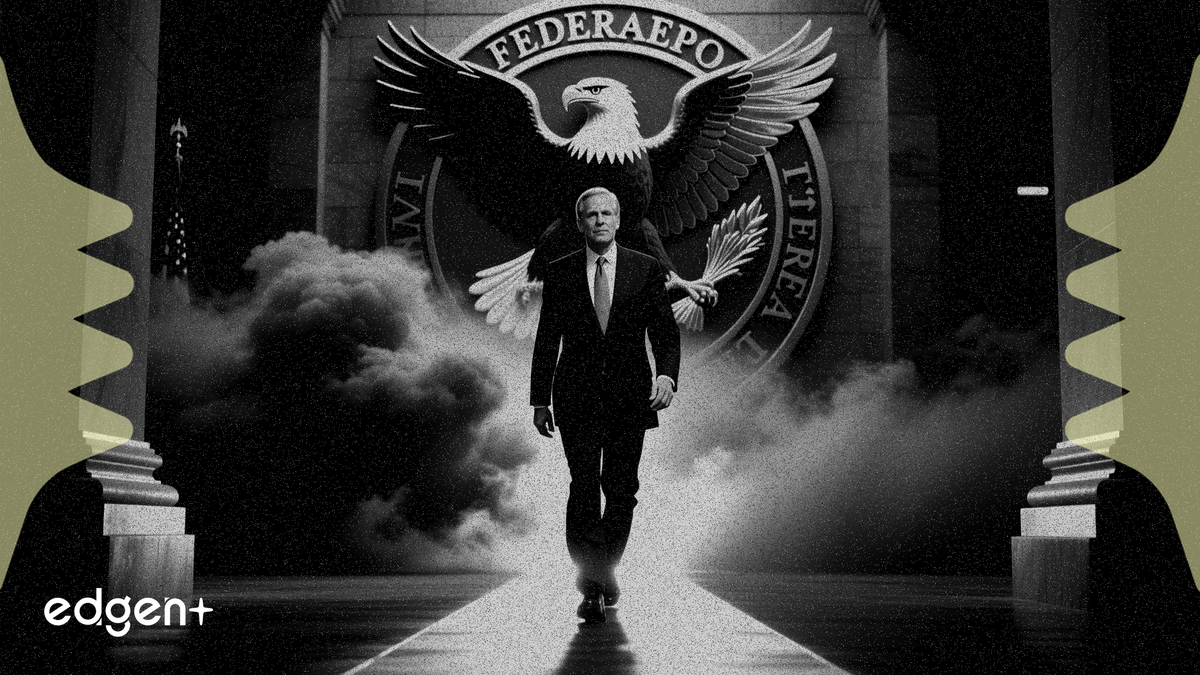
The confirmation of Kevin Warsh as the next Federal Reserve chair is expected to proceed after the Department of Justice closed a criminal probe into current Chair Jerome Powell. The move resolves a roadblock from a key Republican senator, though Warsh is still likely to face sharp questioning over his independence and policy views at a time of rising inflation.
"American taxpayers deserve answers about the Federal Reserve’s fiscal mismanagement, and the Office of the Inspector General’s more powerful authorities best position it to get to the bottom of the matter," White House spokesman Kush Desai said Friday in an emailed statement. He added that the White House was confident the Senate will swiftly confirm Warsh.
The DOJ investigation, which centered on cost overruns for the renovation of two Fed buildings now totaling $2.5 billion, was closed Friday. U.S. Attorney Jeanine Pirro said the matter would be taken up by the Fed’s own Inspector General. The decision came after a federal judge last month quashed a DOJ subpoena, writing that a “mountain of evidence suggests that the Government served these subpoenas on the Board to pressure its Chair into voting for lower interest rates or resigning.”
With Powell’s term ending May 15, the Senate Banking Committee is now expected to vote on Warsh's nomination as soon as Wednesday. A change in leadership could signal a significant shift in U.S. monetary policy, introducing uncertainty for markets. Powell, whose term as a governor lasts until January 2028, could remain on the board, though President Trump has threatened to fire him if he stays.
Warsh's Path to Confirmation
The primary obstacle to a confirmation vote was Senator Thom Tillis, a North Carolina Republican on the banking committee, who had vowed to block any nominee until the DOJ’s investigation into Powell concluded. Tillis had called the inquiry a “vindictive prosecution” that threatened the Fed’s independence. With the DOJ probe now closed, Tillis told NBC he was "prepared to move on with the confirmation of Mr. Warsh."
Warsh, a 56-year-old financier and former Fed governor from 2006 to 2011, was nominated by President Trump in January. During his Senate confirmation hearing on April 21, he pledged to be an “an independent actor” if confirmed. The hearing drew unusual attention with the appearance of NFL Hall of Fame wide receiver Larry Fitzgerald, who was seated behind Warsh, a friend of the nominee.
Policy and Politics Collide
Lawmakers are expected to press Warsh on his monetary policy views, particularly after he signaled support for lower interest rates in a November 2025 Wall Street Journal op-ed, citing AI as a “significant disinflationary force.” This stance aligns with President Trump's repeated public criticism of Powell for not easing borrowing costs more aggressively.
However, with U.S. inflation rising to a 3.3% annual rate last month, its highest in nearly two years, some analysts question if Warsh would maintain a dovish stance. "Although Warsh has argued for lower rates, we do not view him as structurally dovish," Deutsche Bank analysts said in a research note. "Instead, his views have tended to skew hawkish relative to others."
The Fed’s next policy meeting is scheduled for next week, where it is expected to hold its benchmark rate steady in the current 5.25% to 5.50% range. The subsequent meeting is not until June 16-17, giving the Senate a window to confirm Warsh ahead of the next major policy decision.
This article is for informational purposes only and does not constitute investment advice.