

JD.com's Physical AI Acceleration Initiative commits RMB10 billion and 3 million robots by 2028, using its logistics network to build an embodied-AI data advantage.
JD.com's Physical AI Acceleration Initiative commits RMB10 billion and 3 million robots by 2028, using its logistics network to build an embodied-AI data advantage.
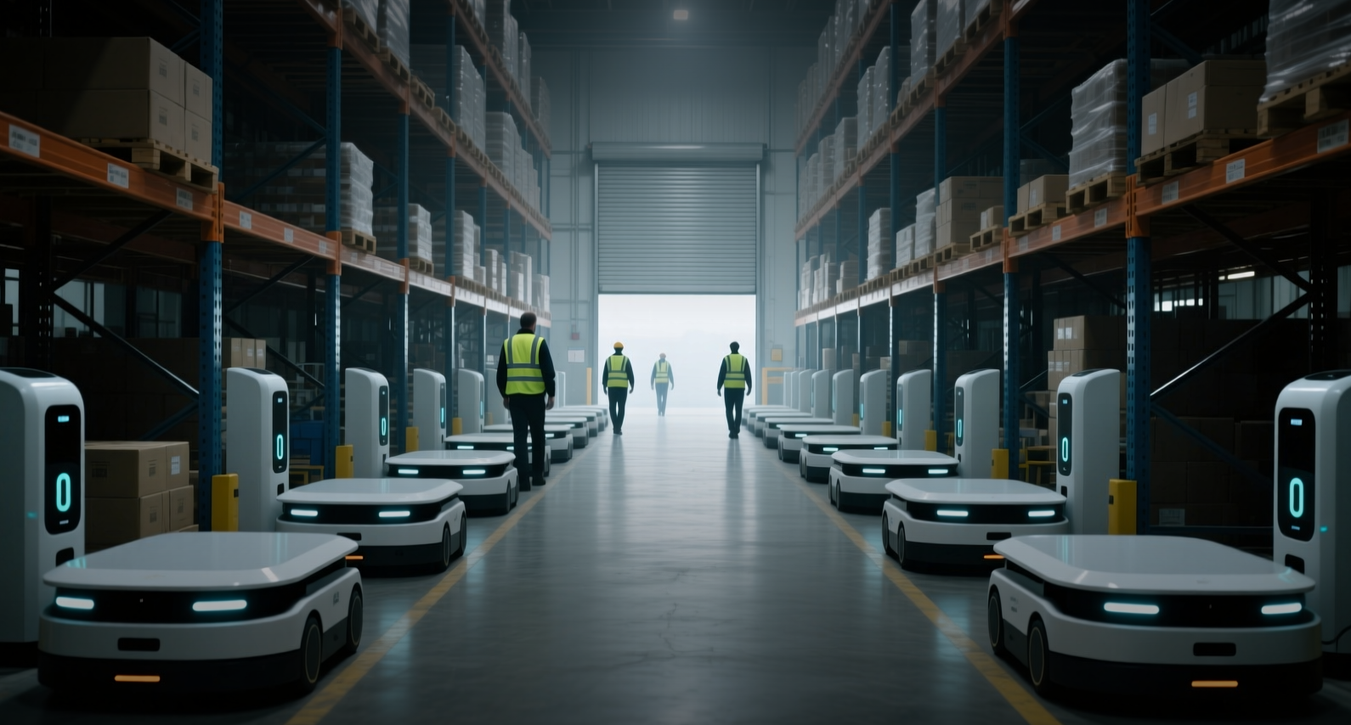
A logistics operator is betting its own warehouses can become the training ground for machines that move goods. JD.com's commitment to deploy more than 3 million robots and spend RMB10 billion by 2028 positions its self-built delivery network as a data engine for embodied AI, a move that could redraw China's robotics supply chain.
"The first phase will focus on embodied robots, building globally leading scaled capabilities across six dimensions: data, manufacturing, R&D, sales, logistics, and services," Cao Peng, chairman of JD.com's technology committee and president of JD Cloud, said at the JD Global Technology Explorer Conference on Sept. 9.
Under the Physical AI Acceleration Initiative, JD aims to build what it calls the world's largest embodied-data training center, collecting more than 10 million hours of real-world human-scenario data within two years. It plans to establish 80 robotics industry bases across China over five years and procure 3 million robots, 1 million autonomous vehicles and 100,000 drones to automate logistics end to end. JD Cloud has already built a domestically produced 10,000-card computing cluster with Moore Threads (688795.SS) and plans a 100,000-card version, according to Cao and Zhang Jianzhong, Moore Threads' founder and chief executive.
The data moat argument
What sets JD apart from pure-play robotics vendors is operational reach. Its warehousing, sorting and delivery network generates the real-world data embodied models need, while its retail platform gives it a channel to sell robots to third parties. The company said it will help 100 robot brands reach RMB1 billion in independent sales each by 2028, and it targets cost reductions for 100 complete-machine manufacturers and business doubling for 100 component suppliers — an attempt to connect both ends of the robotics industry through its platform.
The initiative spans six "world's largest" goals, from an embodied-data collection center and robotics industry base to a service network, logistics application fleet, component supply network and retail channel. JD's plan to build 80 bases across China creates a full-lifecycle platform covering display, delivery, repair, maintenance, R&D, assembly, data collection and manufacturing.
Embodied intelligence remains early in industrialization, with technology maturity, cost control and deployment efficiency the main constraints on mass adoption. JD's system-wide R&D investment grew 53.2 percent year over year in the first half of 2026, accelerating for three consecutive quarters, according to the company. That trajectory points to rising resource allocation toward technology even as core e-commerce margins face competitive pressure.
Investor stakes
The capital outlay carries near-term margin risk. HSBC Research reiterated its buy rating on JD.com (JD.US) with a $38 price target, treating the robotics investment as a long-term efficiency play rather than an immediate earnings driver. JD shares on the Hong Kong exchange (09618.HK) traded down 2.4 percent on the announcement day.
For investors, the question is execution: whether JD can collect tens of millions of hours of data within two years and whether its 80 bases operate profitably. If the roadmap holds, JD becomes a logistics-embodied-AI operator with a data advantage rivals would struggle to replicate. If deployment slips, the RMB10 billion commitment becomes a drag on margins with no offsetting revenue.
This article is for informational purposes only and does not constitute investment advice.
