

Japanese semiconductor equipment makers are rewriting their pricing playbook, using three years of yen depreciation and surging AI demand to push through margin-expanding price increases.
Japanese semiconductor equipment makers are rewriting their pricing playbook, using three years of yen depreciation and surging AI demand to push through margin-expanding price increases.
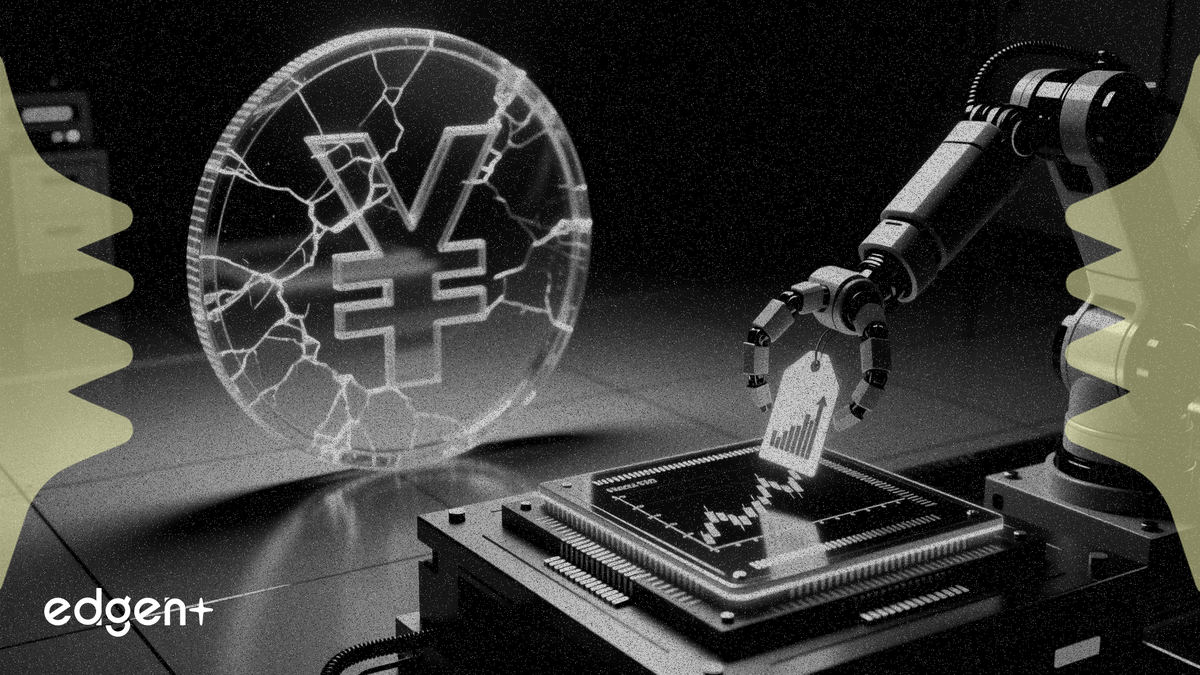
Japanese semiconductor equipment makers are rewriting their pricing playbook, using three years of yen depreciation and surging AI demand to push through margin-expanding price increases.
Tokyo Electron Ltd. and Screen Holdings Co. are pushing through multi-phase price increases, targeting gross margins above 50 percent and operating margins of 35 percent, as three years of yen depreciation and AI-driven demand give Japan's chip equipment makers rare pricing leverage.
"Tokyo Electron has made pricing improvement its top strategic priority, with a clear three-phase plan to lift margins," Bernstein analysts led by Sara Russo wrote in a research note.
The first phase targets premium pricing for expedited delivery requests, which Tokyo Electron historically did not charge for. Phase two involves negotiating surcharges for inflation, raw materials and labor cost increases. The third phase seeks higher prices on new products through technology upgrades and added functionality. Screen has adopted a similar two-phase strategy, with inflation-related adjustments already accepted by customers, Bernstein said. SK Hynix Inc. has already received requests for price increases of 3 percent to 4 percent, signaling the negotiations have moved from intention to action.
The pricing shift could reverse recent underperformance in semiconductor equipment stocks, which have gained about 30 percent over the past two months — lagging behind Renesas Electronics Corp.'s 83 percent surge, Ibiden Co.'s 126 percent jump and Sumco Corp.'s 95 percent rally. Successful implementation would directly expand margins and reshape the investment narrative from cyclical recovery to earnings expansion.
Yen Depreciation Opens the Door for Price Negotiations
The pricing leverage stems from a structural shift in currency markets. The yen has depreciated about 30 percent against the US dollar over the past three years, creating a compelling rationale for Japan-based equipment makers to renegotiate contracts with global customers. Tokyo Electron, Screen and Kokusai Electric Corp. all report earnings in yen, while their customers — including Samsung Electronics Co., TSMC and SK Hynix — operate primarily in US dollars.
Despite the persistent currency pressure, Japanese equipment makers had historically been reluctant to push for price increases. That stance has now shifted. Bernstein expects Kokusai Electric to follow Tokyo Electron and Screen with similar pricing strategies, given its shared yen-denominated cost structure.
The impact is most pronounced for front-end equipment makers. Companies like DISCO Corp., Lasertec Corp. and Advantest Corp., which use a mix of yen and dollar pricing and have already achieved significant margin expansion, stand to benefit less from additional price increases, Bernstein said.
ASML and Besi See Product Upgrade as Bigger Margin Driver
For European equipment leaders, product cycle upgrades offer a more powerful pricing lever than currency-driven adjustments. ASML Holding NV's next-generation extreme ultraviolet lithography machines carry an average selling price roughly 60 percent higher than current models, which Bernstein estimates will push EUV gross margins well above 60 percent.
Bernstein maintained outperform ratings on both ASML and Besi, with price targets of 1,700 euros and 280 euros respectively. The broker noted that ASML could also pursue premium pricing for expedited deliveries given tight supply conditions, though product-driven price increases remain the primary margin driver.
What This Means for Investors
Tokyo Electron shares trade at 72,760 yen, up 7 percent on the session. The company's current consensus forecasts imply a gross margin of 48 percent and operating margin of 30 percent for the fiscal year ending March 2029 — both below management's stated targets of 50 percent and 35 percent, suggesting room for upward revisions if the pricing strategy succeeds. Screen's consensus operating margin of 27 percent for fiscal 2028 also trails its 30 percent target.
Bernstein rates Tokyo Electron and Kokusai Electric outperform, with price targets of 59,200 yen and 8,240 yen respectively. Screen is rated market-perform with a 12,600 yen target. The divergence reflects Bernstein's view that Tokyo Electron and Kokusai have more pricing headroom relative to current consensus, while Screen's China exposure — including the loss of major customer Swaysure's DRAM investment — introduces greater uncertainty.
This article is for informational purposes only and does not constitute investment advice.
