

DARPA has awarded IonQ a $28 million contract extension to scale production of its Evergreen-05 optical atomic clocks and deliver 125 units to U.S. government customers.
DARPA has awarded IonQ a $28 million contract extension to scale production of its Evergreen-05 optical atomic clocks and deliver 125 units to U.S. government customers.
DARPA has awarded IonQ a $28 million contract extension to scale production of its Evergreen-05 optical atomic clocks and deliver 125 units to U.S. government customers.
IonQ's expansion into quantum timing hardware gained a defense anchor as DARPA awarded the company a $28 million contract extension under its It's About Time program to produce 125 Evergreen-05 optical atomic clocks for U.S. government customers.
"We added Vector Atomic to the IonQ family because their clocks and sensors are the best in the world," IonQ Chairman and CEO Niccolo de Masi said. "DARPA's investment under the It's About Time program confirms that we made the right choice."
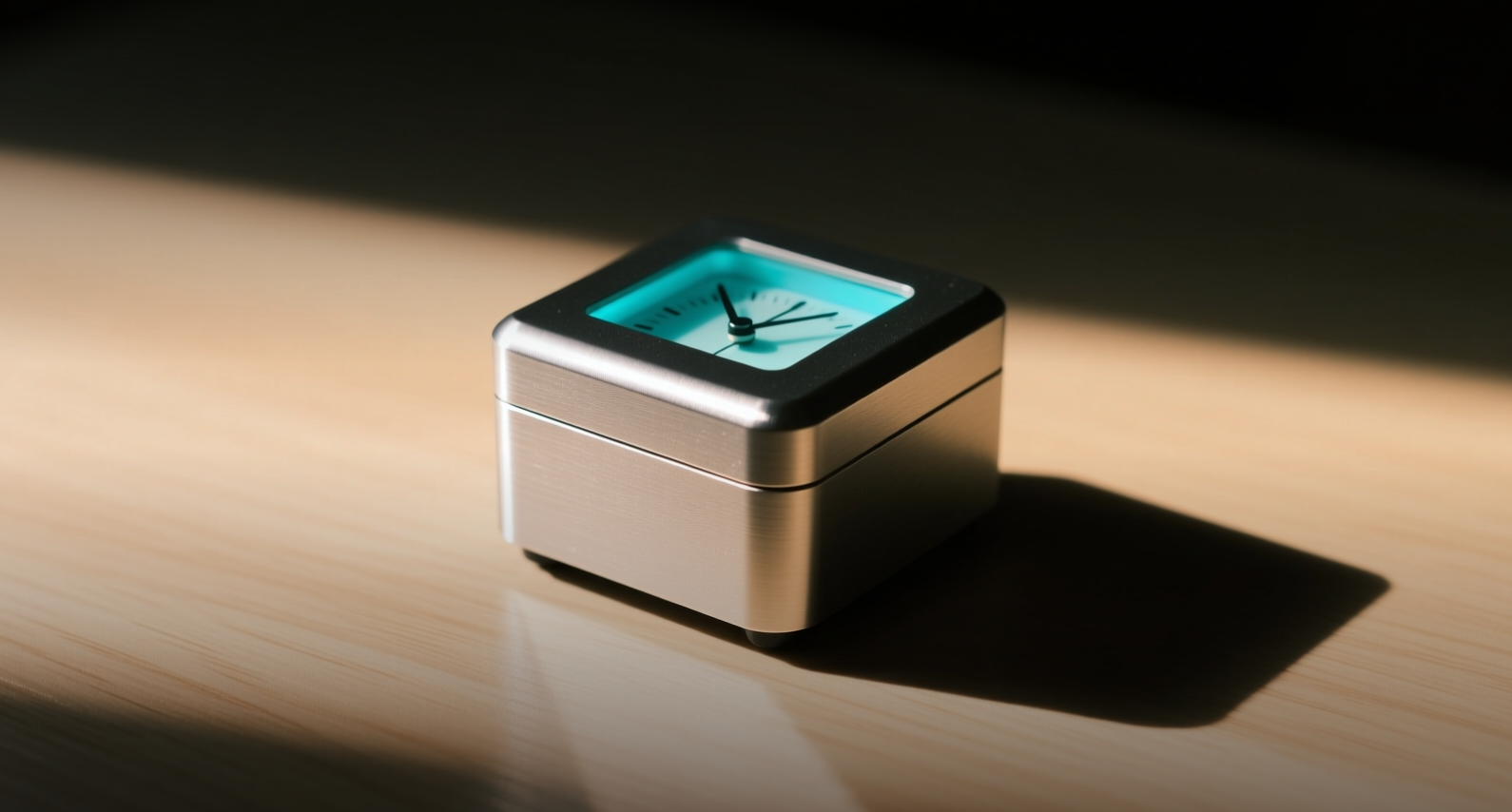
The Evergreen-05 is a fully integrated optical atomic clock with a 5-liter, shoe box-sized form factor. It delivers timing stability of 50 femtoseconds at one second and nanosecond holdover over 10 days, projecting to a timing error of less than one second over 30 million years. Compared with active hydrogen masers, the clock offers superior phase noise and short-term stability with comparable long-term drift, in 1/75th of the volume.
The contract extends DARPA's support for the core technology, which began in 2019 when the agency funded Vector Atomic, then a year-old startup in Pleasanton, California. IonQ acquired Vector Atomic in October 2025 to expand into quantum position, navigation, and timing, and will invest $15 million in dedicated production space, manufacturing equipment, and support staff to fulfill the order.
The clocks are designed for mission-critical applications including radar, secure communications, and precision geolocation. Their tactical package and broader environmental operating range extend IonQ's existing clock technology across land, maritime, and airborne platforms, according to the company.
The performance profile matters because timing precision underpins navigation and communications systems. A hydrogen maser — the incumbent technology for high-stability timing — typically occupies a much larger footprint. IonQ's clock delivers comparable long-term drift in a fraction of the space, opening deployment on platforms where size and weight constraints rule out traditional systems.
DARPA's continued backing follows IonQ's October 2025 acquisition of Vector Atomic, the startup that developed the Evergreen-05 core under the agency's Robust Optical Clock Network program. Marty Boyd, director of IonQ's timekeeping division and co-founder of Vector Atomic, said the initial DARPA support "was critical to prove the core concepts of our clock."
"We joined IonQ to accelerate and scale up delivery of our commercial products, and DARPA's continued support gives us the opportunity to do that," Boyd said.
The contract adds to IonQ's defense and government business as the company broadens beyond quantum computing into sensing and networking. IonQ's quantum computers have been used by partners including Amazon Web Services, AstraZeneca, and NVIDIA, which the company says achieved a 20x performance increase over previous quantum solutions. In 2025, IonQ set a world record with 99.99% two-qubit gate fidelity.
The $28 million contract, modest against IonQ's broader quantum platform ambitions, provides a recurring government revenue stream and confirms the Vector Atomic acquisition. IonQ shares trade on the New York Stock Exchange under the ticker IONQ. The expansion into timing hardware positions the company in the defense timing market, where precision clocks are critical for GPS-denied navigation and secure communications.
This article is for informational purposes only and does not constitute investment advice.
