

Intel's market capitalization surged to a record of approximately $476 billion, fueled by a significant first-quarter earnings surprise and bullish commentary on AI-driven demand.
Intel's market capitalization surged to a record of approximately $476 billion, fueled by a significant first-quarter earnings surprise and bullish commentary on AI-driven demand.
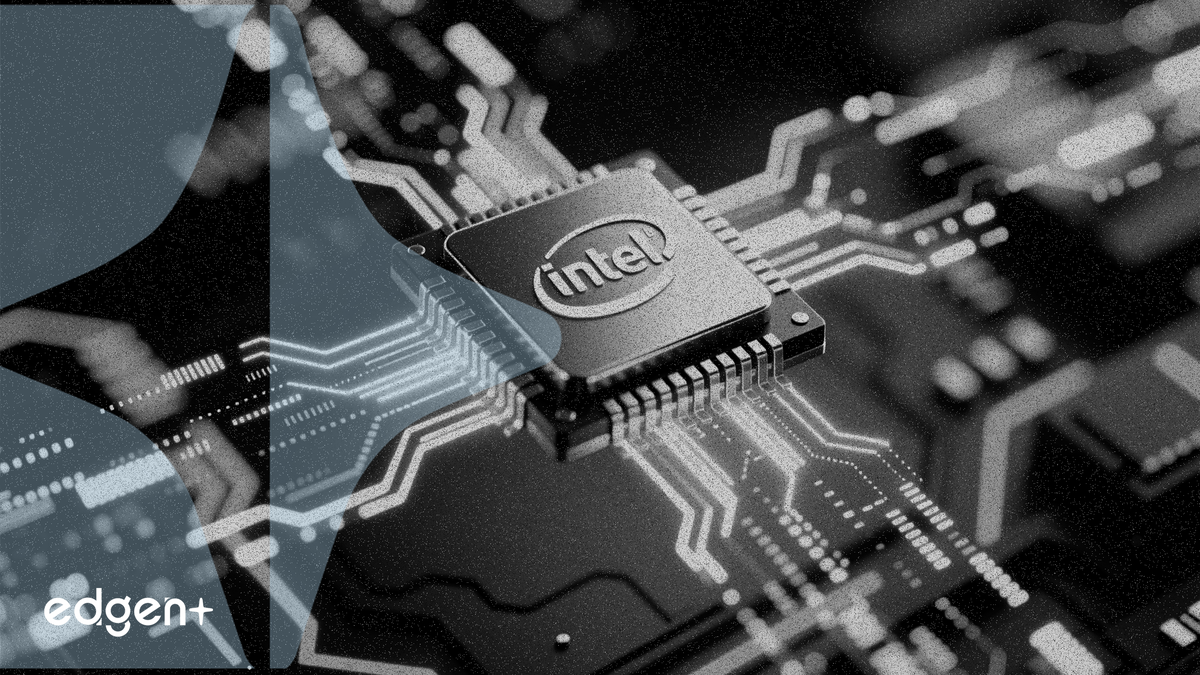
Intel’s market capitalization climbed to a record $476 billion this week as its stock hit an all-time high of $94.95, fueled by a 7% first-quarter revenue beat that has Wall Street debating whether the legacy chipmaker is finally capitalizing on the AI revolution or if its valuation has outrun fundamentals.
"Even I didn’t expect this formerly iconic chipmaker to report such an outstanding quarter," CNBC's Jim Cramer said on his Mad Money broadcast. "I think there’s been a profound cultural shift in Intel," he added, crediting the transformation to CEO Lip-Bu Tan, who took the helm just over a year ago.
The semiconductor giant reported first-quarter 2026 revenue of $13.6 billion, a 7% increase from the $12.7 billion recorded in the same period of 2025 and the company's largest earnings surprise in over five years. Shares surged 12.06% on Wednesday following the results. For the second quarter, Intel forecasts revenue between $13.8 billion and $14.8 billion, representing potential year-over-year growth of up to 14.7%.
The record valuation raises a critical question for investors: has Intel earned its seat at the AI table, or is the rally a product of speculative fervor? While Intel's recovery appears driven by strong CPU demand, the broader AI chip market involves intense competition from rivals like AMD, which is pursuing a different, accelerator-focused path.
The core of Intel's strong performance stems from robust demand for its central processing units (CPUs), particularly its newest generation of server processors. According to the company’s earnings call, the new server chips are experiencing the most aggressive adoption curve Intel has seen in five years. This surge in demand allowed for greater pricing power, which directly contributed to margin expansion, according to CFO David Zinsner.
Cramer highlighted this trend as "the next leg of the AI revolution," suggesting that the market for CPUs in AI infrastructure remains exceptionally strong. This CPU-centric success provides a stark contrast to the GPU-dominated narrative that has defined the AI hardware market for the past several years, positioning Intel as a primary beneficiary of a diversifying hardware landscape.
While Intel celebrates its CPU-driven resurgence, competitor Advanced Micro Devices (AMD) continues its aggressive push into AI accelerators. Underscoring the high stakes, Susquehanna analyst Christopher Rolland recently raised his price target on AMD to a street-high of $375, citing the accelerating adoption of its MI350 and forthcoming MI450 AI chips.
Rolland pointed to blockbuster deals with OpenAI and Meta, each committing to 6-gigawatt hardware procurements that could translate into tens of billions in revenue. However, not all analysts are as bullish. Northland recently downgraded AMD to Market Perform with a $260 price target, highlighting significant Wall Street disagreement on the sector's valuation. AMD shares, which advanced 4.3% on the Intel news, trade at a steep 50 times forward earnings, a valuation that leaves little room for error.
For investors, the divergence is key. Intel's $476 billion valuation is a bet on a CPU-led recovery and a cultural turnaround, while AMD's valuation hinges on capturing a significant share of the dedicated AI accelerator market from Nvidia. As Cramer noted, while the parabolic move in Intel suggests some investors "missed it," any market pullback could offer another chance to weigh the competing architectures shaping the future of AI.
This article is for informational purposes only and does not constitute investment advice.

