

Intel's 281.8% year-to-date surge marks one of the most dramatic turnarounds in semiconductor history, driven by advanced chip packaging technology and a White House-backed partnership with Apple.
Intel's 281.8% year-to-date surge marks one of the most dramatic turnarounds in semiconductor history, driven by advanced chip packaging technology and a White House-backed partnership with Apple.
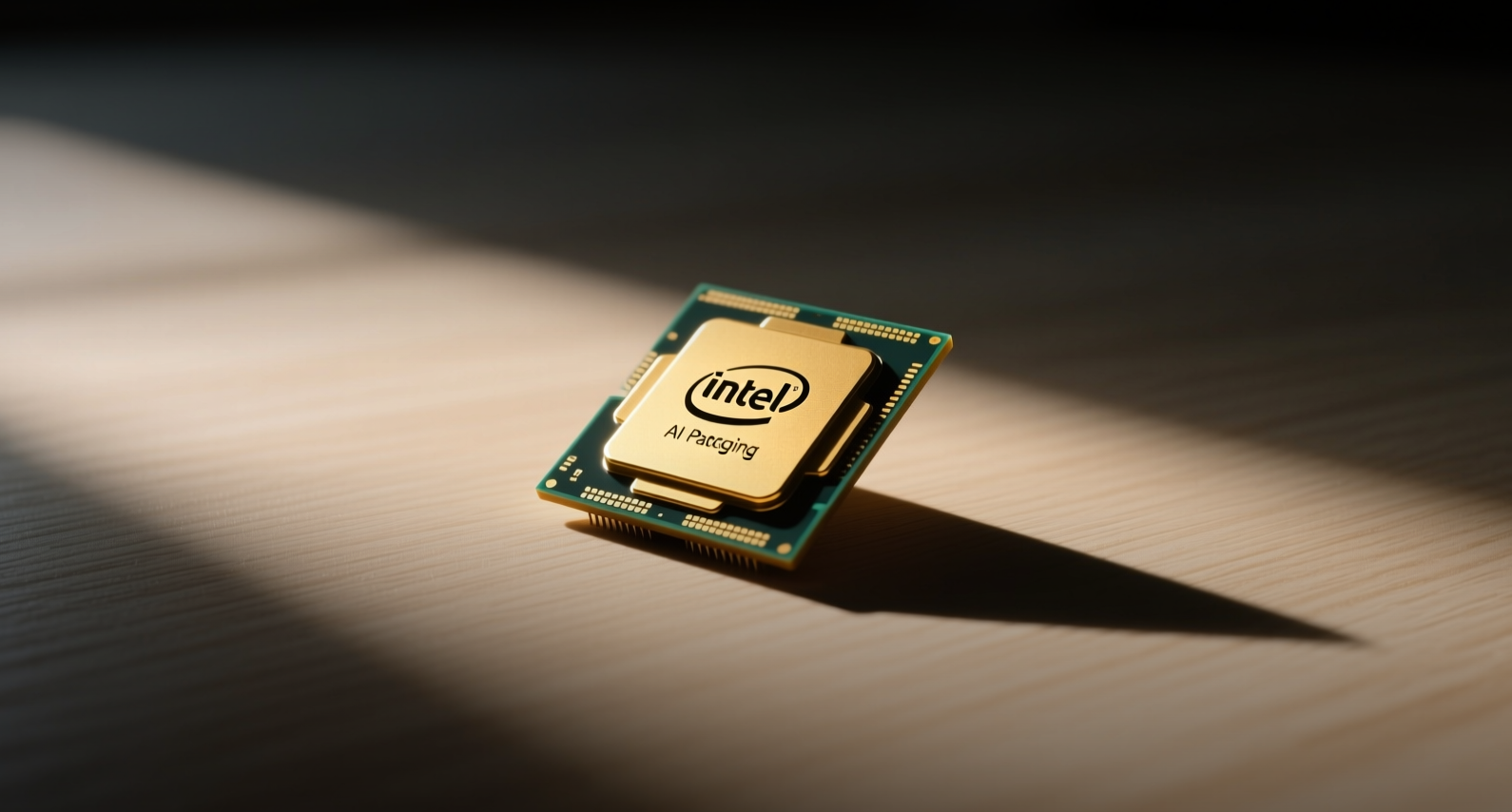
Intel's bet on advanced chip packaging has fueled a 281.8% year-to-date surge, as the company positions itself at the center of US semiconductor manufacturing alongside a new Apple partnership.
"Advanced packaging is where the semiconductor industry's next battleground will be fought," Seok-Hee Lee, Intel's newly elevated head of advanced packaging operations, said.
Intel shares traded at $136.05 intraday Tuesday, down 3.47% from Monday's close but up from a 52-week low of $18.97. President Donald Trump confirmed this week that Apple has agreed to work with Intel to design and manufacture chips in the United States, lending political momentum to Intel's foundry comeback strategy.
The packaging push — technology that stacks and connects multiple chips to improve performance without shrinking individual transistors — gives Intel a differentiation point against Taiwan Semiconductor Manufacturing Co., which dominates leading-edge chip manufacturing but faces capacity constraints in its CoWoS (chip-on-wafer-on-substrate) packaging.
How Packaging Became Intel's Moat
Advanced packaging has emerged as a critical bottleneck in the semiconductor supply chain. As traditional transistor scaling slows, chipmakers increasingly rely on packaging techniques — stacking memory directly atop logic chips, or splitting a single design across multiple smaller dies — to deliver performance gains. TSMC's CoWoS packaging, used in Nvidia Corp.'s H100 and Blackwell graphics processors, has been oversubscribed for more than two years, with lead times stretching past 12 months.
Intel is betting its packaging expertise can capture a share of that demand. The company elevated semiconductor industry veteran Seok-Hee Lee to lead its advanced packaging operations, signaling a determination to rebuild its manufacturing credibility after years of process-node delays. Intel's packaging technology, including its Foveros 3D stacking and EMIB (embedded multi-die interconnect bridge) approaches, targets the same high-performance computing and AI accelerator customers that have strained TSMC's capacity.
The Apple Factor and US Manufacturing
The White House-backed Apple partnership adds a marquee customer to Intel's foundry ambitions. Apple, which designs its own chips for iPhones, Macs, and data centers, has relied exclusively on TSMC for production since 2020. Shifting some chip design and manufacturing to Intel would represent a seismic realignment of the semiconductor supply chain, potentially diverting billions of dollars in annual wafer spending from Taiwan to the United States.
The political dimension is significant. The Trump administration has made domestic chip manufacturing a priority, and Intel stands to benefit from both direct government support and the strategic imperative to reduce reliance on Taiwan-based fabrication. For Apple, diversifying its chip supply away from a single source reduces geopolitical risk — a consideration that has grown more urgent as tensions between China and Taiwan persist.
What This Means for Investors
Intel shares still trade below the consensus price target of $87.98, reflecting skepticism that the company can sustain its turnaround. The stock's 281.8% rally from its $18.97 low has already priced in significant optimism about the foundry strategy and packaging differentiation. The question for investors is whether Intel can convert political tailwinds and technological ambition into revenue — and whether its packaging capacity can meaningfully challenge TSMC's entrenched position.
Nvidia, AMD, and other chip designers that rely on TSMC's CoWoS packaging face a strategic calculus: if Intel's packaging capacity comes online at scale, it could provide an alternative that eases supply constraints and potentially lowers costs. For TSMC, any loss of packaging share to Intel would represent a rare competitive setback in a market it has dominated for years.
This article is for informational purposes only and does not constitute investment advice.
