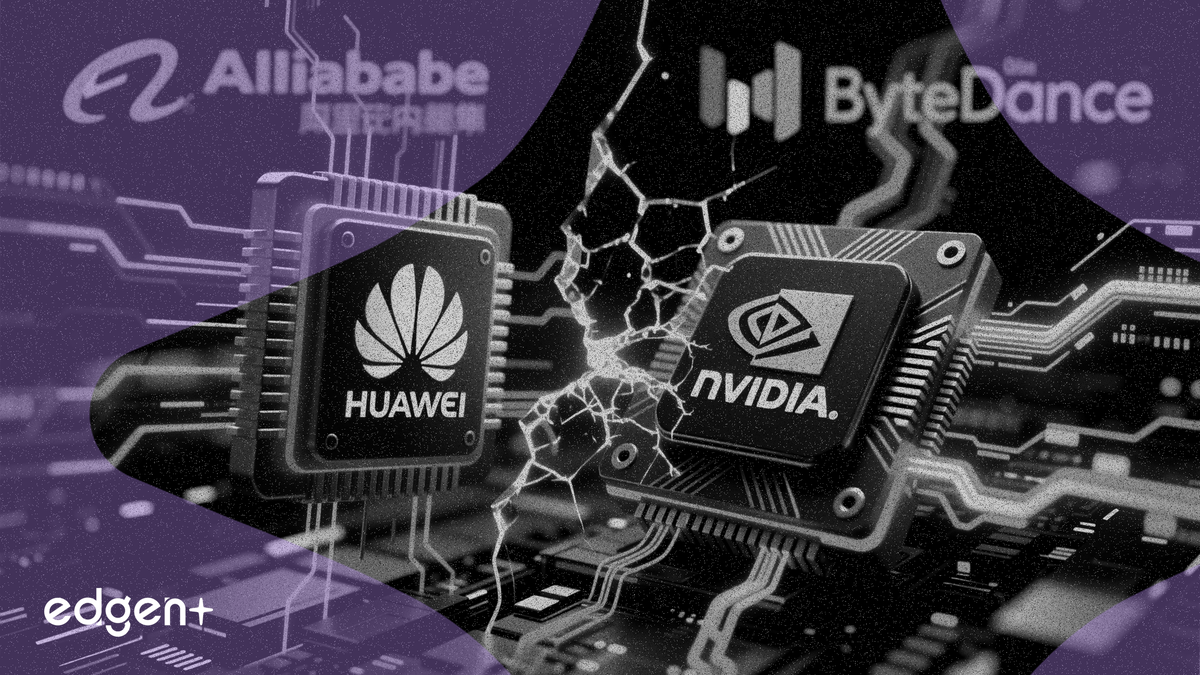
ByteDance, Alibaba Adopt Huawei's New AI Chip
Huawei is poised to capture a significant share of China's AI accelerator market as tech giants ByteDance and Alibaba plan to purchase its new 950PR processor. Following successful customer testing that began with samples in January, the development marks a critical milestone for China's goal of semiconductor self-sufficiency. Huawei intends to ship approximately 750,000 units of the 950PR this year, with mass production scheduled to start in April and full-scale shipments beginning in the second half of the year. This reception contrasts sharply with the lukewarm adoption of Huawei's previous flagship chip, the Ascend 910C, which struggled to gain traction with large private-sector firms.
950PR Closes Gap with CUDA Software Compatibility
The new chip's success stems directly from key technical improvements that address previous adoption hurdles. Tech firms have responded positively to the 950PR's enhanced compatibility with Nvidia's CUDA, the dominant software system for AI development. This feature allows Chinese developers, who have primarily built models using Nvidia's ecosystem, to migrate their work more easily to Huawei's hardware. By moving away from its proprietary CANN software system, Huawei has significantly lowered the barrier to entry for a large pool of developers, complementing the chip's improved response speeds and overall performance.
Huawei's $6,900 Chip Pressures Nvidia Amid US Sanctions
Huawei is launching the 950PR at a strategic moment, capitalizing on U.S. export restrictions that limit Nvidia's access to the Chinese market. Washington's ban on many of Nvidia's high-end AI chips has created an opening for domestic competitors. Huawei is pricing the standard 950PR, which uses traditional DDR memory, at approximately 50,000 yuan ($6,900) per card. A premium version equipped with faster High-Bandwidth Memory (HBM) will be offered for around 70,000 yuan. This pricing strategy positions the 950PR as a commercially viable and powerful alternative for Chinese companies facing uncertainty over the supply of foreign-made chips like Nvidia's H200.