


High-bandwidth memory supply bottlenecks will persist for another six to 12 months, sustaining pricing power for memory chip makers as AI infrastructure spending continues to accelerate.
High-bandwidth memory supply bottlenecks will persist for another six to 12 months, sustaining pricing power for memory chip makers as AI infrastructure spending continues to accelerate.
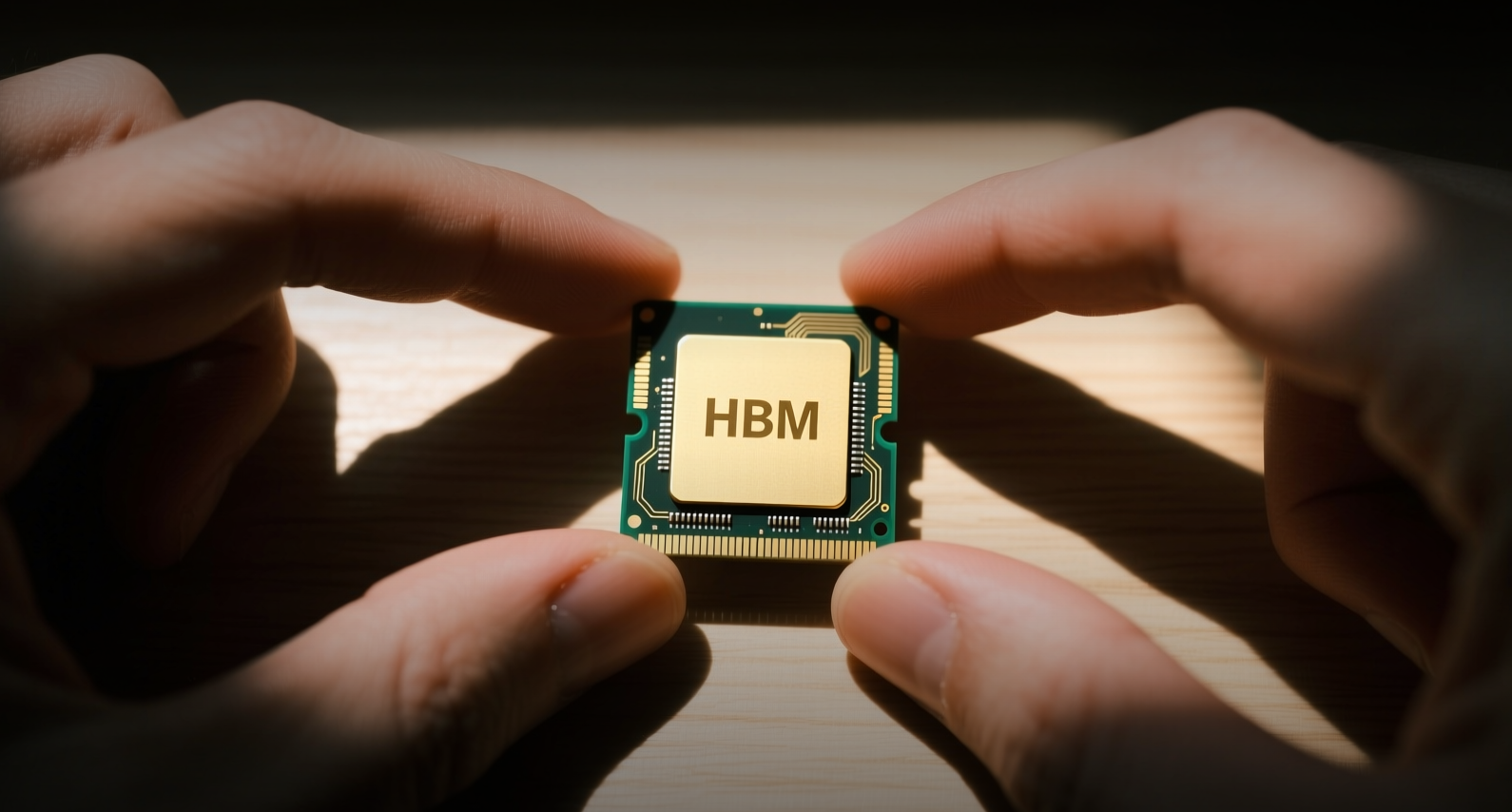
High-bandwidth memory supply bottlenecks will persist for another six to 12 months, sustaining pricing power for memory chip makers as AI infrastructure spending continues to accelerate.
Supply constraints in the high-bandwidth memory market, a critical component for running Nvidia Corp.'s AI accelerators, will last at least another half year as demand from data center buildouts outstrips manufacturing capacity, according to RBC Wealth Management. The shortage has driven DDR5-6000 32-gigabyte kit prices from $110 to as much as $500 since 2025, with relief not expected until mid-2027 at the earliest, according to market research firm TrendForce.
"The scarcity in the high-bandwidth memory market could persist for another six to 12 months," Gautam Chadda, executive director at RBC Wealth Management, said. "AI enablement and AI infrastructure spending continue to support memory makers."
The bottleneck stems from four converging supply chain choke points: TSMC's near-monopoly on AI accelerator fabrication, DRAM production constraints that have intensified over the past year, power infrastructure limitations for new data centers, and a shift to optical interconnects that has created laser supply shortages, according to Geoff Tate, a technology consultant. "For AI to grow, they need all the bottleneck technologies to grow," Tate said. "You can't run a data center with only three out of four."
The scarcity has created an extraordinary pricing environment for memory manufacturers. Micron Technology Inc., one of three global HBM suppliers alongside SK Hynix Inc. and Samsung Electronics Co., delivered its 13th consecutive earnings beat last quarter, with Wall Street projecting 2026 earnings per share growth of nearly 800%, according to Zacks Equity Research. SK Hynix, which commands 56% of the HBM market, saw first-quarter revenue surge 198% year over year to 52.6 trillion won, with gross profit rising more than 300%. The company listed American depositary shares at $149 on July 10 in the largest U.S. debut by a non-American company, raising $26.5 billion to expand manufacturing capacity.
Supply chain constraints deepen
The memory shortage is reshaping how hyperscalers design their AI infrastructure. Rather than relying solely on standard Nvidia GPU architectures, companies including Google, Meta Platforms Inc. and Amazon.com Inc. are developing custom ASICs optimized for their specific workloads, according to Manmeet Walia, director of product management at Synopsys Inc. "The CSPs and the hyperscalers are becoming big enough that they can live in their own world," Walia said. "What they desire is very custom solutions."
This fragmentation is tempered by the shared memory ecosystem. DRAM shortages are affecting all system designs, with HBM (high-bandwidth memory, which stacks DRAM dies vertically to achieve faster data access than traditional flat layouts) becoming the binding constraint. Nvidia has signed a multiyear partnership with SK Hynix to co-develop advanced memory chips, locking in supply for the AI chip leader's next-generation GPU platforms.
Recent volatility in South Korean equities, home to both SK Hynix and Samsung, has been driven by technical factors rather than a weakening AI trade, Chadda said. Leveraged exchange-traded fund flows and margin loan unwinds have amplified price swings, but the fundamental demand picture for memory remains intact.
Investment implications
For investors, the 6-to-12-month scarcity window suggests sustained revenue growth and margin expansion for HBM suppliers. Micron shares, which have risen more than 600% over the past 12 months, trade at a forward price-to-earnings ratio of 6, compared with SK Hynix's forward P/E of 10 following its U.S. listing. The pricing differential reflects both SK Hynix's market leadership and the premium investors are paying for direct exposure to the HBM market.
The broader AI infrastructure buildout provides a multiyear tailwind. About 12,000 data centers exist worldwide today, and capacity is expected to double by 2030 as new facilities come online. Power constraints, however, remain a wild card: legacy utility infrastructure cannot keep pace with demand, pushing operators toward off-grid solutions including small modular nuclear reactors. GE Vernova Inc., which produces gas turbines and grid equipment for data center power, has seen its shares surge 63% year to date.
AMD was more pessimistic at Computex 2026, suggesting that meaningful DRAM price relief may not arrive until 2028. For now, memory makers hold the pricing power, and the bottleneck shows no sign of breaking.
This article is for informational purposes only and does not constitute investment advice.
