

Anthropic is securing its first dedicated data centers with $35 billion in chip leases backstopped by Google, deepening the financial ties between the AI startup and the search giant.
Anthropic is securing its first dedicated data centers with $35 billion in chip leases backstopped by Google, deepening the financial ties between the AI startup and the search giant.
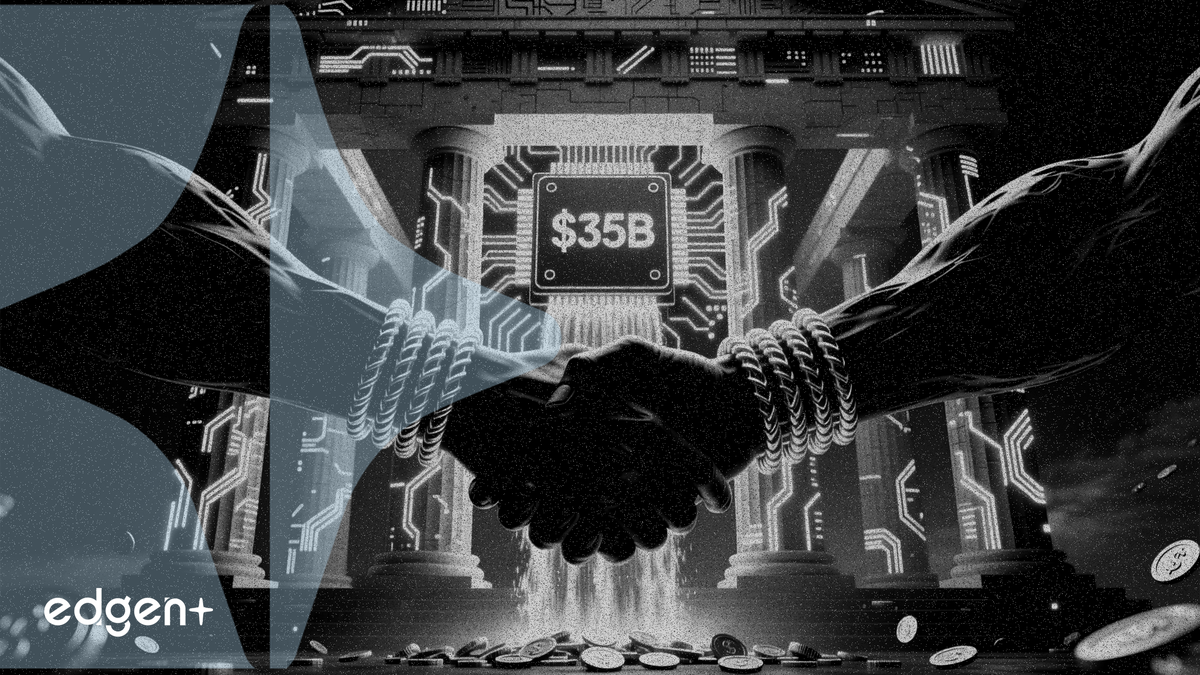
Google has agreed to backstop lease payments at five data centers for Anthropic, helping the artificial intelligence startup secure what amounts to a $35 billion loan for computer chips, according to people familiar with the matter.
The arrangement marks a significant escalation in Google's financial support for Anthropic, the creator of the Claude chatbot. Google was among Anthropic's earliest investors, buying equity in the company repeatedly. Now it is increasingly underwriting the infrastructure that powers the startup's AI models, a role that blurs the line between investor, customer and financier.
"Google is effectively acting as a credit enhancer for Anthropic's data center buildout," said Rachel Kim, an analyst at Edgen who covers AI infrastructure. "This lets Anthropic access the kind of computing capacity that would otherwise require a much larger balance sheet."
Anthropic's annualized revenue reached $45 billion in the first quarter of 2026, up fivefold from roughly $9 billion at the end of 2025, according to Sacra. The company's growth has been fueled by demand for Claude, which competes with OpenAI's ChatGPT and Google's Gemini. But that growth comes with enormous computing costs — Anthropic has lowered its gross margin projection to 40 percent because of inference expenses on servers from Google and Amazon.
The $35 billion question
The five data centers involved in the lease arrangement will house powerful computer chips, including Google's own tensor processing units, that Anthropic needs to train and run its AI models. Google's backstop guarantees the lease payments, reducing risk for the data center operators and lenders who financed the construction.
The deal structure reflects a broader trend in AI infrastructure financing. Hyperscalers including Google, Microsoft and Amazon are increasingly using their balance sheets to support the startups that depend on their cloud platforms. Microsoft has committed more than $13 billion to OpenAI through a combination of equity and cloud credits, while Amazon has invested $8 billion in Anthropic.
For Google, the arrangement secures a major customer for its cloud business and its custom TPU chips, which compete with Nvidia's market-leading graphics processing units. Custom chips including Google TPUs, Amazon Trainium and Microsoft Maia cut inference costs between 30 percent and 50 percent compared with Nvidia GPUs, according to TrendForce, which projects custom chips will run 40 percent of AI servers by 2030.
What it means for investors
The deepening financial entanglement between AI startups and their cloud backers creates both opportunity and risk. For Google, the Anthropic relationship drives revenue through its cloud division and helps amortize the cost of its massive data center buildout. Alphabet trades at about 22 times forward earnings, and the company's cloud business has been a key growth driver.
But the arrangement also exposes Google to Anthropic's operational performance. If the startup fails to generate enough revenue to cover its lease payments, Google would be on the hook. The broader AI industry is already facing pricing pressure — Anthropic cut Claude Opus pricing by 67 percent at the Opus 4.5 launch in November 2025, and enterprise customers including Uber have begun capping AI spending after blowing through annual budgets.
Token consumption is forecast to rise 24-fold by 2030, to 120 quadrillion tokens a month, according to Goldman Sachs Research, which notes chipmakers are lowering annual token costs by 60 percent to 70 percent. That volume growth could offset falling prices, but the margin compression is real. Enterprise token usage grew 1,001 percent from January 2025 to April 2026, while spending rose just 497 percent, per Ramp — a sign that the price per token is falling faster than usage is rising.
For Anthropic, the Google-backed data centers provide the computing capacity needed to compete with OpenAI and maintain its growth trajectory. The company's $45 billion annualized revenue run rate suggests strong product-market fit, but the path to profitability remains uncertain given the enormous capital requirements of AI infrastructure. The $700 billion data center buildout underway across the industry will need to find paying customers — and Anthropic, with Google's help, is securing its place in line.
This article is for informational purposes only and does not constitute investment advice.
