

Goldman Sachs expects humanoid robot shipments to reach 502,000 units by 2032, positioning the sector as AI's next major growth engine as the investment narrative shifts from computing power to physical applications.
Goldman Sachs expects humanoid robot shipments to reach 502,000 units by 2032, positioning the sector as AI's next major growth engine as the investment narrative shifts from computing power to physical applications.
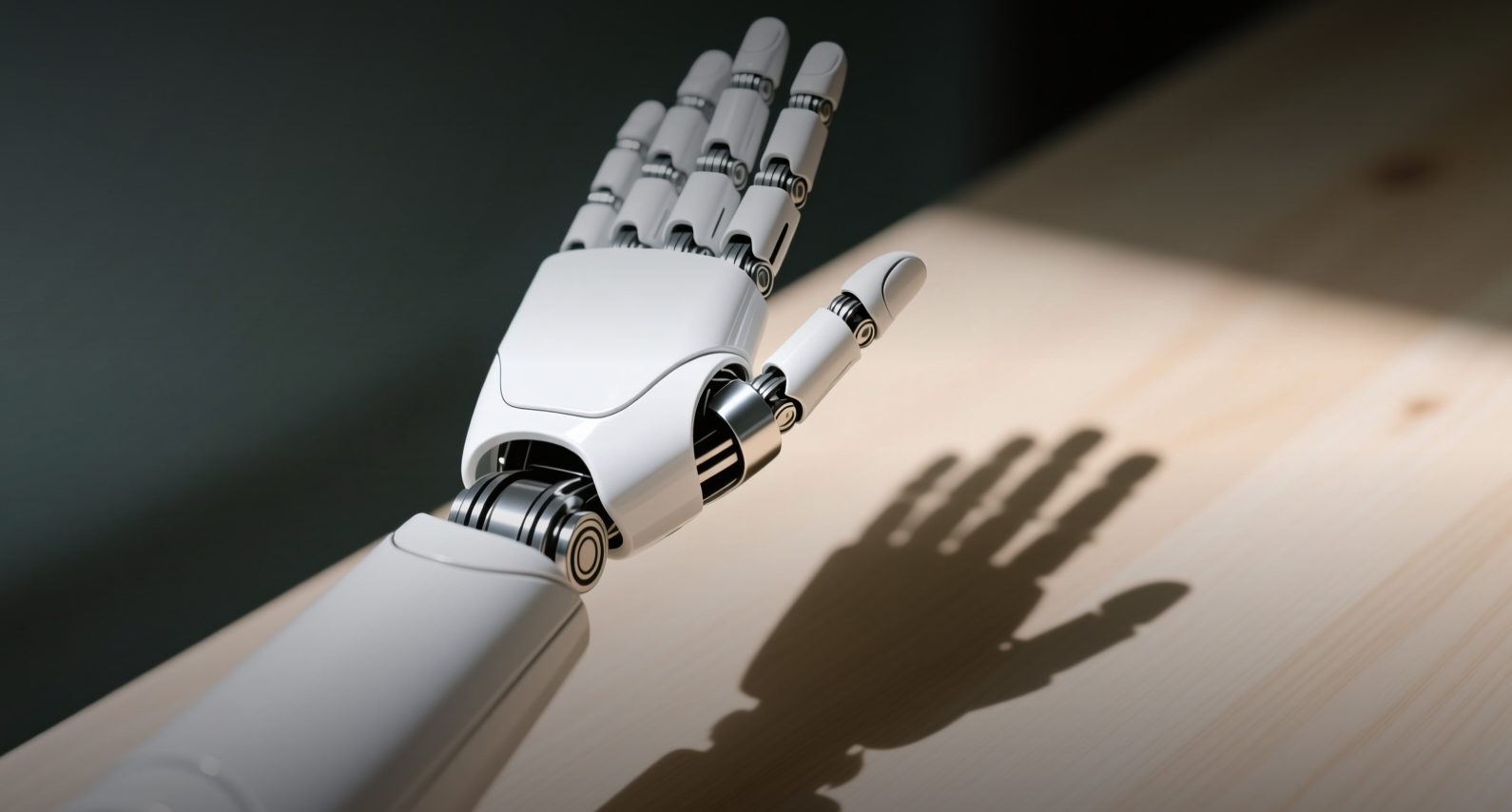
Goldman Sachs expects global humanoid robot shipments to reach 76,000 units by 2027 and 502,000 by 2032, as the AI investment narrative shifts from computing infrastructure to physical applications.
"The industry is transitioning from technology validation to commercialization, though large-scale deployment still requires time," Jacqueline Du, equity strategist at Goldman Sachs, wrote in a report following a May field survey of 14 robotics companies across Hong Kong, Shenzhen and Beijing.
The survey found VLA/VTLA models and world models are accelerating integration, improving robot planning and environmental adaptation. But unlike large language models, robot AI faces a scarcity of real-world physical data — force, torque and motion data that cannot be harvested from the internet at scale. To address this, the industry is investing in centralized data factories and human-robot collaboration data collection. Goldman said data collection and related services could become a significant revenue source for the supply chain as demand grows.
The report highlights a valuation gap: Asia-Pacific robotics stocks trade at a median 22x forward earnings versus 28x for US peers, a 21 percent discount, while PEG ratios stand at 1.5x versus 2.0x. Mutual funds are beginning to rotate into the robotics supply chain, with capital concentrated in components, automotive automation and industrial automation.
From "can move" to "can work"
Tesla's Optimus demonstration at its "We, Robot" event and Unitree's H1 appearance at the 2025 Spring Festival Gala showed meaningful progress in hardware flexibility and robustness. But for industrial and consumer applications, robots still fall short on precision, consistency, cost and general-purpose autonomous AI — the most critical constraint. Robots must not only perceive their environment but plan and execute continuous actions in complex real-world settings, demanding more from models, data and hardware.
Nvidia is working to close this gap through its Physical AI ecosystem. The Jetson Thor edge computing chip, GR00T models and Isaac platform, along with the Isaac GR00T Blueprint and Cosmos simulation framework, help developers generate synthetic training data at scale, easing the shortage of real physical data.
Core components hold the value
Goldman said the supply chain's value will concentrate in components with high technical barriers. Harmonic reducers carry the highest technical threshold, demanding precision, lightweight design and torque performance, offering strong growth potential. Actuator assemblies show relatively high adoption certainty in high-specification robots. Planetary roller screws remain in flux, with uncertainty around yield, production consistency and capacity readiness, while dexterous hand technology routes are not yet settled.
The shipment trajectory is already accelerating. Global humanoid robot shipments jumped 272 percent year-over-year in the first half of 2026 to 19,100 units, according to Smart Analytics Global, with Chinese vendors accounting for more than 97 percent of volume. AgiBot shipped roughly 8,400 units for a 44 percent market share, surpassing Unitree's 5,900 units at 31 percent. Together, the two companies account for three-quarters of every humanoid robot shipped worldwide. Smart Analytics Global pegs 2026 humanoid robot revenue at around $1.6 billion, roughly doubling to $3 billion in 2027.
The FCC's late-July ban on new imports of foreign-made humanoid and quadruped robots — citing cybersecurity and national security risks — gives US players like Tesla, Figure AI, Boston Dynamics and Agility Robotics more time to scale, though none currently ships at Chinese volumes. Unitree has set its Shanghai Star Market IPO at 150.8 yuan per share, aiming to raise roughly 6.1 billion yuan, about $904 million.
For investors, the report suggests the robotics sector has not yet entered a crowded-trade phase. If the industry enters a scaled commercialization cycle, current positioning may represent early-stage capital rotation. Asia-Pacific robotics and automation companies — particularly harmonic reducer and actuator component makers — offer lower valuations with comparable growth expectations to US peers, according to Goldman. The report also notes that most industry participants expect humanoid robots to reach scaled commercial deployment between 2027 and 2029, after accumulating tens of millions of hours of high-quality training data.
This article is for informational purposes only and does not constitute investment advice.
