
German factory orders rose 2.5% in July for a third straight month, but the gain was driven almost entirely by defense-related transport equipment orders while consumer and automotive demand weakened.
German factory orders rose 2.5% in July for a third straight month, but the gain was driven almost entirely by defense-related transport equipment orders while consumer and automotive demand weakened.
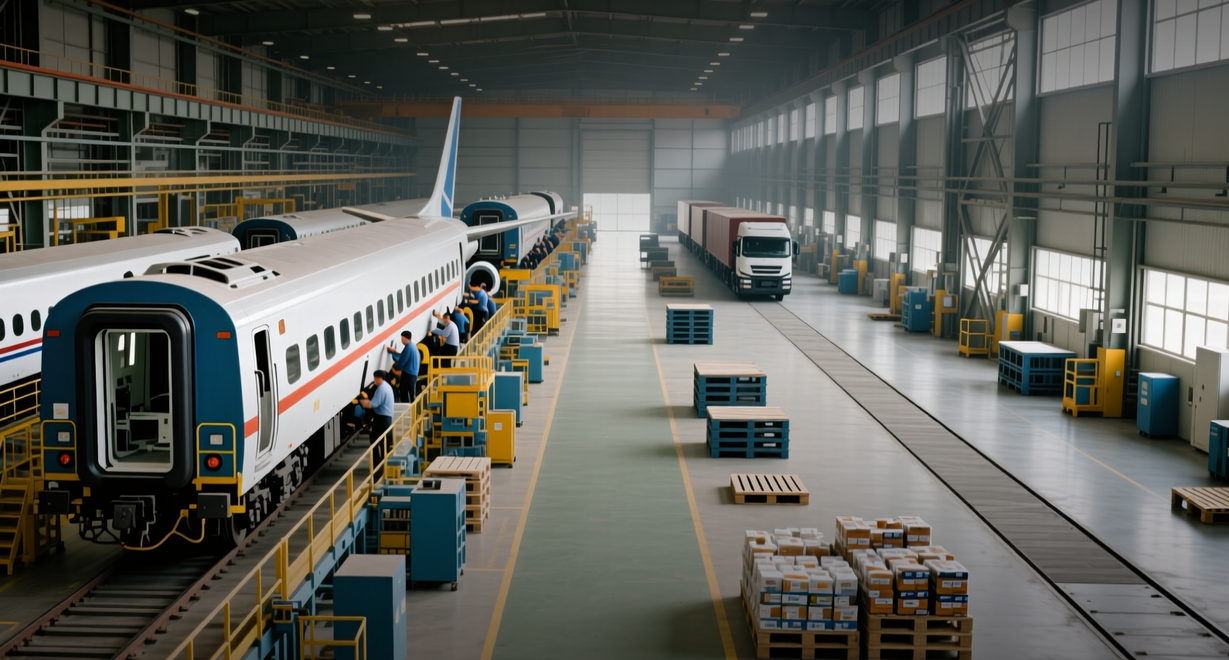
German factory orders rose 2.5% in July, a third consecutive monthly gain that masks a widening split between defense-driven transport equipment demand and a deteriorating consumer and automotive base, data from Destatis showed Friday. The increase beat the 0.1% decline economists polled by The Wall Street Journal had expected and followed an upwardly revised 3.7% rise in June, leaving orders 13.1% higher than a year earlier.
The Ifo Institute, a German economics think tank, on Thursday raised its 2026 growth forecast for the country, citing steadily improving orders and a recent jump in export expectations. Purchasing managers' surveys published this week showed August production growth was the strongest since January 2022, with business expectations among manufacturers at their highest since February, before the first U.S.-Israeli strikes on Iran.
Almost all of July's gain traced to a 126.4% surge in orders for transport equipment — aircraft, ships, trains and military vehicles — a category that includes defense procurement tied to Germany's fiscal stimulus push. Excluding large-scale orders, new orders fell 1.4% from June, according to Destatis. Intermediate goods orders rose 4.3%, while consumer products orders dropped 4.8%, a divergence suggesting manufacturers are stockpiling inputs rather than converting them into finished goods.
The composition of the order book raises questions about durability. The car industry, Germany's traditional manufacturing anchor, saw orders sink 12.5% in July. Auto giant Volkswagen's board on Thursday approved 50,000 additional job cuts and a halving of its model portfolio as it pivots strategy against Chinese competition — a structural shift that will weigh on the sector's contribution to industrial output for years.
Energy costs complicate the outlook. Surging oil and gas prices tied to the Middle East conflict and the closure of the Strait of Hormuz have pushed manufacturers to stockpile inputs, potentially inflating order data. The European Central Bank is expected to raise its key interest rate next week, which would tighten financing conditions for manufacturers already navigating elevated input costs. Eurozone inflation has climbed to near a three-year high ahead of the ECB meeting, according to data published this week, reinforcing expectations for a hike.
Domestic demand rose 9.1% in July, supported by hundreds of billions of euros in fiscal stimulus flowing to defense and infrastructure projects. Foreign orders fell 2.1%. The three-month comparison from May to July showed new orders 2.9% higher than the prior three months, a less volatile measure that confirms the upward trend even as its composition skews toward government-backed procurement.
The question for the second half is whether the industrial upturn can broaden beyond defense and stockpiling. Consumer products orders have now declined in consecutive months, and the ECB's expected rate increase next week threatens to raise borrowing costs for manufacturers and their customers. If energy prices keep climbing and the Strait of Hormuz remains closed, the stockpiling that has supported order books could reverse as inventories normalize — a scenario that would expose the underlying weakness in German manufacturing demand. The Ifo Institute's forecast revision assumes the current momentum holds, but the divergence between headline orders and the consumer-facing segments of the economy leaves little margin for error.
This article is for informational purposes only and does not constitute investment advice.
