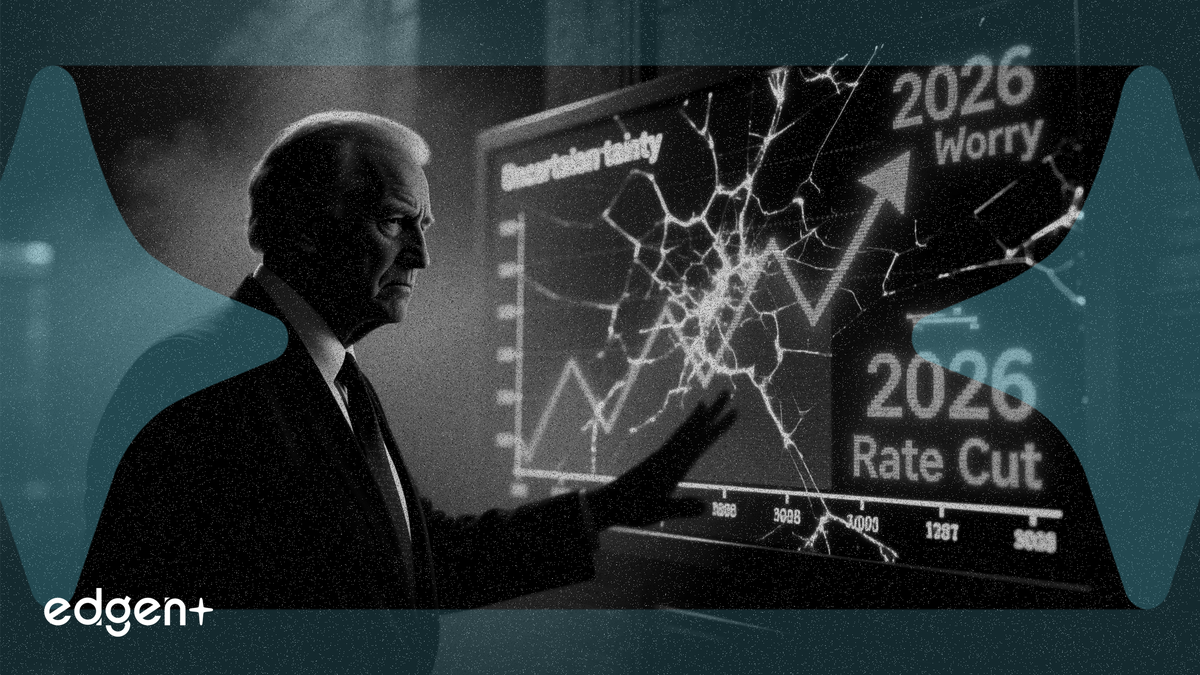
A key Federal Reserve official has voiced significant concern over a persistent segment of inflation, challenging the market's expectation for interest rate relief.
Back
A key Federal Reserve official has voiced significant concern over a persistent segment of inflation, challenging the market's expectation for interest rate relief.

Dallas Federal Reserve President Lorie Logan expressed fresh concern over core services inflation on Monday, introducing a hawkish new variable into the debate over the central bank’s timeline for cutting its benchmark rate, currently at 3.5% to 3.75%.
"I am concerned about inflation in core services excluding housing," Logan, a voting member of the policy-setting committee in 2026, said in a statement.
The remarks add a layer of complexity for investors, who have been navigating conflicting signals from the Fed. While the committee's official projection from its March meeting included a single rate cut in 2026, Logan's focus on this sticky inflation component suggests a potentially more prolonged period of restrictive policy. This could fuel US dollar strength and apply further pressure to equity markets.
Logan's comments matter because they highlight a growing divergence within the Fed on the path ahead. While some officials see a clear route to 2% inflation, her focus on a resilient and problematic inflation category suggests the "last mile" of the inflation fight could be the hardest, potentially delaying or reducing the scope of any future easing cycle.
The specific mention of "core services excluding housing" is critical. This category, often called "supercore" inflation, is closely watched by the Fed as it is believed to be driven primarily by wage growth and a tight labor market. Persistent strength in this area could indicate that underlying inflationary pressures are not cooling as quickly as desired, forcing the Fed to maintain its restrictive stance for longer than anticipated. The current federal funds rate has been held in the 3.5% to 3.75% range since the last rate hike in 2025, and Logan's comments temper expectations for a reversal.
The Dallas Fed chief's hawkish tone contrasts with recent commentary from her colleagues. New York Fed President John Williams recently stated that monetary policy is "well positioned" to handle current uncertainties, including the inflationary impact of the ongoing conflict in the Middle East. Williams projects inflation will fall to 2.75% this year and reach the 2% target by next year, a more optimistic timeline than many of his peers who see the goal only being reached by 2028.
Fed Chair Jerome Powell has also struck a more patient tone, advocating for a "wait and see" approach. "There's sort of downside risk to the labor market, which suggests keep rates low, but there's upside risk to inflation, which suggests maybe don't keep rates low," Powell said recently, summarizing the central bank's dilemma. Logan's pointed concern about supercore inflation adds a new, specific risk to the hawkish side of that equation, potentially shifting the committee's balance away from imminent cuts.
This article is for informational purposes only and does not constitute investment advice.