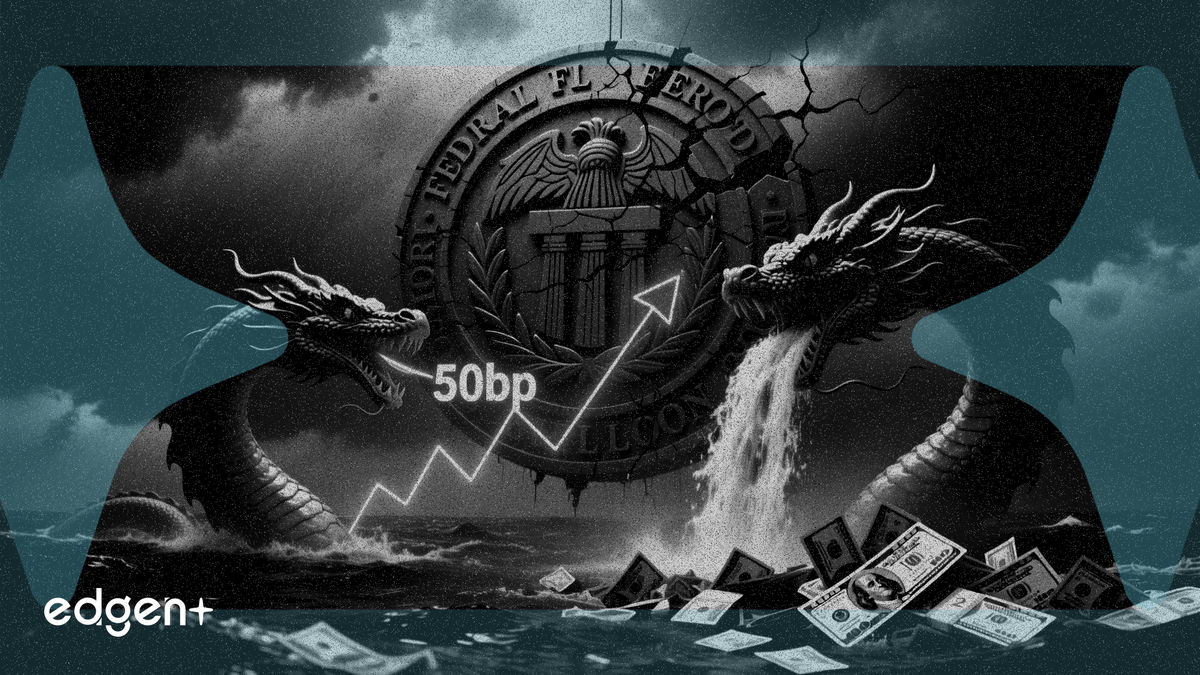
The Federal Reserve's push to shrink its balance sheet collides with a $2 trillion annual deficit and waning foreign demand for US debt, threatening to push long-term yields higher.
The Federal Reserve's effort to reduce its $7.5 trillion balance sheet risks adding upward pressure on long-term interest rates at a time when 10-year Treasury yields have already climbed 50 basis points to 4.5% since the Iran war began, according to Desmond Lachman, a scholar at the American Enterprise Institute.
"Any attempt by the Fed to reduce its balance sheet size today is bound to add upward pressure to long-term interest rates," Lachman wrote in a Wall Street Journal op-ed published Tuesday, responding to former Treasury official David Malpass's argument that balance sheet reduction is a worthy monetary policy objective.
The warning comes as 30-year Treasury yields touched 5.2% before the Memorial Day weekend, the highest in 19 years, while the 10-year reached 4.7%, levels not seen since mid-2007. The federal government needs to borrow roughly $10 trillion over the next 12 months — $7.5 trillion to refinance maturing debt and $2 trillion to cover the budget shortfall — according to the Committee for a Responsible Federal Budget. Foreign investors, a traditional source of demand for US government bonds, appear to be losing appetite, Lachman noted.
With interest expense already running at nearly $1 trillion a year, exceeding Medicare spending and equaling two-thirds of Social Security outlays, even a modest 50-basis-point overshoot above the Congressional Budget Office's baseline forecast would push annual carrying costs to $2.5 trillion by 2036, consuming 30% of all federal revenue. Interest cost per household would soar to $17,000 from $7,900 last year, the CRFB estimated.
The New Fed Chief's Tightrope
New Federal Reserve Chair Kevin Warsh has publicly favored tightening monetary policy by reducing the central bank's holdings of Treasuries, a strategy that involves selling a portion of its portfolio to the public. The approach aims to cool aggregate demand by transforming trillions in reserves into savings, addressing what economists describe as too many dollars chasing too few goods.
Yet the timing could not be more precarious. The average interest rate on outstanding Treasury Notes stands at just 3.23%, reflecting years of ultra-cheap borrowing during and after the Covid crisis when Treasury Bills yielded as little as 0.2%. Today, those short-term instruments yield 3.7% — an 18-fold increase. As the US refinances bonds that roll off at 5.2% on the 30-year and 4.7% on the 10-year, the dynamic mirrors the "teaser" mortgage reset that triggered the 2008 housing crisis: low-rate debt issued during a borrowing binge is resetting at unaffordable levels.
The last time the Fed attempted quantitative tightening at scale was in 2022-2023, when it reduced its balance sheet by roughly $1.4 trillion. That episode coincided with the regional banking turmoil of March 2023, when Silicon Valley Bank collapsed as rising rates eroded the value of its bond portfolio. The current environment carries similar risks: higher long-term yields would further depress bond prices, potentially triggering losses at banks and other leveraged holders of Treasuries.
Fiscal Dominance Returns
The deeper problem is what economists call fiscal dominance — the point at which monetary policy becomes subservient to the government's borrowing needs. With the federal budget deficit projected at about $2 trillion annually and the national debt exceeding $39 trillion, the US has lost all margin for error on interest rates, according to the CRFB.
Warsh can raise the federal funds rate or signal no plans for cuts to cool credit demand. He can sell bonds from the Fed's portfolio to target aggregate demand directly. But he cannot control the primary driver of excess demand: runaway federal spending. As the CRFB stated in its analysis, "The best way to accomplish these goals is through deficit reduction, which can help the Federal Reserve lower rates by reducing near-term inflationary pressures."
The CRFB warned that yields persisting at pre-Memorial Day levels or pushing higher threaten to "spark a fiscal crisis." The next Fed meeting, scheduled for mid-June, will offer the first formal test of whether Warsh's balance sheet strategy can coexist with the fiscal reality of a $2 trillion deficit and a bond market that is increasingly demanding compensation for the risk of lending to the world's largest debtor.
This article is for informational purposes only and does not constitute investment advice.