
The future of the Federal Reserve's independence hangs in the balance as Chair Jerome Powell's decision to stay or go could shift the board's majority, with his term ending May 15.
The future of the Federal Reserve's independence hangs in the balance as Chair Jerome Powell's decision to stay or go could shift the board's majority, with his term ending May 15.
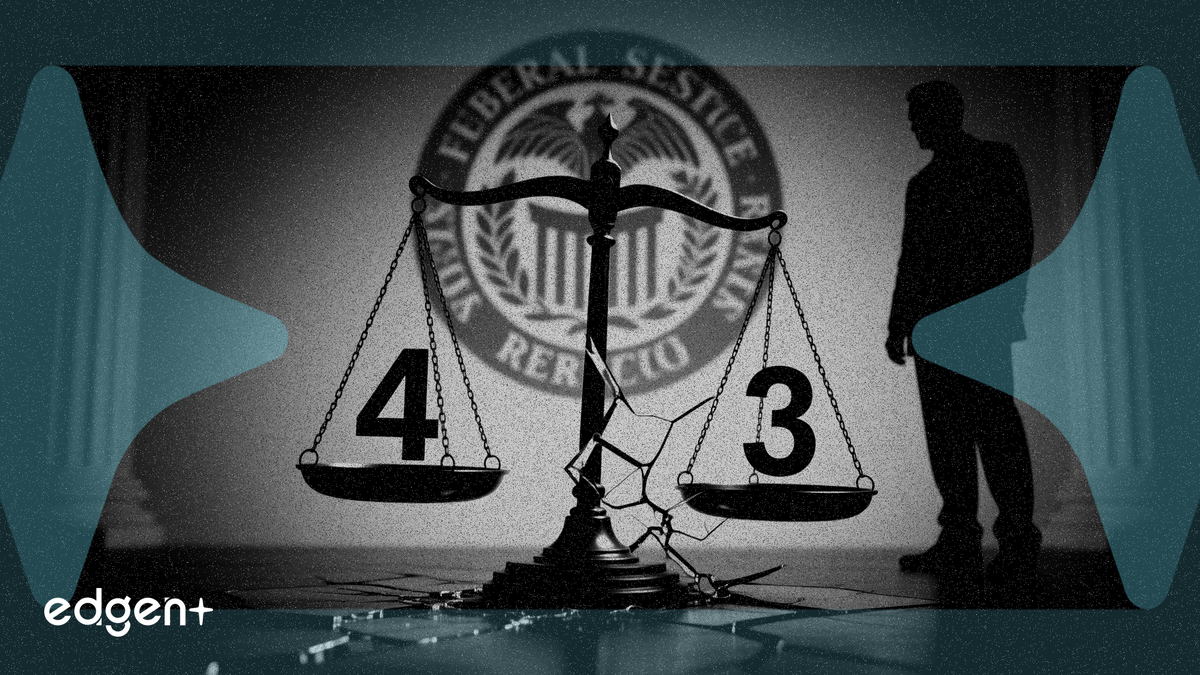
(P1) The Federal Reserve is poised for a significant leadership transition that could reshape U.S. monetary policy for years to come, as Chair Jerome Powell’s term ends May 15. The recent conclusion of a Justice Department investigation into Powell has cleared the path for President Trump's nominee, Kevin Warsh, to be confirmed, but the key uncertainty is whether Powell will remain on the Fed's board as a governor, a move that would block Trump from appointing a majority.
(P2) "Powell has absolutely earned a retirement at the time and of the nature of his choosing. He has given mightily to the country,” said David Wilcox, a former senior Fed economist who worked with Powell. “But history has a habit of sometimes being cruel, and it has conspired to put him in a circumstance where he has to make a difficult decision.”
(P3) The Fed is widely expected to hold its benchmark interest rate steady at a range of 3.5% to 3.75% at its upcoming meeting on April 29. This decision comes amid rising inflation, with the Consumer Price Index hitting 3.3% in March, and a still-strong labor market that added 178,000 jobs last month. The political drama surrounding the Fed's leadership has added a layer of uncertainty for markets, which are already grappling with the implications of a potential shift in monetary policy under a new chair.
(P4) If Powell chooses to leave the board, President Trump would have the opportunity to appoint a fourth governor, securing a 4-3 majority of his appointees on the seven-member board. This could lead to significant changes in the Fed's approach to interest rates, inflation, and financial regulation. A board dominated by Trump appointees might be more inclined to prioritize short-term economic growth over the Fed's traditional mandate of price stability, a scenario that could have profound implications for the U.S. economy and global financial markets.
The confirmation of Kevin Warsh, a former Fed governor, would likely usher in a new era for the central bank. During his confirmation hearing, Warsh advocated for new tools, a new inflation framework, and a different communication style, suggesting a potential departure from the Powell-led Fed's policies. While some analysts believe Warsh is a conventional choice, his alignment with Trump's agenda remains a key question for investors.
The situation is further complicated by the precedent set by Marriner Eccles, the only Fed chair to remain on the board after his term ended in 1948. Eccles played a crucial role in securing the Fed's independence from the White House. Some observers believe Powell could play a similar role in the current political climate, acting as a bulwark against political interference in monetary policy.
The uncertainty surrounding the Fed's leadership is likely to keep markets on edge. A significant shift in the Fed's leadership and policy direction could lead to increased volatility in equity, bond, and currency markets. Investors will be closely watching for any signals from Powell about his future plans, as well as any further indications of Warsh's policy leanings. The upcoming FOMC meeting on April 29 will be a key event, not just for the rate decision itself, but for any clues it may provide about the future of the world's most powerful central bank.
This article is for informational purposes only and does not constitute investment advice.
