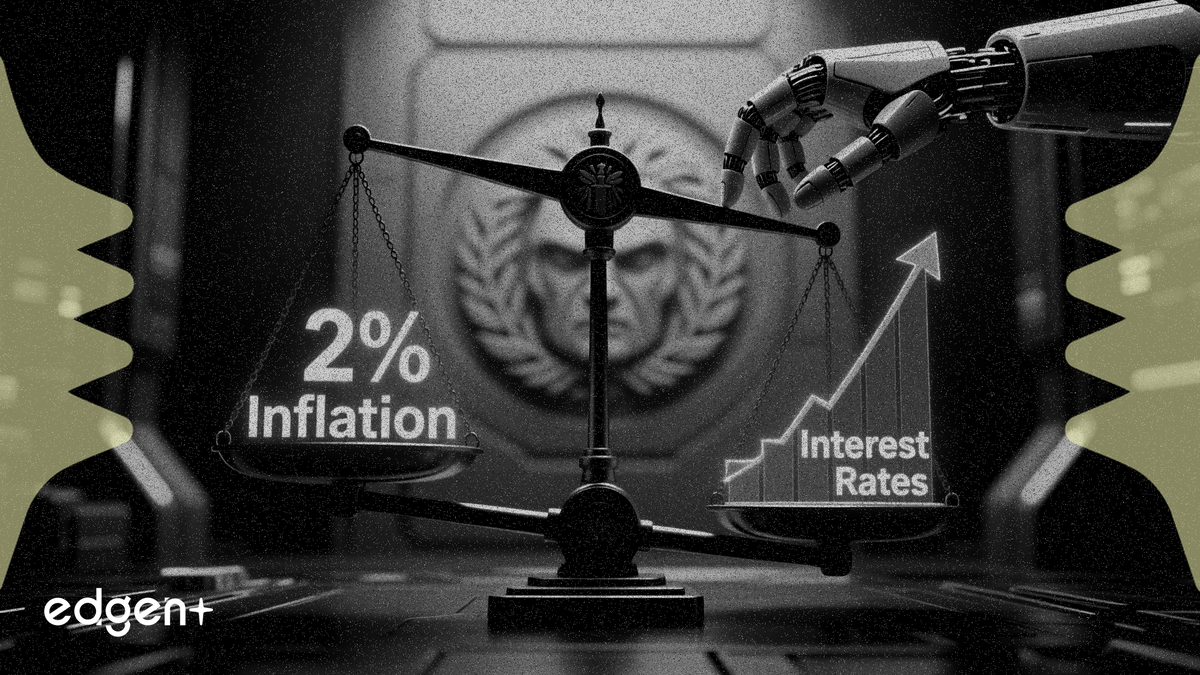
Federal Reserve officials at their last meeting expressed a growing willingness to raise interest rates if inflation remains stubbornly high, a notable shift in tone that sent a hawkish signal through markets. The minutes from the April 30-May 1 meeting showed that while policy was seen as "well positioned," various participants mentioned a readiness to tighten further should inflation risks warrant such a move.
"The minutes carried a hawkish tone, reminding markets that the Fed's finger is closer to the hike button than the market is pricing in," said Ian Lyngen, Head of U.S. Rates Strategy at BMO Capital Markets. "This serves as a clear pushback against the narrative of imminent rate cuts."
The discussion followed a series of "disappointing" inflation readings in the first quarter that stalled progress toward the central bank's 2 percent target. Following the release of the minutes, the 2-year Treasury yield, which is sensitive to Fed policy expectations, ticked higher. Equity markets showed a muted reaction, with the S&P 500 remaining little changed as investors digested the more aggressive stance.
This hawkish tilt complicates the path forward for monetary policy in 2024. While the Federal Open Market Committee (FOMC) held its policy rate steady at a 23-year high of 5.25% to 5.50% at the meeting, the minutes reveal a committee that is losing patience with the pace of disinflation. The Fed has held this rate since July 2023. The debate now shifts to whether the current level of policy is restrictive enough to bring inflation back to its target.
Confidence in Disinflation Wanes
According to the minutes, "participants noted that they continued to expect that inflation would return to 2 percent over the medium term," but "the recent inflation data had not increased their confidence in progress toward 2 percent." This sentiment was a key driver behind the decision to maintain a restrictive stance and introduce the possibility of further hikes. The summary of economic projections from the March meeting had shown a median of three rate cuts expected in 2024, a forecast that now appears increasingly optimistic.
The market is now recalibrating its expectations. While futures markets still price in a high probability of at least one 25-basis-point cut by the December 2024 meeting, the odds of a second cut have diminished. The focus for investors now turns to upcoming inflation and labor market data, which will be critical in shaping the Fed's decision at its next meeting on June 11-12. A continuation of strong economic data and sticky inflation could force the Fed to keep rates higher for longer, or even act on the hawkish warnings revealed in the latest minutes.
This article is for informational purposes only and does not constitute investment advice.