
A Republican senator’s vow to halt President Trump’s Federal Reserve nominee until a Justice Department investigation into Jerome Powell is dropped injects new uncertainty into the central bank’s leadership transition.
A Republican senator’s vow to halt President Trump’s Federal Reserve nominee until a Justice Department investigation into Jerome Powell is dropped injects new uncertainty into the central bank’s leadership transition.
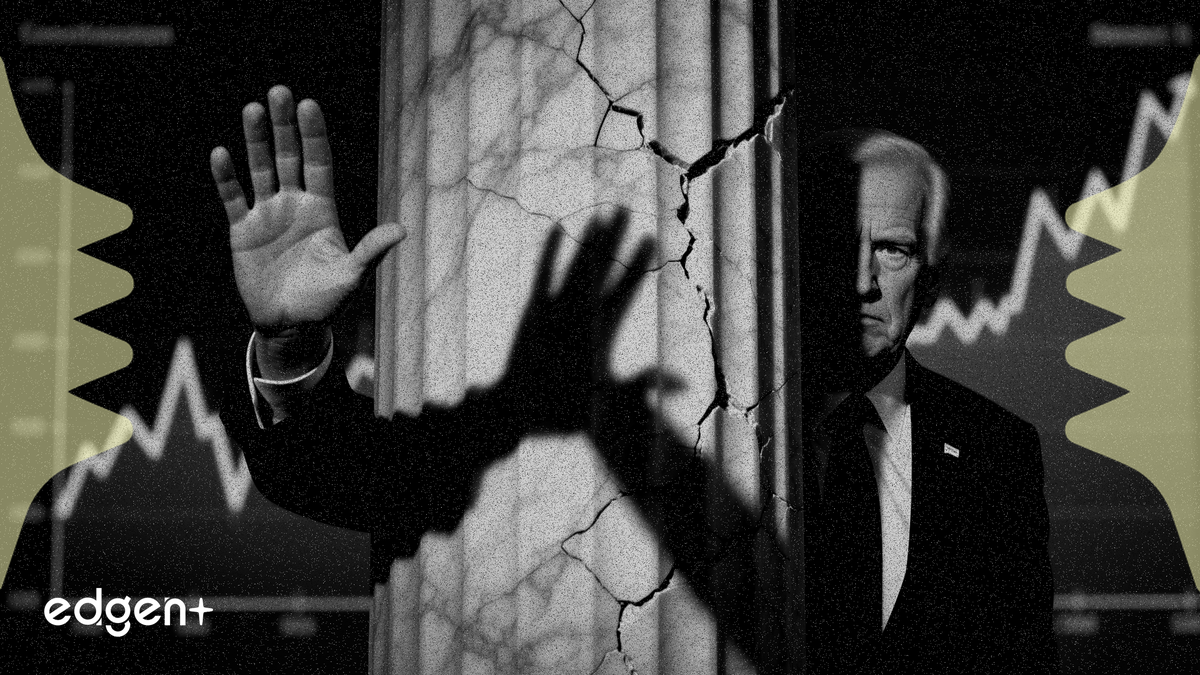
The confirmation of Kevin Warsh to lead the Federal Reserve is facing a significant roadblock after Senator Thom Tillis pledged to block the nomination until the Department of Justice ends its criminal probe into current Chair Jerome Powell. The investigation centers on cost overruns of roughly $1.2 billion for a renovation project at the central bank’s headquarters.
"This is about a bedrock principle of Fed independence," Tillis, a Republican member of the Senate Banking Committee, told reporters in March. "I have no earthly idea what the market reaction would have been if suddenly the perception is that the Fed chair serves at the pleasure of the President."
The DOJ probe, stemming from Powell’s congressional testimony about the $2.5 billion renovation, has so far failed to produce clear evidence of wrongdoing. During a closed-door hearing on March 3, G.A. Massucco-LaTaif, a senior prosecutor in the D.C. U.S. attorney’s office, admitted that investigators “do not know at this time” what evidence of fraud exists, though he cited “1.2 billion reasons for us to look into it.”
The standoff complicates the transition of power at the world's most influential central bank as Powell's term as chair is set to expire on May 15, 2026. While Warsh, a former Fed governor, is President Trump’s pick, Tillis’s opposition creates a hurdle to his confirmation and sustains a period of leadership uncertainty that could unsettle markets awaiting clear guidance on monetary policy beyond the Fed's last rate hold at 5.25-5.50 percent.
The Justice Department’s inquiry has been met with sharp legal and political resistance. In a significant setback for the prosecution, Chief U.S. District Judge James E. Boasberg quashed grand jury subpoenas related to the case in early April.
In his ruling, Judge Boasberg wrote there is "abundant evidence that the subpoenas’ dominant (if not sole) purpose is to harass and pressure Powell either to yield to the president or to resign and make way for a Fed chair who will." The U.S. attorney for the District of Columbia, Jeanine Pirro, has until early May to appeal the decision.
Senator Tillis has defended the Federal Reserve's handling of the renovation project, stating that rising input costs were a key factor in the budget overage and that "most of the overruns look reasonable." The investigation is widely seen by critics as part of a broader pressure campaign against Powell by President Trump, who has frequently attacked the chair over monetary policy.
Kevin Warsh, who served as a Fed governor during the 2008 financial crisis, is scheduled to appear before the Senate Banking Committee for his confirmation hearing. In prepared remarks, Warsh is expected to affirm his commitment to the central bank's independence while also noting that officials should be open to a diversity of views.
"Fed independence is placed at greatest risk when it strays into fiscal and social policies where it has neither authority nor expertise," Warsh's planned testimony states.
Powell, whose term on the Federal Reserve's board of governors does not expire until January 2028, has stated he will serve as Chair pro tem if his successor is not confirmed by May 15. He has also committed to remaining on the board until the DOJ investigation is "well and truly over, with transparency and finality," setting the stage for a prolonged period of contested leadership at the central bank.
This article is for informational purposes only and does not constitute investment advice.